KVIDIO Bluetooth Over-Ear Headphones vs BERIBES Bluetooth Over-Ear Headphones
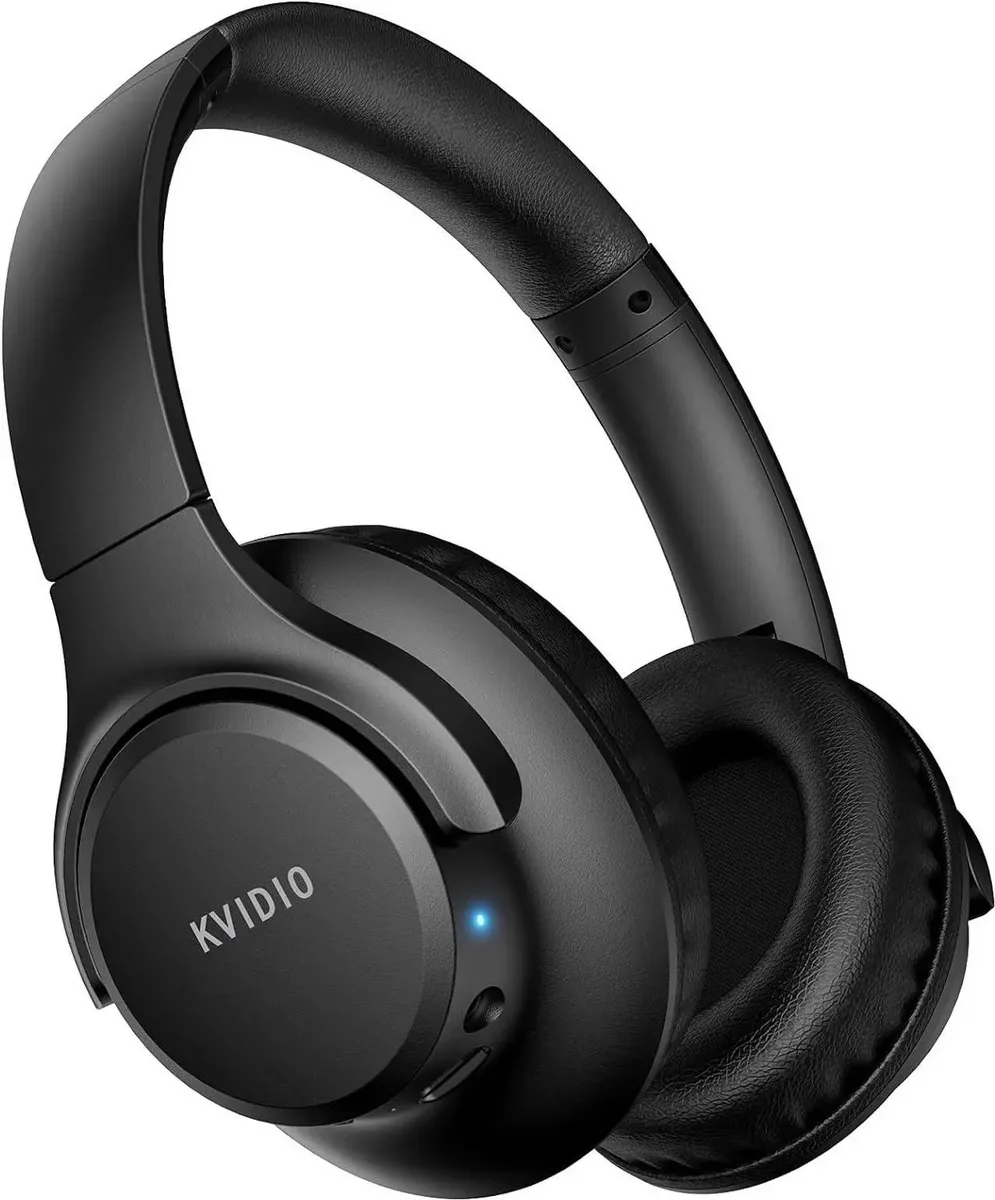
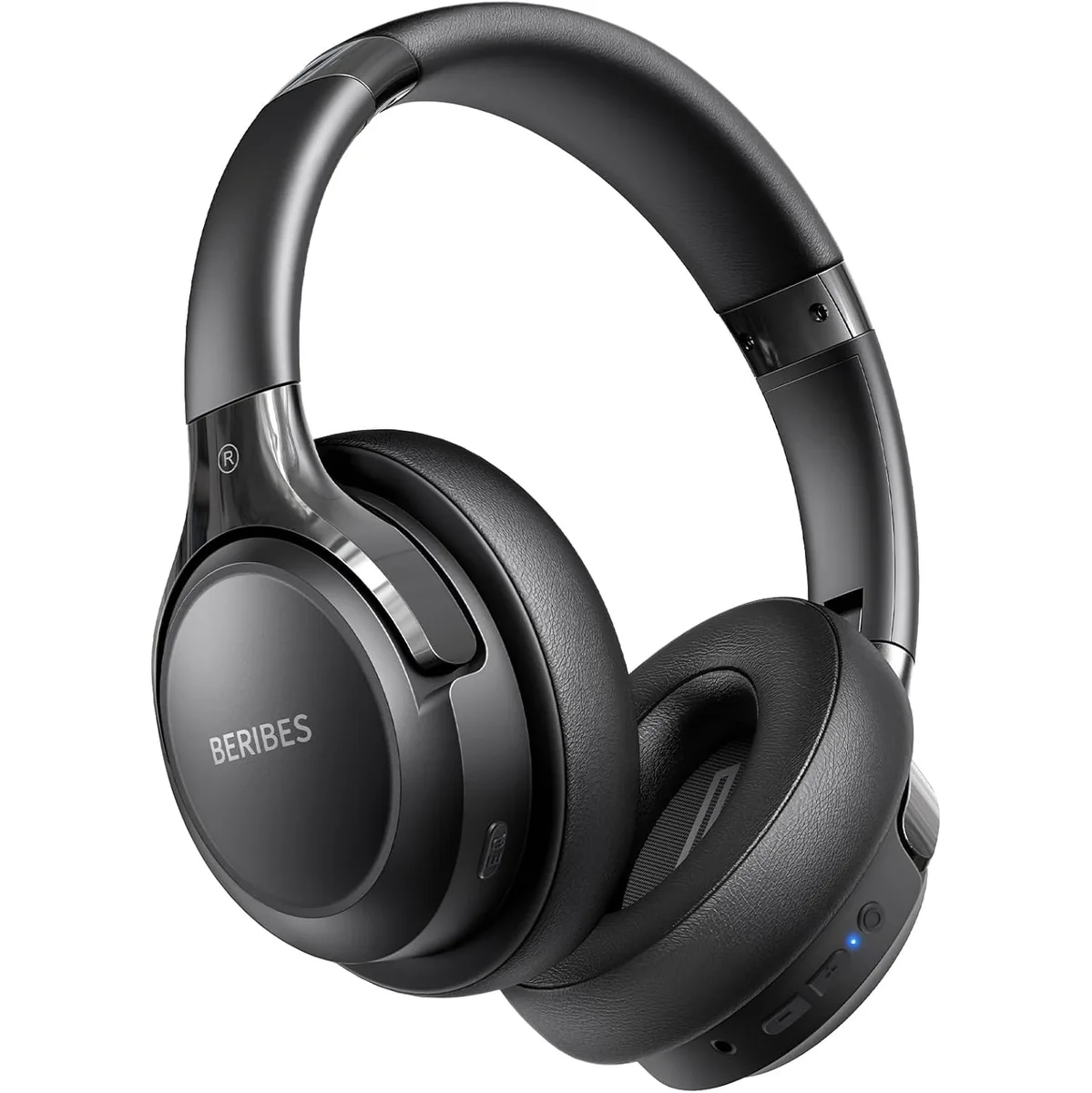
Quick take: The BERIBES Bluetooth Over-Ear Headphones costs $5 less; only the BERIBES Bluetooth Over-Ear Headphones supports multipoint (two devices at once).
Which one to buy
These two look nearly identical, cost $25 and $20, both claim 65 hours from a 500mAh cell, both fold, and both ship with a 3.5mm cable so a dead battery doesn't silence them. Neither has ANC, an app or an IP rating. The differences are small, but they're real.
The BERIBES has the longer feature list. It has six onboard EQ modes you cycle with a button (owners lean on the bass boost), multipoint so a laptop and phone stay connected at once, USB-C charging, and it's 28g lighter at 172g. The KVIDIO has no EQ and no multipoint, so it plays one device with one tuning.
The KVIDIO answers with the better-regarded basics. Owners find its warm, bass-tilted sound surprisingly good for the money, and its memory-foam cups get repeated praise for all-day office wear. Reviewers who tested the BERIBES are harsher, with bass that blurs and mids that soften as volume rises, and owners say its leatherette pads get hot and sticky around the four-hour mark. The BERIBES also has call audio owners call grainy and voice prompts loud and strange enough to be a running joke.
KVIDIO Bluetooth Over-Ear Headphones
If comfort and sound matter more than features and your headphones only ever talk to one device.
BERIBES Bluetooth Over-Ear Headphones
For multipoint for a laptop and phone, onboard EQ, USB-C and the lighter frame, as long as you listen in sessions shorter than about four hours.
| Spec | KVIDIO Bluetooth Over-Ear Headphones | BERIBES Bluetooth Over-Ear Headphones |
|---|---|---|
| Approx. price | ~$25 | ~$20 |
| Rating | — | — |
| Type | Over-Ear Headphones | Over-Ear Headphones |
| Noise Cancelling | None | None |
| Battery (single charge) | 65 hrs | 65 hrs |
| Battery (with case) | — | — |
| Quick Charge | — | — |
| Codecs | — | — |
| Bluetooth | 5.4 | 6.0 |
| Multipoint | No | Yes |
| Driver Size | 40 mm | 40 mm |
| Weight | 200 g | 172 g |
| Water Resistance | — | — |
| Wireless Charging | No | No |
| Transparency Mode | No | No |
| Spatial Audio | No | No |
| App EQ | No | No |
Pros & cons
KVIDIO Bluetooth Over-Ear Headphones
- ✓65-hour battery life outlasts headphones at ten times the price
- ✓Memory-protein foam earcups that owners find comfortable all day
- ✓Includes 3.5mm cable — keeps working with a dead battery
- ✓Folds flat and weighs only ~200g for travel
- ✓Built-in mic handles calls acceptably
- ✓Surprisingly listenable warm tuning for the price
- ✗No ANC — passive isolation only
- ✗No app, no EQ, no multipoint, unpublished codecs
- ✗Plastic build won't survive rough abuse
- ✗Highs lack detail and the soundstage is small
- ✗Amazon-native brand: model naming and specs shift between listing revisions
BERIBES Bluetooth Over-Ear Headphones
- ✓65-hour battery plus 950-hour standby from one charge
- ✓Six EQ modes selectable right on the headphone — no app needed
- ✓Multipoint holds phone and laptop simultaneously
- ✓Very light (0.38 lb) with gentle clamp
- ✓USB-C charging and included 3.5mm cable for wired mode
- ✓Folds for travel
- ✗Bass blurs and mids soften at higher volumes
- ✗Leatherette pads run hot and sticky over long sessions
- ✗Grainy microphone and awkward voice prompts
- ✗Build longevity is inconsistent across owner reports
- ✗No ANC, no app, unpublished codecs; 'Bluetooth 6.0' is the seller's claim
KVIDIO Bluetooth Over-Ear Headphones vs BERIBES Bluetooth Over-Ear Headphones: common questions
Is the KVIDIO's memory foam or the BERIBES's lighter clamp more comfortable for a full workday?▾
Owners lean toward the KVIDIO, whose memory-foam over-ear cups get praise for all-day office wear, though glasses wearers report soreness eventually. The BERIBES starts out easier with a lighter clamp, but its leatherette pads heat up and many owners tap out around hour four.
Is the BERIBES's multipoint worth choosing it over the KVIDIO?▾
If you take calls on a phone while listening on a laptop, yes, because the KVIDIO can't hold two devices. Just know BERIBES owners call its call audio grainy, so multipoint helps more for switching media than for meetings.