Sennheiser Momentum 4 Wireless vs Sennheiser HD 600
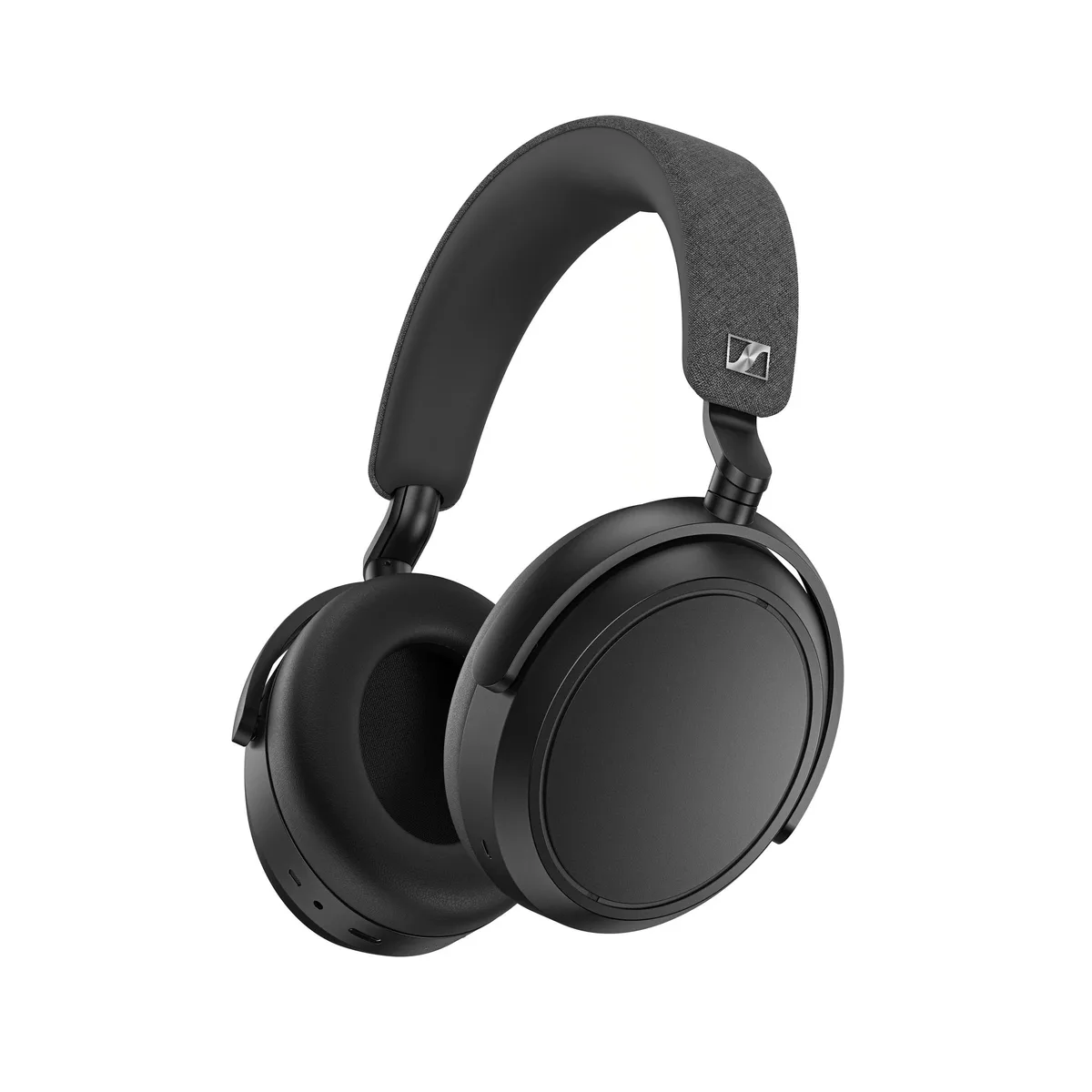
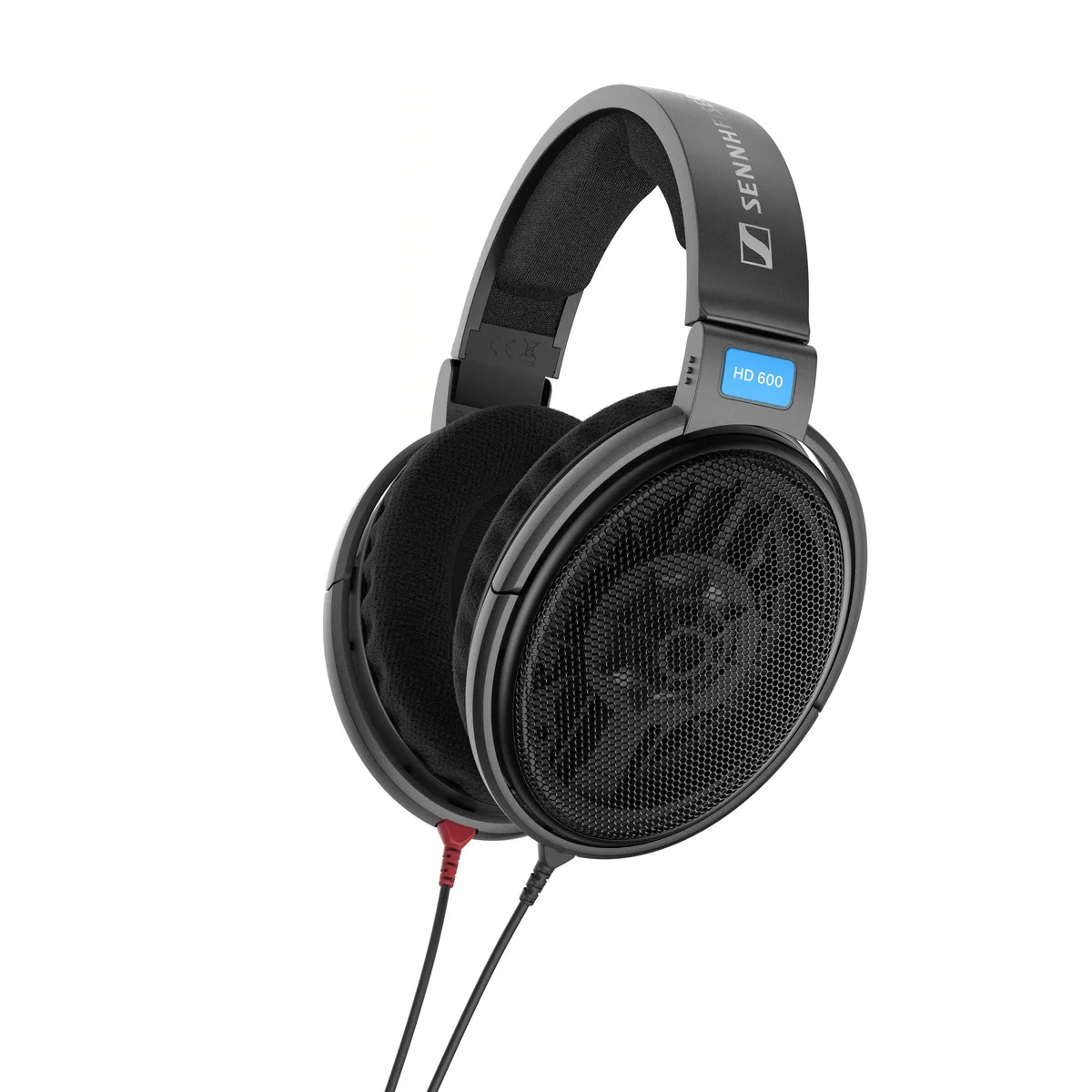
Quick take: The Sennheiser Momentum 4 Wireless costs $130 less; the Sennheiser Momentum 4 Wireless has active noise cancelling while the Sennheiser HD 600 doesn't; only the Sennheiser Momentum 4 Wireless supports multipoint (two devices at once).
Which one to buy
Shoppers comparing these are usually asking whether to put the budget into great wireless sound or a reference headphone for the desk. Both use 42mm drivers and both come from Sennheiser, but they're very different to live with.
The HD 600 is the reference people have used for midrange since 1997. Mixing and mastering engineers still keep one as a check, and owners who move on to $1,000 headphones often come back because nothing else gets vocals and acoustic instruments sounding as natural. It also demands a lot. At 300 ohms it sounds quiet and thin from a phone, so owners say a basic desktop amp or a capable dongle is required. It's open-back, so it leaks sound both ways and works only in a quiet room. Its sub-bass rolls off steeply, its stage is intimate, and it clamps hard until stretched. Every part is replaceable, though, and 20-year-old pairs are still in use.
The Momentum 4 is the one you can take everywhere. It's closed with adaptive ANC, 60 hours of battery, multipoint, aptX Adaptive and a deep app EQ. Owners rank its sound above the Sony and Bose flagships at the same price, but that's high praise in a different category. It doesn't aim to compete with the HD 600's timbre, and it plays from a phone with no extra hardware. Its risks are electronic: touch panels that misfire or die, and a minority of units that won't power on after one to three years. The HD 600's known quirks are mechanical, like loose cable plugs and a flattened headband, and owners fix them themselves.
At $220 against $350 plus an amp, the totals are further apart than the prices suggest. Owners' advice on the HD 600 is to wait for a dip toward $250 or buy used.
Sennheiser Momentum 4 Wireless
The better fit if your listening happens on trains, planes and in offices from a phone, and you want the best sound you can get without wires, with ANC and weeks between charges.
Sennheiser HD 600
Worth it if you listen or mix at a desk in a quiet room, care most about natural vocal and instrument timbre, and are willing to add an amp.
| Spec | Sennheiser Momentum 4 Wireless | Sennheiser HD 600 |
|---|---|---|
| Approx. price | ~$220 | ~$350 |
| Rating | — | — |
| Type | Over-Ear Headphones | Wired & Studio |
| Noise Cancelling | Adaptive ANC | None |
| Battery (single charge) | 60 hrs | — |
| Battery (with case) | — | — |
| Quick Charge | 10 min = 6 hrs | — |
| Codecs | SBC, AAC, aptX, aptX Adaptive | — |
| Bluetooth | 5.2 | — |
| Multipoint | Yes | No |
| Driver Size | 42 mm | 42 mm |
| Weight | 293 g | 260 g |
| Water Resistance | — | — |
| Wireless Charging | No | No |
| Transparency Mode | Yes | No |
| Spatial Audio | No | No |
| App EQ | Yes | No |
Pros & cons
Sennheiser Momentum 4 Wireless
- ✓60-hour ANC battery — double the XM6 and Bose Ultra
- ✓10-minute charge buys 6 hours
- ✓42mm drivers rank among the best-sounding wireless over-ears
- ✓Parametric-style EQ in the Smart Control app
- ✓aptX Adaptive support beyond Sony's codec list
- ✓Around $220 street makes it a flagship-sound steal
- ✗Adaptive ANC clearly trails Bose and the XM6
- ✗Touch controls misfire — many owners disable auto-pause
- ✗Wind noise wrecks outdoor call quality
- ✗Anonymous design ditched the old Momentum retro charm
- ✗Some units drain battery in standby until auto-off is toggled
Sennheiser HD 600
- ✓Benchmark-grade neutral midrange — voices and acoustic instruments sound correct
- ✓Fully serviceable: pads, headband, cable, and drivers all replaceable
- ✓Comfortable 260g build proven over decades of daily studio use
- ✓Scales noticeably with better amps and sources
- ✓Detachable 3m cable with 6.3mm adapter included
- ✓Owners routinely report 10-20 year lifespans
- ✓Wide 12 Hz - 40.5 kHz rated response with very low distortion
- ✗300-ohm impedance genuinely needs amplification — underwhelming from phones and laptops
- ✗Sub-bass rolls off; bass-heads will be left wanting
- ✗Intimate, narrow soundstage compared to modern open-backs
- ✗Zero isolation and heavy leakage — home use only
- ✗Ruthless with poor recordings and compressed streams
- ✗Clamping force is stiff until the headband breaks in
Sennheiser Momentum 4 Wireless vs Sennheiser HD 600: common questions
Can I run the HD 600 from my phone like the Momentum 4?▾
It will play, but owners say it sounds quiet, thin and flat at 300 ohms. A basic desktop amp or capable dongle is the practical minimum. The Momentum 4 is Bluetooth and needs nothing else.
Is the HD 600 or the Momentum 4 better for mixing music?▾
The HD 600, without much contest. Engineers have trusted it as a check for decades, and every part can be serviced. The Momentum 4 is tuned for enjoyment with an EQ on top, and Bluetooth isn't a monitoring path.
Does the Momentum 4 have more bass than the HD 600?▾
Likely the Momentum 4, which is a closed design, while the HD 600's sub-bass rolls off steeply below about 60Hz as an open-back. HD 600 owners call its bass polite no matter which amp they use.
Will the HD 600 or the Momentum 4 last longer?▾
Owner reports favor the HD 600. It's fully modular, and decades-old pairs are still in service. Momentum 4 owners report touch-panel failures and some units that stop powering on after one to three years, which you can't fix at home.