Bluetooth Codecs Explained: AAC, LDAC, aptX, and What Your Phone Actually Supports
The codec is how your phone compresses audio to squeeze it over Bluetooth, and it's the most oversold spec in headphones. The inconvenient truths: your phone decides which codecs you can use, the audible differences are smaller than any tip change, and the fanciest codec can genuinely make your experience worse in a crowded gym.
The cast, in one minute
| Codec | Max bitrate | iPhone | Android | Honest verdict |
|---|---|---|---|---|
| SBC | ~328 kbps | Yes | Yes | Fine. Genuinely fine. |
| AAC | ~256 kbps | Yes | Inconsistent | Excellent on Apple; hit-or-miss elsewhere |
| LDAC | ~990 kbps | No | Most flagships | Audible ceiling raise, battery+stability cost |
| aptX | 352-384 kbps | No | Most Android phones | Solid, fixed-rate, 16-bit |
| aptX HD | 576 kbps | No | Most Android phones | 24-bit, fixed rate, fading from new gear |
| aptX Adaptive | ~420 kbps | No | Qualcomm phones | Great latency/stability balance |
| LC3 (LE Audio) | efficient | Partial | Rolling out | The future; check both ends support it |
SBC is the mandatory baseline every device speaks — worse in spec sheets than in practice. AAC is Apple's lane: iPhones support nothing better, so on iOS every earbud is an AAC earbud. LDAC (Sony) pushes up to triple the bitrate and is the 'Hi-Res Wireless' badge on Android. aptX and its Adaptive/Lossless variants (Qualcomm) live on Android phones with the right chips. LC3 arrives with LE Audio: more efficient than SBC at the same quality, plus features like Auracast — support is spreading through 2025-2026 hardware but still uneven.
LDAC vs AAC
On an iPhone this isn't a choice: iPhones don't support LDAC, so a Sony earbud connected to one runs AAC, at roughly 256 kbps. The question only exists on Android, where LDAC has been part of the OS since Android 8.0.
On paper LDAC wins easily. It runs at 330, 660 or 990 kbps and carries up to 24-bit/96 kHz, where AAC tops out around 256 kbps. In practice the gap is narrower than those numbers suggest. AAC is an efficient codec when the phone's encoder is good, Android phones vary a lot in how well they encode it, and LDAC only reaches 990 kbps with a clean, close connection. At its 330 kbps mode LDAC carries less data than aptX, so it has little edge over good AAC. If your Android phone and headphones both offer LDAC, use it at home and drop back when it stutters.
aptX HD vs LDAC
Both are Android-only 'hi-res' codecs. aptX HD is a fixed 576 kbps at 24-bit/48 kHz; LDAC ranges from 330 to 990 kbps at up to 24-bit/96 kHz. So LDAC has the higher ceiling, but in its 330 and 660 modes it runs at or below aptX HD's rate, and most phones switch LDAC's rate automatically depending on signal.
The headphone usually settles this one. Plenty of models list only one of the two, and aptX HD has largely given way to aptX Adaptive in newer Qualcomm-based gear. Neither difference is something most people pick out in a blind test.
aptX vs LDAC
Classic aptX is the older, simpler Qualcomm codec: 352 kbps at 44.1 kHz or 384 kbps at 48 kHz, 16-bit, fixed rate. LDAC can carry more than twice that. Where aptX earns its place is consistency: it doesn't swing between quality tiers and it holds up in a crowded radio environment. On paper LDAC is better; through a phone in your pocket on a busy street, the gap often closes or reverses.
LDAC vs aptX Adaptive
These two were built for different problems. LDAC is about peak bitrate. aptX Adaptive scales its bitrate (roughly 279 to 420 kbps in its lossy modes) with radio conditions and has a low-latency mode aimed at games and video, so lip-sync stays closer. On phones and earbuds that both carry Snapdragon Sound, Adaptive can also run aptX Lossless at CD quality, around 1.2 Mbps.
If you watch video or game on your phone, aptX Adaptive is the more useful of the two. For music on a quiet couch, LDAC at 990 kbps has more headroom. Both need an Android phone that supports them; neither works on an iPhone.
AAC vs aptX
These sit in the same bitrate class: AAC around 256 kbps, aptX at 352-384 kbps. AAC squeezes more out of each bit, and on Apple devices it is well implemented and the only option anyway. On Android, AAC quality depends on the phone's encoder, while aptX sounds the same on every phone that licenses it. Most listeners can't tell them apart. To see which codec a connection is actually using on Android, turn on Developer options and check the Bluetooth audio codec setting while the headphones are playing.
What you can actually hear
In blind tests, distinguishing a well-implemented AAC stream from LDAC through consumer earbuds is at the edge of hearing for most people — and completely swamped by a tip that seals properly, an EQ tweak, or moving from a noisy street to a quiet room. The codec sets the ceiling; the drivers, tuning, and fit decide how far below the ceiling you actually sit. A $250 earbud on SBC beats a $60 earbud on LDAC every single time.
Where codecs do earn their keep: LDAC on a quiet couch with lossless source material and good over-ears is a real, if small, improvement. And latency-optimized codecs like aptX Adaptive matter for gaming and video where lip-sync drift is maddening.
The tradeoffs nobody prints on the box
LDAC at its full 990kbps needs clean radio spectrum. In a gym, an airport, or a city intersection, it drops packets and stutters — which is why Sony ships it defaulted to a lower rate, quietly below the number on the box. It also draws noticeably more battery on both ends. Multipoint frequently disables the fancy codec entirely: many earbuds silently fall back to AAC or SBC when two devices are connected, so the feature you use daily cancels the spec you paid for.
The practical playbook: iPhone owners can ignore codecs entirely — buy for fit, ANC, and features. Android owners should enjoy LDAC/aptX when included, never pay a premium specifically for it, and toggle it off the moment stutter appears. And nobody should choose headphones by codec list over comfort. Your ears will thank you for the better-fitting pair, not the bigger bitrate.
Headphones mentioned in this guide
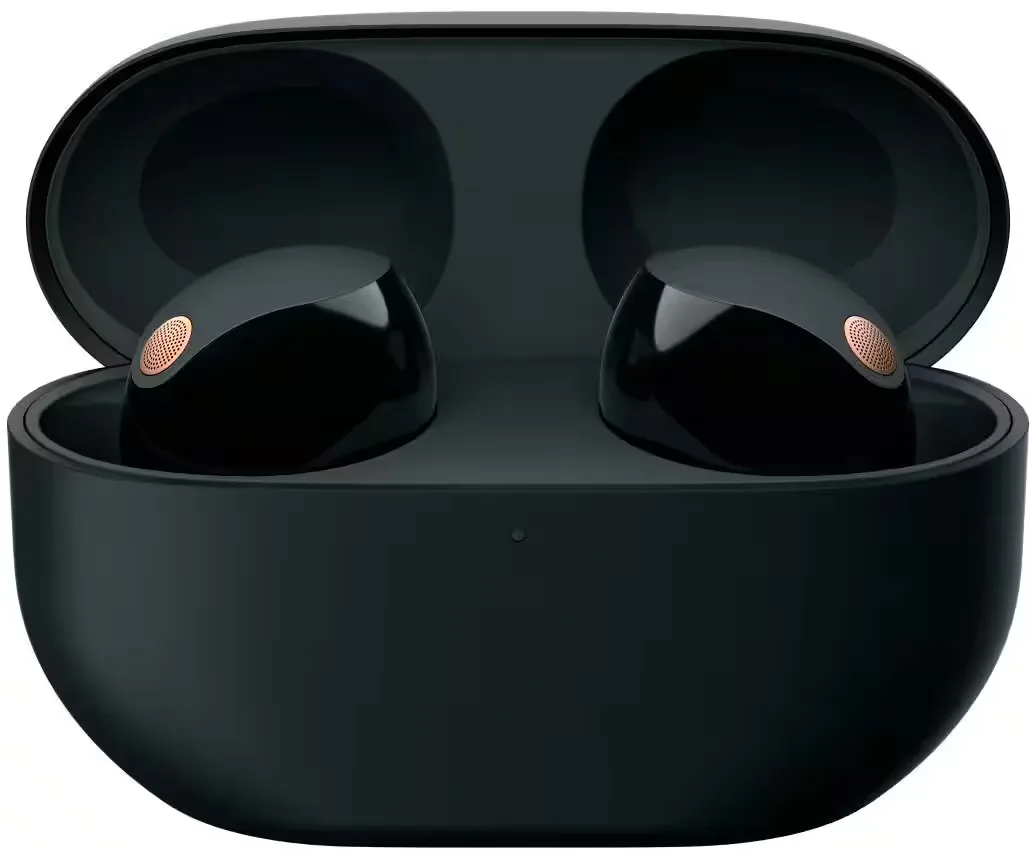
Sony
Wireless Earbuds
Still the all-rounder to beat for Android users, especially now that the XM6's arrival keeps pushing the price down. The 8.4mm Dynamic Driver X sounds rich and warm out of the box, LDAC delivers genuine hi-res from a phone, and the foam-ish tips seal so well that ANC feels stronger than it measures. Eight hours with noise canceling on is excellent, and 3 minutes in the case buys an hour. The consensus owner complaints are real, though: call quality falls apart in wind, the polished case scratches if you look at it wrong, and a vocal minority reports one bud draining faster than the other after a year-plus. Multipoint works but disables LDAC. The Headphones Connect app EQ is powerful once you find the settings buried three menus deep. IPX4 is fine for gym sweat, nothing more.
Best for Android listeners who want hi-res LDAC and strong ANC
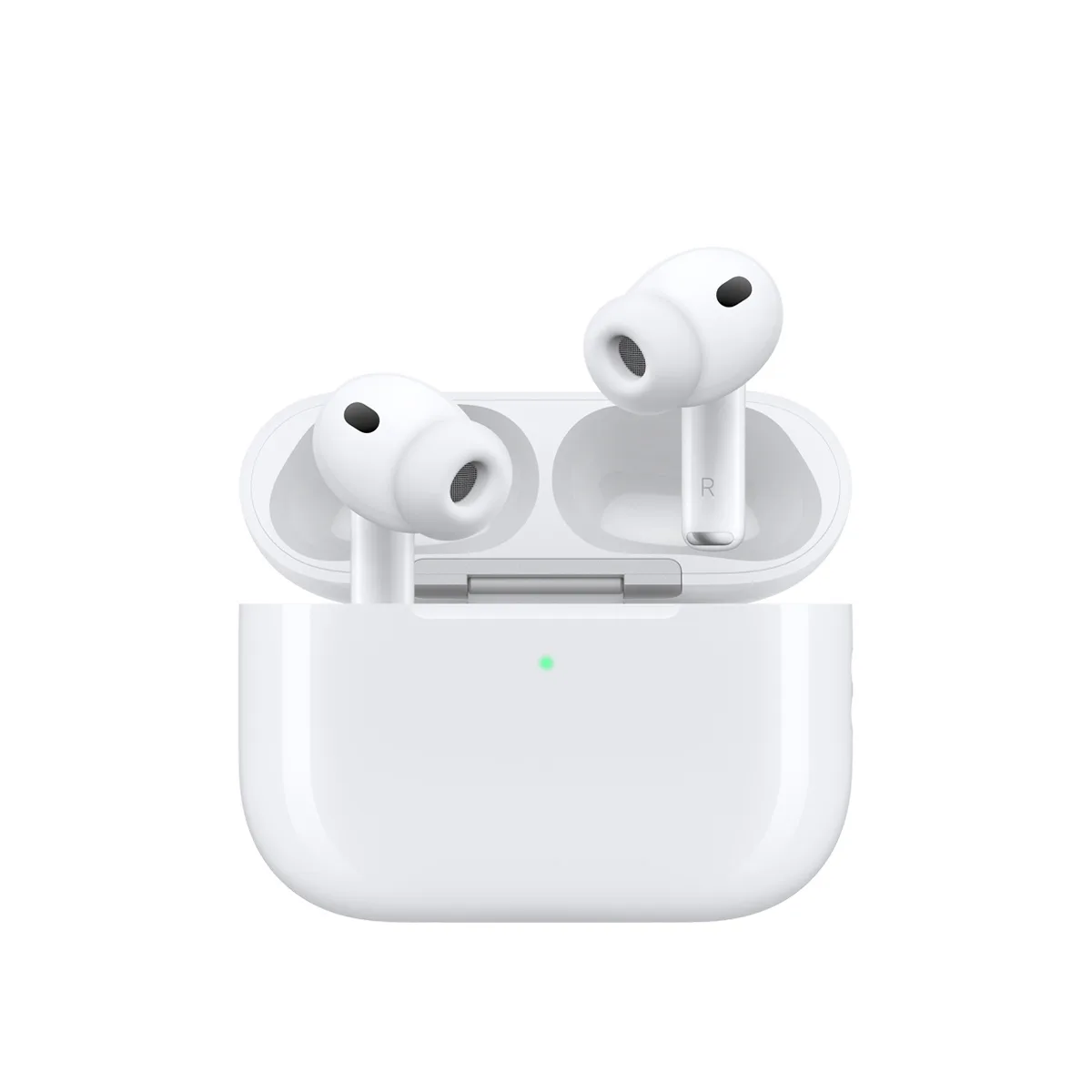
Apple
Wireless Earbuds
If you live on an iPhone, these are the easy answer. Apple roughly doubled the ANC over the Pro 2, added heart-rate sensing, foam-infused tips that actually seal, and bumped water resistance to IP57 — owners consistently say the noise cancellation now trades blows with Bose. Battery went up to 8 hours per charge, though the slimmer case total actually dropped to 24 hours. The honest caveats: you're stuck with AAC (no LDAC or aptX, so Android users lose hi-res and most features entirely), there's no real EQ beyond Apple's presets, and multipoint only works as auto-switching between Apple devices. Transparency mode and call quality remain the best in the business, and the hearing-aid feature is genuinely useful. Some longtime owners still grumble about eventual battery degradation — it's not user-replaceable. On Android, buy literally anything else.
Best for iPhone users who want set-and-forget ANC
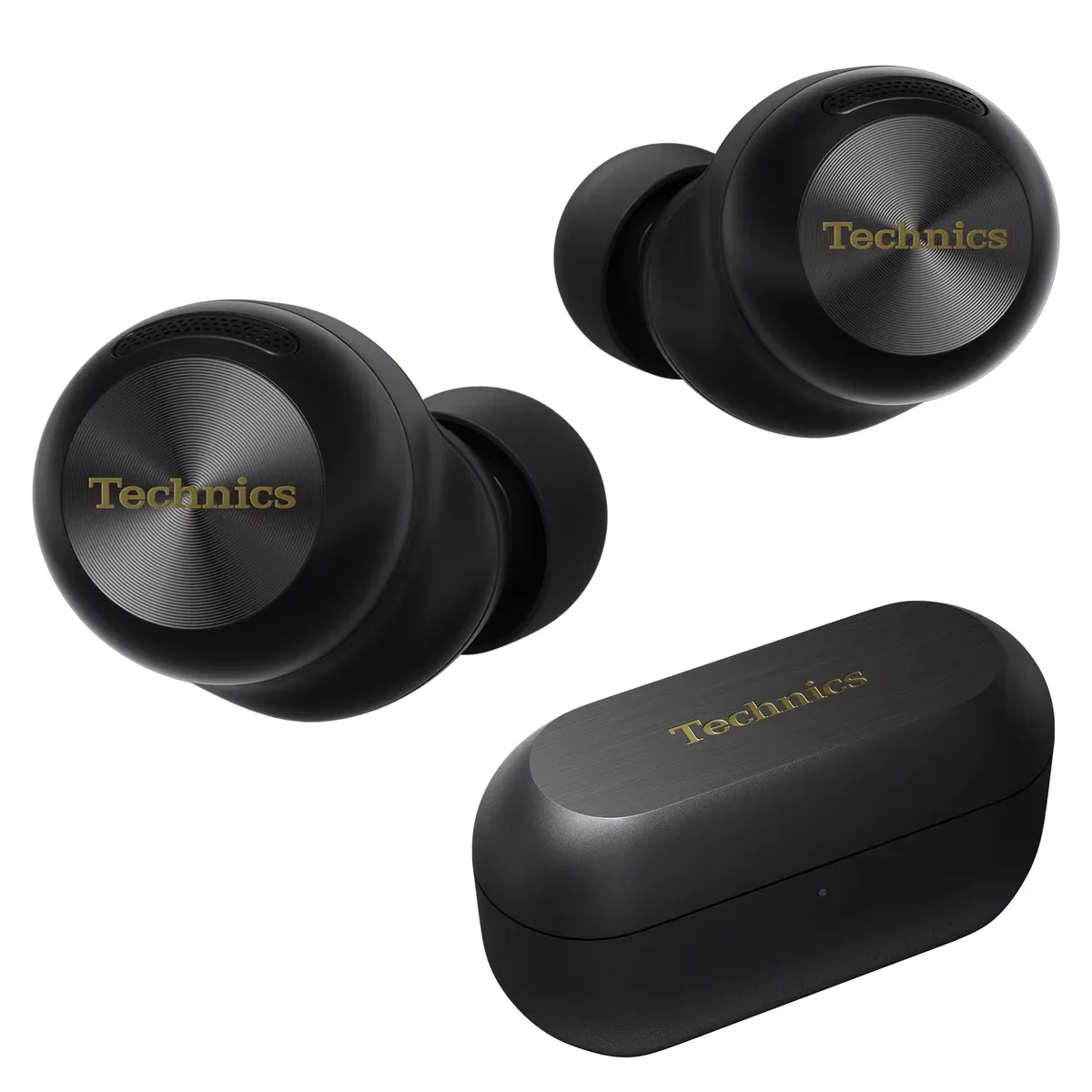
Technics
Wireless Earbuds
The audiophile-forum darling of this generation. The 10mm magnetic-fluid driver borrowed from Technics' $1,200 wired IEMs produces detail and instrument separation that owners routinely call the best in true wireless, and it does LDAC hi-res while connected to three devices simultaneously — a multipoint trick nobody else matches. Ten hours with ANC on (seven-ish using LDAC) leads the flagship class, and Dolby Atmos head tracking is aboard. Why it isn't the default pick: the Adaptive ANC is clearly a step behind Bose and the AirPods Pro 3 — good on planes, not great — and the shallow-fit housings divide opinion, with some owners never getting a reliable seal. IPX4 is minimal, call quality is average in noise, and the Audio Connect app is functional but clunky. If sound quality outranks silence on your list, this is the one to beat.
Best for sound-quality-first listeners who juggle multiple devices