JBL
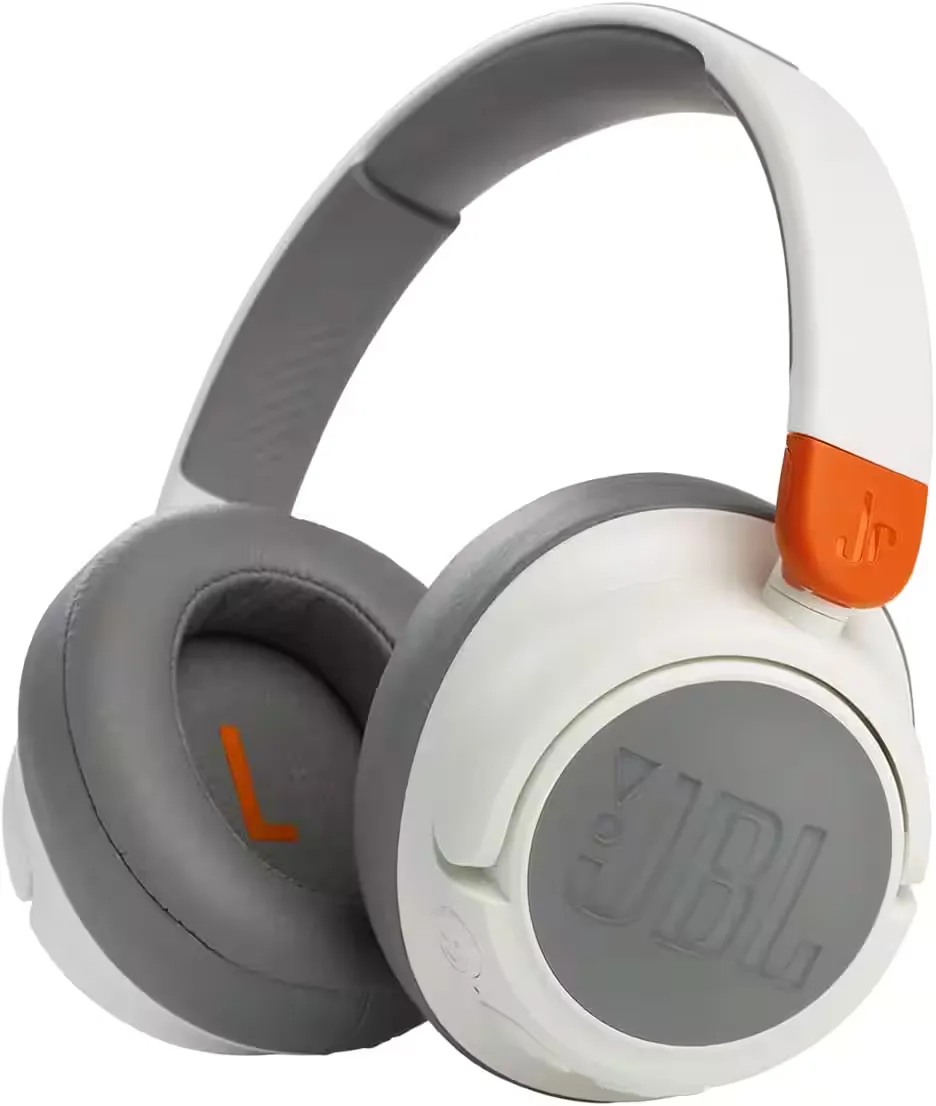
JBL JR460NC
This is the kids headphone you buy for airplanes: real active noise cancelling at a price that doesn't sting when it gets left in a seat pocket. The over-ear cups seal better than typical kids on-ears, the ANC takes the edge off engine drone, and reviewers note the volume stays capped just under 85dB with no way for kids to override it — there isn't even a volume dial to crank. Battery runs 20 hours with ANC on and about 30 with it off, recharging fully in two hours, and the detachable 3.5mm cable means a dead battery on descent isn't a crisis. The built-in mic is fine for school calls, multipoint lets it hop between a tablet and a phone, and Google Fast Pair makes Android setup instant. Honest caveats: at 200g it's noticeably heavier than the on-ear JBLs, and the over-ear sizing runs big on toddlers — this is really a 6-and-up headphone. The tuning is bass-heavy in classic JBL fashion, which kids love and audiophile parents will shrug at. And like most kids headphones, the volume cap is only trustworthy over Bluetooth; on the aux cable, loudness depends on whatever device it's plugged into. For road trips and school use at around $50, it's the sweet spot in JBL's kids line.
We may earn a commission. Price and availability on Amazon’s site may differ.
Specifications
Highlights
Pros
- ✓Active noise cancelling actually helps on planes and in loud classrooms
- ✓20-hour battery with ANC on, about 30 hours with it off, full recharge in 2 hours
- ✓Detachable 3.5mm cable keeps them usable when the battery dies
- ✓Volume capped just under 85dB with no dial for kids to override
- ✓Multipoint connects a tablet and phone at the same time
- ✓Built-in mic works for school video calls
- ✓Google Fast Pair makes Android pairing one tap
- ✓Over-ear cups seal better and fit growing kids longer than on-ear models
Cons
- ✗At 200g, heavier than most kids headphones — toddlers may find them bulky
- ✗Over-ear sizing runs big; better for ages 6+ than preschoolers
- ✗Volume limit only applies reliably over Bluetooth — wired loudness depends on the source device
- ✗Bass-heavy tuning with no app or EQ to tame it
- ✗No published quick-charge figure and no water resistance rating
Owner Insights(110 discussions)
The JR460NC is the kids headphone parents buy for airplanes, and its owner reputation is built on a combination nothing else offers at $50: real ANC, an over-ear seal, a hardware Bluetooth volume cap kids genuinely can't override, and a detachable cable for when the battery dies in row 34. Reviewers consistently rate it the best travel and online-learning pick in the category, and the 20-hour ANC-on battery covers the longest travel day with margin.
The practical experience earns solid marks with honest caveats. The ANC dulls engine drone and room hum rather than erasing it — helpful precisely because kids stop cranking volume to fight background noise, but no one should expect flagship silence. The 85dB cap holds over Bluetooth with no dial to bypass; the loophole is the aux cable, where a powered-off headphone is a passive circuit and volume becomes whatever the seatback or tablet delivers — the one safety detail parents most often miss. Physically, the 200g weight and big over-ear cups make this a 6-and-up headphone despite the marketing, the headband is the part to protect from backpack abuse, and the bass-heavy tuning delights kids while parents shrug.
Buy it for school-age kids who fly, take long car trips, or do video classes in noisy houses — the ANC-plus-cable-plus-cap combination is unmatched at the price. For preschoolers, the lighter JBL JR310BT or a BuddyPhones fits better; for parents whose top priority is a limiter verified to hold at 85dB, the ONANOFF BuddyPhones POP Fun measures dead-on target and is the strongest alternative, though it gives up the ANC that makes the JR460NC special.
Pros
- +Real active noise cancellation at ~$50 — parents call it the airplane headphone: it kills enough engine drone that kids stop cranking the volume to compensate
- +The Bluetooth volume cap just under 85dB is hardware-enforced with no dial or app for kids to override — reviewers confirm there's simply no way to push it louder wirelessly
- +Over-ear cups seal better than the on-ear kids norm, so passive isolation helps even with ANC off
- +Detachable 3.5mm cable means a dead battery on descent isn't a crisis, and it works with seatback screens and school Chromebooks
- +Battery covers a long-haul trip: about 20 hours with ANC on, ~30 with it off, full recharge in two hours
- +Built-in mic works fine for school video calls, and multipoint lets it hop between a tablet and a phone — rare at this price, kids category or not
- +Google Fast Pair makes Android setup instant, and the folding frame plus included pouch travel well
Cons
- −At 200g it's noticeably heavier than on-ear kids models, and smaller kids report neck fatigue and slippage on long sessions
- −Sizing runs big: the over-ear cups swallow toddler heads — parents consistently call this a 6-and-up headphone despite the marketing
- −The wired connection is the limiter loophole: with the headphone powered off, the passive aux path can't enforce the 85dB cap, so wired volume tracks whatever the source device puts out — set the seatback or tablet volume yourself
- −The ANC is mild by adult standards — it dulls hum and drone but nowhere near 'nap time silence', so temper expectations from Bose-owning parents
- −The headband is the structural weak point — the frame has reasonable solidity but reviewers warn against twisting it, and backpack-stuffing is how these die
- −Bass-heavy JBL tuning that kids love and audiophile parents shrug at; SBC-only Bluetooth
- −No quick-charge rating, so a forgotten overnight charge means tethering to the cable (which then bypasses the limiter)
Common Questions
Compare the JBL JR460NC
Related headphones
More from JBL →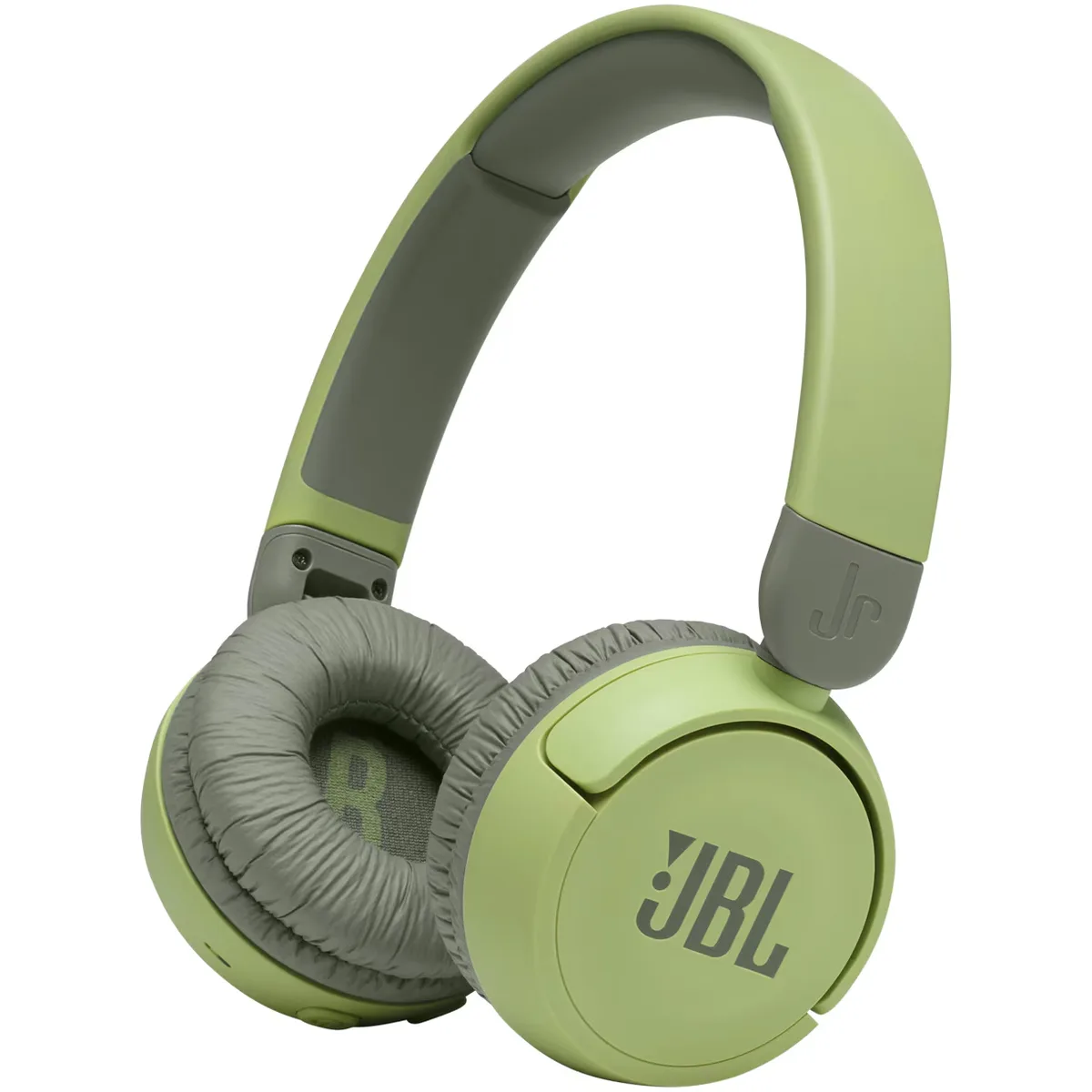
JBL
Kids Headphones
These are the default budget pick for little kids, and they mostly earn it: light at 115g, sized for roughly ages 3 to 10, foldable, and cheap enough that a lost pair isn't a tragedy. Battery is the standout — JBL claims 30 hours and lab testing actually beat that, so weekly charging is realistic, and a 5-minute USB-C top-up buys about 2 hours. The built-in mic handles school video calls fine, and the three-button controls are simple enough for a preschooler to run alone. Now the caveat parents actually care about: the advertised 85dB Safe Sound limit doesn't fully hold — independent lab testing measured roughly 94dB at max volume over Bluetooth, fine as a backstop for short sessions but not the set-and-forget hearing guarantee the box implies, so keep the source volume down on long flights. They're also wireless-only: there's no aux cable, so a dead battery means silence, and the port placement means kids can't listen while charging. The small headband fits little heads snugly but big kids will outgrow it, and children who hate pressure on their ears may fight the on-ear fit. At around $34 they're a fair deal if you treat the volume limit as a safety net rather than a promise.
Best for parents who want cheap, light wireless headphones for ages 3-10
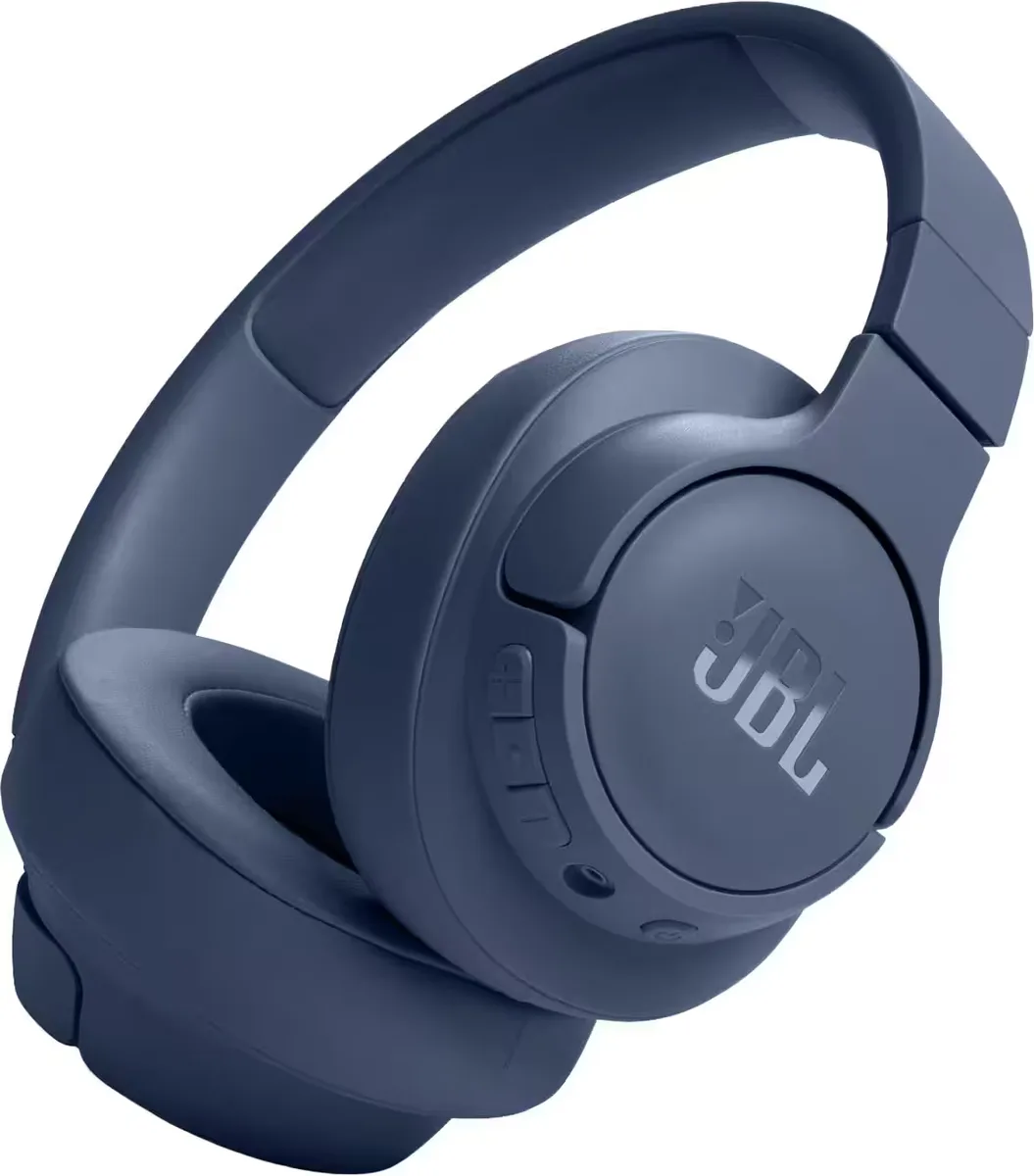
JBL
Over-Ear Headphones
The Tune 720BT is the 'just give me cheap headphones that last forever' pick: a rated 76 hours of battery — and owners consistently report the claim holds up in real use — for around $50. There's no ANC at all; the closed earcups block a little noise passively and that's it, so commuters who need quiet should spend up on the Q20i or ULT Wear instead. What you do get is JBL's punchy Pure Bass tuning (tameable via the full EQ in the JBL Headphones app), Bluetooth 5.3 with multipoint that hands off smoothly between laptop and phone, a light 220g foldable frame, and a detachable 3.5mm cable for when the battery finally dies. Critical listeners will notice the compromises: the midrange gets grainy, treble can turn sizzly at volume, and Consumer Reports-style testing flags the sonic quirks even while rating the overall sound good for the class. The mic also favors background noise over your voice on outdoor calls. Build is basic lightweight plastic — comfortable, but nothing feels premium. As a set-and-forget pair for the office, homework, or travel where charging is an afterthought, it's one of the easiest sub-$60 recommendations around.
Best for Budget buyers who never want to think about charging
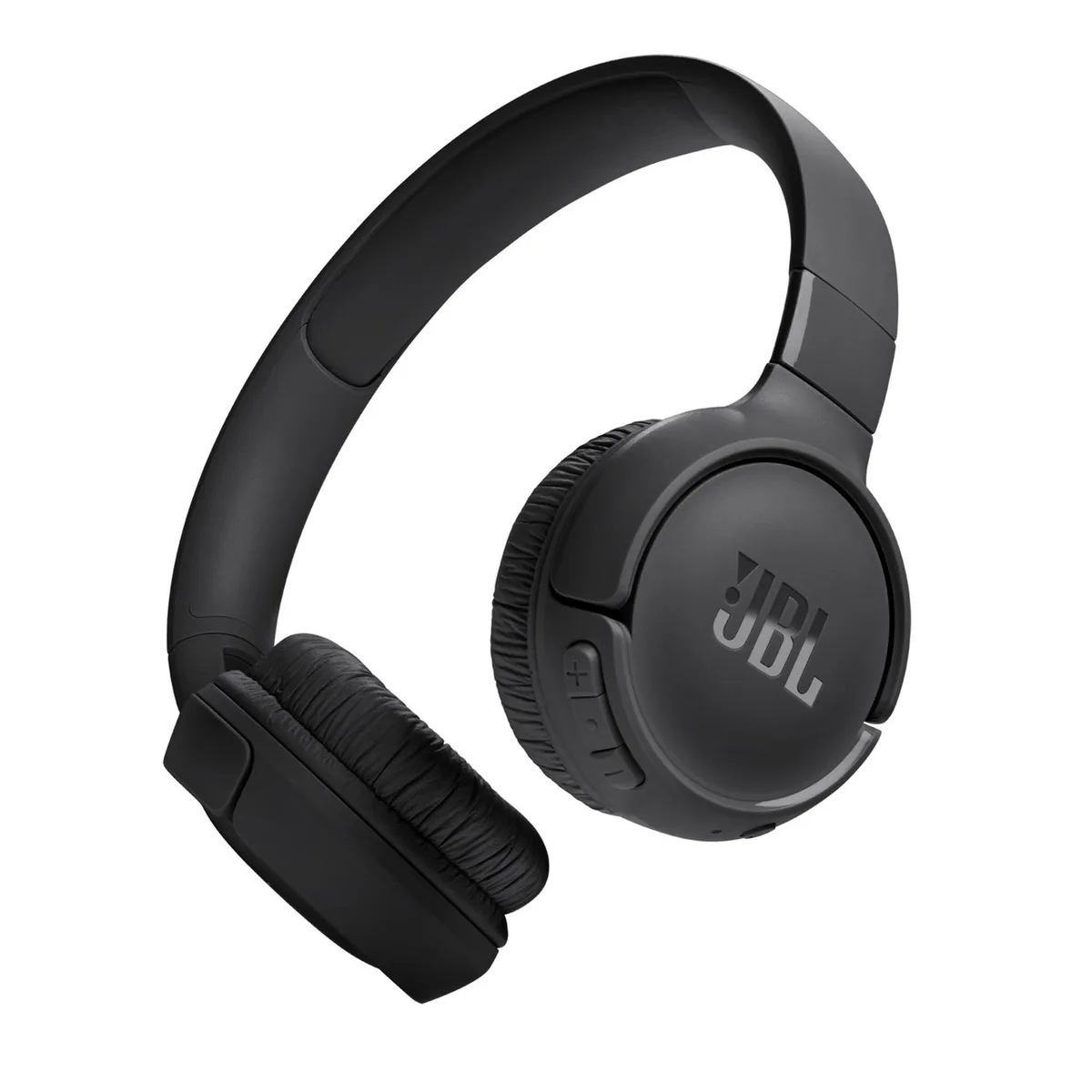
JBL
On-Ear Headphones
The Tune 520BT is everywhere for a reason: it costs about $40, weighs almost nothing, and the 57-hour battery is real — owners routinely go weeks between charges. JBL's Pure Bass tuning is exactly what it sounds like, warm and bass-forward, which most casual listeners enjoy even if detail-hounds will find the treble soft. The build is entirely lightweight plastic; it survives backpacks fine but creaks a little and feels every bit its price. Being an on-ear, the pads press on your ears rather than around them, and after two or three hours that pressure gets noticeable. There's no ANC, and the thin pads leak sound both ways on a bus. Multipoint and app EQ at this price are genuinely rare, and the mic is passable for calls indoors. As cheap-and-cheerful wireless headphones go, this is the default pick.
Best for students and commuters who want cheap, long-lasting wireless sound
JBL
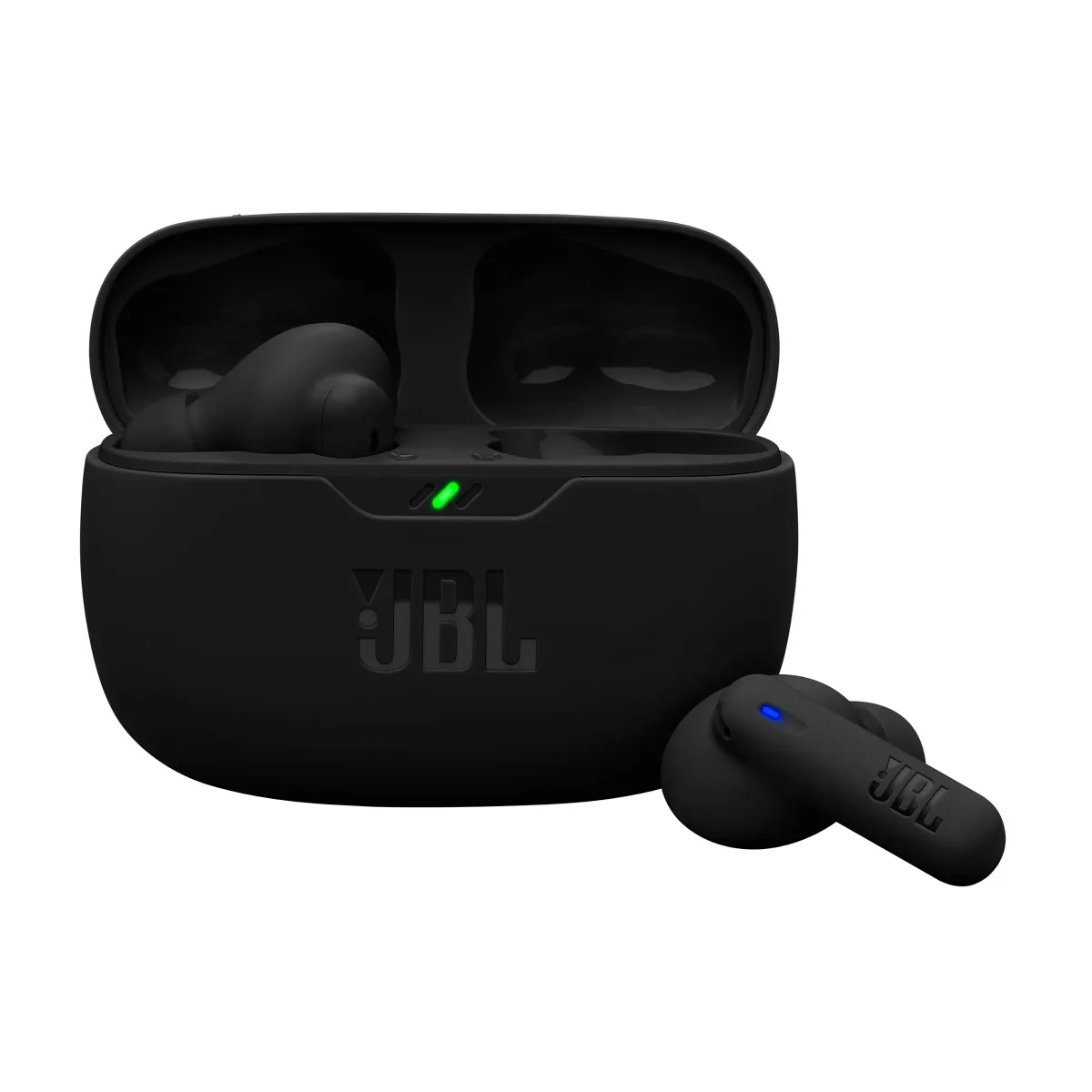
Wireless Earbuds
The Vibe Beam 2 packs an almost suspicious amount into a $40 earbud: real ANC with a Smart Ambient transparency mode, multipoint for two devices, IP54 dust and water resistance (the case itself is even IPX2 rated, which nobody else bothers with), and a 40-hour total battery that owners say translates to charging the case about once a week. The 8mm drivers deliver JBL's Pure Bass house sound — warm and bass-forward — and the JBL Headphones app gives you preset and fully custom EQ if you want to rein it in; some owners still wish they went louder and dug deeper. Battery math is honest: 10 hours per charge with ANC off, 8 with it on, and a 10-minute speed charge buys a full 3 hours, one of the best quick-charge ratios in the class. The ANC is a fixed system rather than adaptive, and it handles office hum and commute drone well for the price without threatening anything at $100+. The real weak spot is calls: despite the 4-mic array, multiple owners report the other end struggles to hear them anywhere noisier than a quiet room. No wireless charging either. As an everyday set-and-forget bud for music and podcasts, though, this is one of the strongest value plays JBL makes.
Best for Weekly chargers who hate babysitting a battery case
JBL
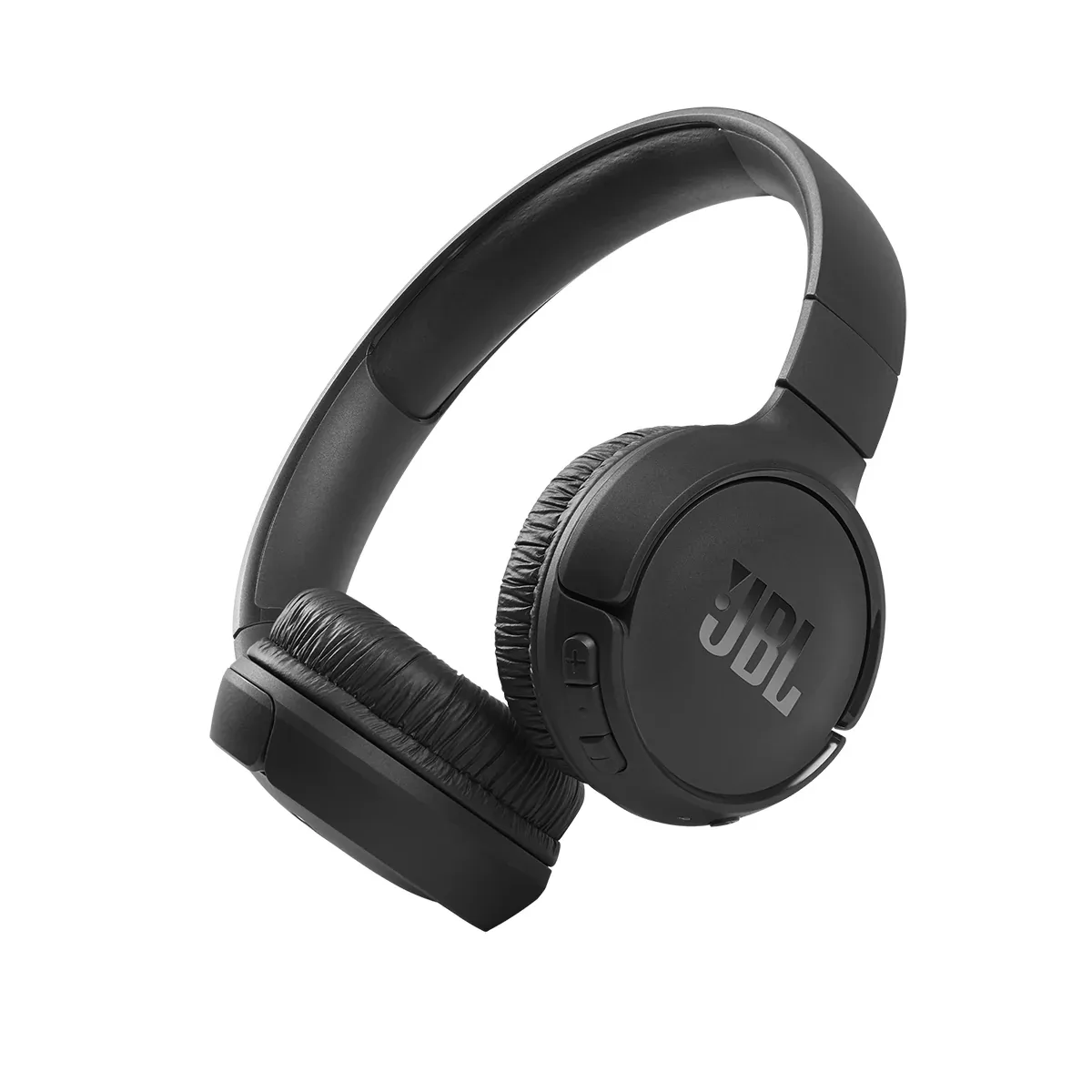
On-Ear Headphones
One of the best-selling headphones on the planet, and the formula is obvious: a real brand, JBL's bass-forward 'Pure Bass' tuning from 32mm drivers, 40 hours of battery, multipoint, and a folding 160g frame, all for the price of a takeout dinner. For casual listening, video calls, and throwing in a bag, it does the job — long-term reviews consistently call the sound genuinely good for the money, with strong bass and inoffensive mids. Now the caveats, which are real. This is an on-ear with a fairly tight, non-adjustable clamp and thin padding: owners routinely report ear soreness after a couple of hours, and glasses wearers get it worse. Build is light plastic, and broken hinges show up often enough in owner reports that you shouldn't sit on them. There's no ANC, no app, no EQ, and — the sneaky one — no 3.5mm jack at all: when the battery dies or you need zero-latency audio, there is no wired fallback (the USB-C port is charge-only). Sound also leaks at higher volumes. None of that changes the value math: if you need cheap, light, wireless headphones from a brand with actual quality control, this is the default answer — just budget for comfort breaks.
Best for cheap, no-fuss wireless sound from a real brand
JBL
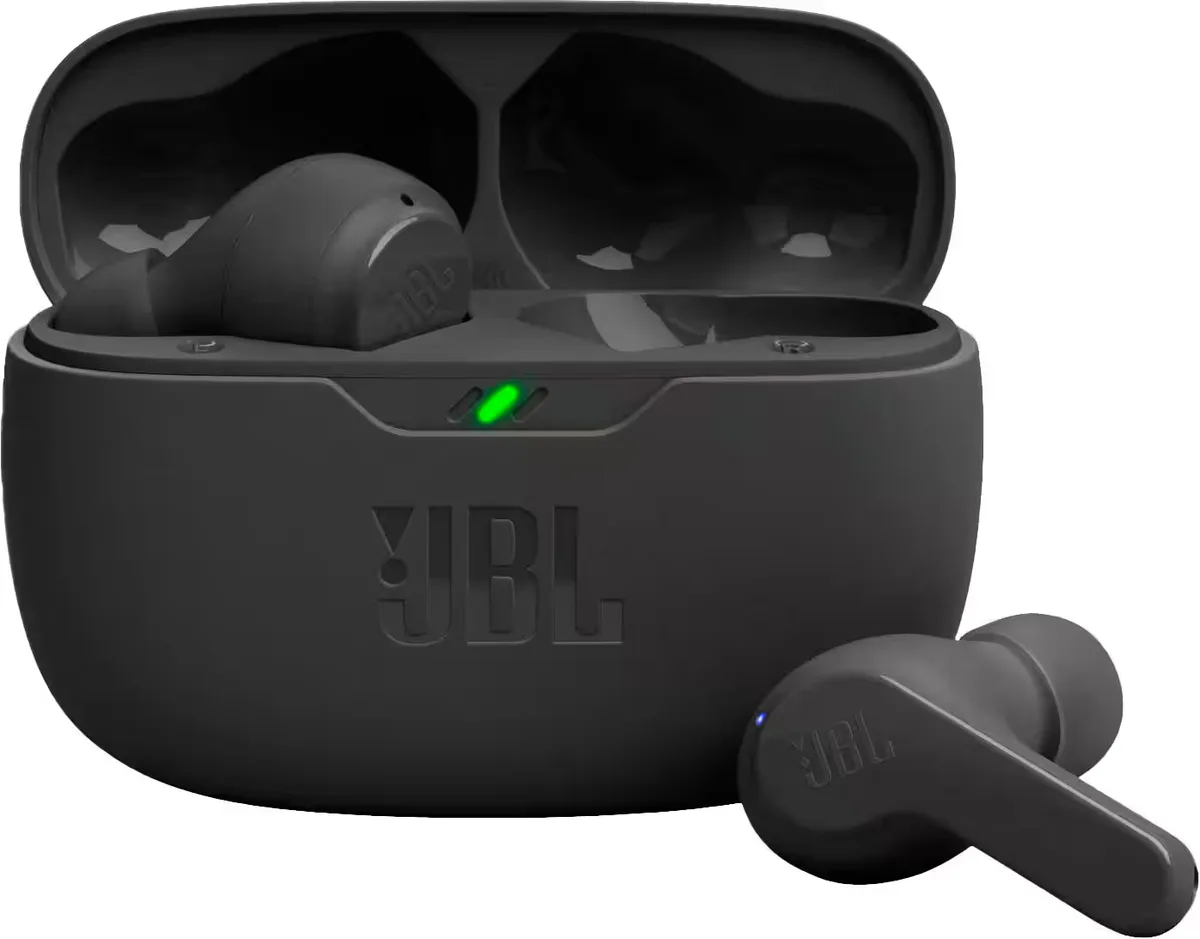
Wireless Earbuds
The Vibe Beam is JBL's volume seller, and it earns that by doing the unglamorous stuff well. The stick design fits securely, IP54 handles gym sweat, the battery runs a real 8 hours, and unusually for $30 you get Ambient Aware and TalkThru transparency modes plus full EQ customization in the genuinely good JBL Headphones app. What's missing is exactly what you'd guess: no ANC, no multipoint, no wireless charging, SBC/AAC only over Bluetooth 5.2. Owner gripes center on the mic — fine indoors, but windy calls turn robotic — and touch controls that misread taps. A few report that the case's weaker IPX2 rating means a soaked gym bag kills it even when the buds survive. If brand-name reliability matters more than a feature list, this is the safe $30 spend.
Best for casual listeners upgrading from freebie earbuds