JBL
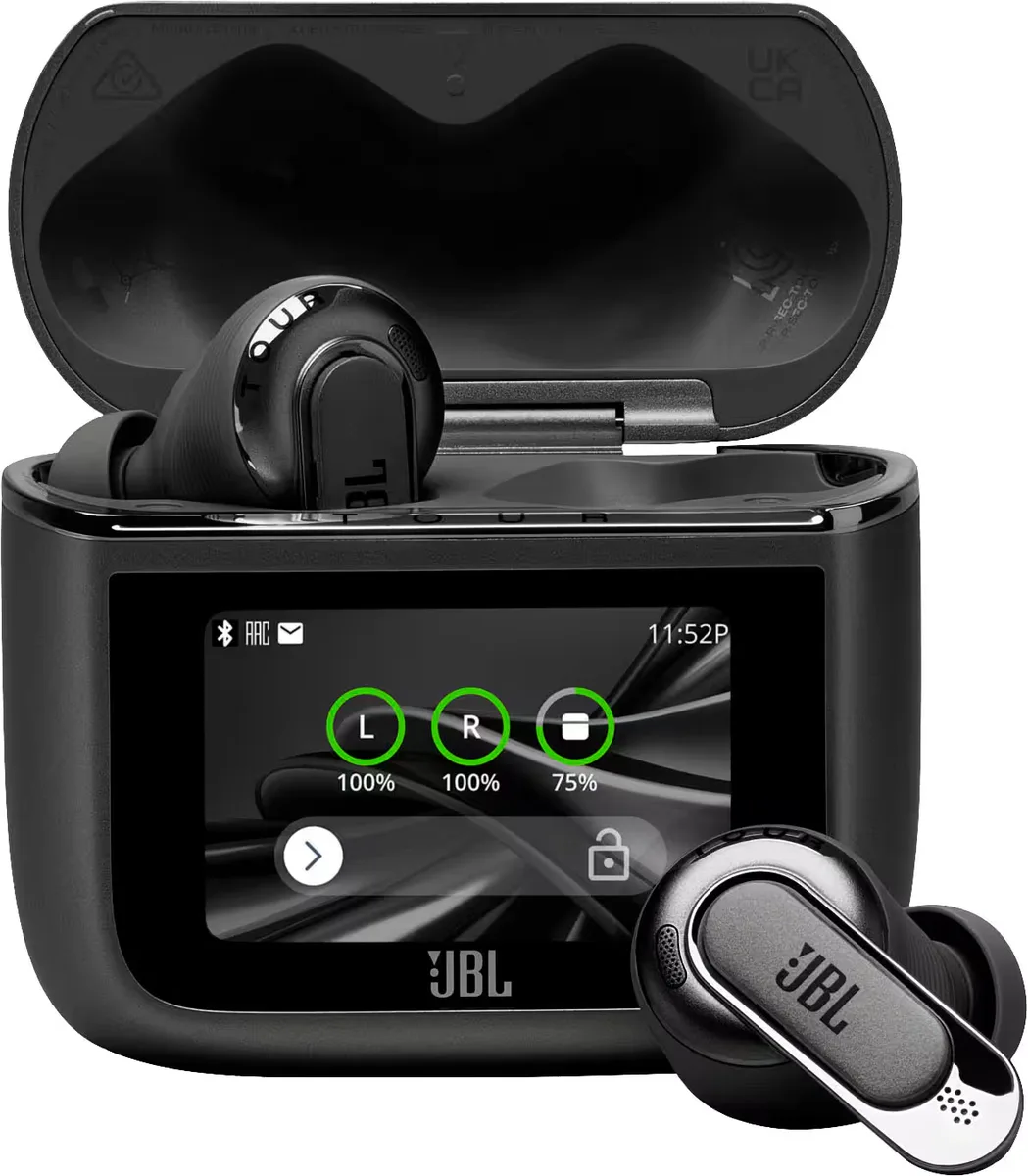
JBL Tour Pro 3
The touchscreen case sounds like a gimmick until you plug it into an airplane seatback and it becomes a wireless transmitter for your buds — frequent flyers say that feature alone justifies the price, and it retransmits over Auracast too. The buds themselves are properly specced: an 11mm dynamic driver plus balanced armature per side, LDAC, 8 hours with ANC, and a monster 44-hour total. True Adaptive ANC 2.0 is solid mid-pack — behind Bose, roughly level with Sony. The honest knocks: out of the box the tuning is bass-heavy V-shape, so plan on living in the 10-band EQ; the 71.8g case is a pocket brick; and the case screen genuinely is unnecessary for daily control once novelty fades. Call quality is above average, and IP55 beats most rivals. If you fly a lot or burn through battery, these make a strong case.
We may earn a commission. Price and availability on Amazon’s site may differ.
Specifications
Highlights
Pros
- ✓Touchscreen case doubles as airplane-seatback wireless transmitter
- ✓Monster 44-hour total battery
- ✓11mm dynamic plus balanced armature per side
- ✓LDAC and Auracast retransmission included
- ✓IP55 beats most flagship rivals
- ✓Above-average call quality beats Sony XM5 in wind
Cons
- ✗Bass-heavy V-shaped default tuning demands EQ time
- ✗71.8g case is a pocket brick
- ✗Case screen novelty fades into redundancy
- ✗ANC only mid-pack — behind Bose, level with Sony
- ✗$230 is Bose money for mid-pack silencing
Owner Insights(1,400 discussions)
The Tour Pro 3's owner reputation has flipped the expected script: the touchscreen case that reviewers dismissed as a gimmick turns out to contain the genuinely loved feature — a wired-to-wireless transmitter. Plug the case into an airplane seatback screen or a gym treadmill and it streams audio straight to the buds (retransmitting over Auracast too), and frequent-flyer owners say that trick alone justified the purchase. Owner sentiment overall runs strongly positive, ranking them just behind the Sony and Bose flagships, with several long-term owners calling them the best earbuds they've owned.
The daily experience is defined by abundance and one asterisk. Endurance is the abundance: 8 hours ANC and a 44-hour case total is the biggest number in the flagship class, and travelers stop thinking about charging entirely. The hybrid dynamic-plus-armature drivers resolve real detail, ANC lands mid-pack near Sony, and call quality is above average. The asterisk is the tuning: out of the box it's a bass-heavy V-shape, and the owner consensus is near-unanimous that you must spend time in the 10-band EQ — taming sub-bass, lifting the 150Hz region — plus run the Personi-Fi hearing-test personalization before these sound like $250 earbuds. Meanwhile the 71.8g case is a pocket brick, the touchscreen novelty fades within weeks, the app occasionally refuses to connect, and a few owners report one bud charging slower than the other.
Buy these if you fly a lot, burn through battery, or want the most complete feature list in the class — at the frequent sub-$230 sale prices owners consider them a strong buy. If maximum silence matters more, the Bose QC Ultra 2nd Gen is the pick; if you want a slimmer everyday package with similar sound chops, the Sony WF-1000XM5 is the strongest alternative — better-known tuning out of the box and a pocketable case, at the cost of the transmitter case and about half the total battery.
Pros
- +The smart case's audio-transmitter mode is the killer feature — plug it into an airplane seatback or gym TV and it streams to the buds; frequent flyers say it alone justifies the price
- +Monster endurance: 8 hours with ANC and a 44-hour case total that lets owners forget chargers exist on week-long trips
- +Hybrid 11mm dynamic driver plus balanced-armature per side delivers detail owners don't expect from JBL, especially after EQ
- +The 10-band EQ plus Personi-Fi hearing-test personalization earns repeated owner praise for transforming the sound
- +True Adaptive ANC 2.0 lands solidly mid-pack — owners rate it near Sony, and clearly better than budget rivals
- +Call quality is above average, with owners calling voice pickup superior on work calls
- +Secure, comfortable fit for long sessions is one of the most-repeated owner positives
- +LDAC, Auracast retransmission, multipoint and IP55 — a spec sheet with essentially nothing missing
Cons
- −Out-of-the-box tuning is a bass-heavy V-shape — owners consistently say you must live in the EQ, taming sub-bass and lifting low-mids, before they sound their price
- −The 71.8g case is a pocket brick — the single most common owner complaint, and the price of the built-in screen and transmitter
- −The case touchscreen is a novelty for daily control; most owners admit they stop using it within weeks and control everything from the phone
- −The JBL Headphones app draws recurring complaints — occasional failures to connect and general bugginess
- −Scattered owner reports of one bud (often the right) charging slower than the other in the case
- −ANC, while solid, is clearly behind Bose and the AirPods Pro 3 for plane rumble
- −No aptX support despite the deep spec sheet — Snapdragon owners fall back to LDAC or AAC
- −At the $250-300 list price owners hesitate; the value consensus kicks in only at frequent sub-$230 sales
Common Questions
Compare the JBL Tour Pro 3
Related headphones
More from JBL →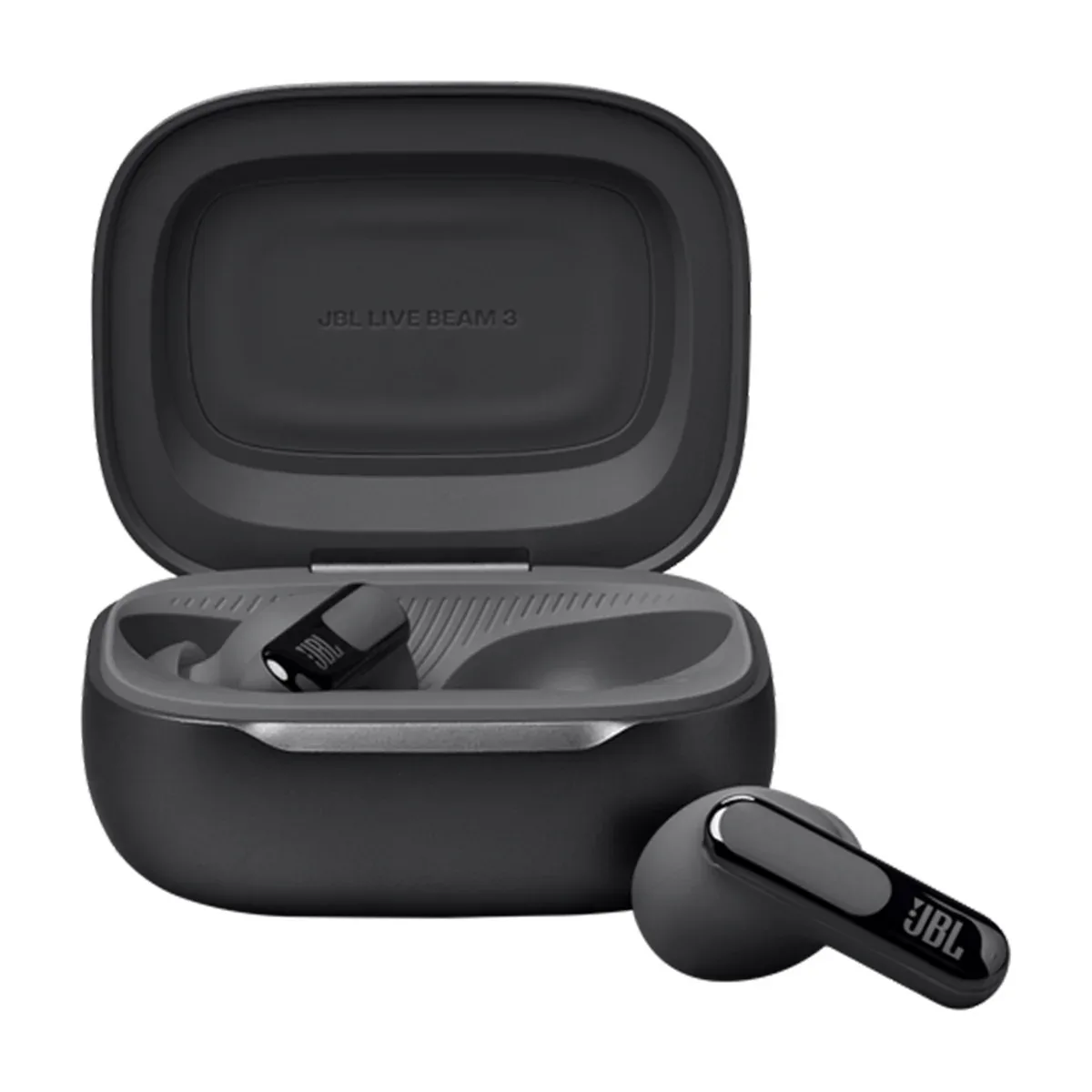
JBL
Wireless Earbuds
The party trick is the case: a 1.45-inch touchscreen that handles volume, EQ, ANC modes, messages, and even photo wallpapers without touching your phone — the same screen as the $300 Tour Pro line for less. The stamina is just as notable: 10 hours per charge with ANC on (12 off) and 48 total with the case embarrasses most flagships, and the case still charges wirelessly. Sound is classic JBL — deep bass, 10mm drivers, LDAC hi-res — and Personi-Fi 3.0 in the app tunes it to your hearing; multipoint plus Google Audio Switch covers device juggling. Where they fall short of the flagship tier: reviewers agree the True Adaptive ANC is decent but clearly below Bose, Sony, and Samsung at silencing chatter, and JBL's spatial audio adds an artificial echo most people turn off. The stick-shaped body isn't especially grippy either — some owners find a yawn can loosen them — and there's a long-standing quirk where single-bud mode sometimes disables ANC entirely. IP55 covers workouts and rain. If battery life and the gadget-lover case matter more to you than class-leading silence, these earn their spot; street prices well under the $200 list make them an easy recommendation.
Best for battery-life obsessives who love a gadget case
JBL
Wireless Earbuds
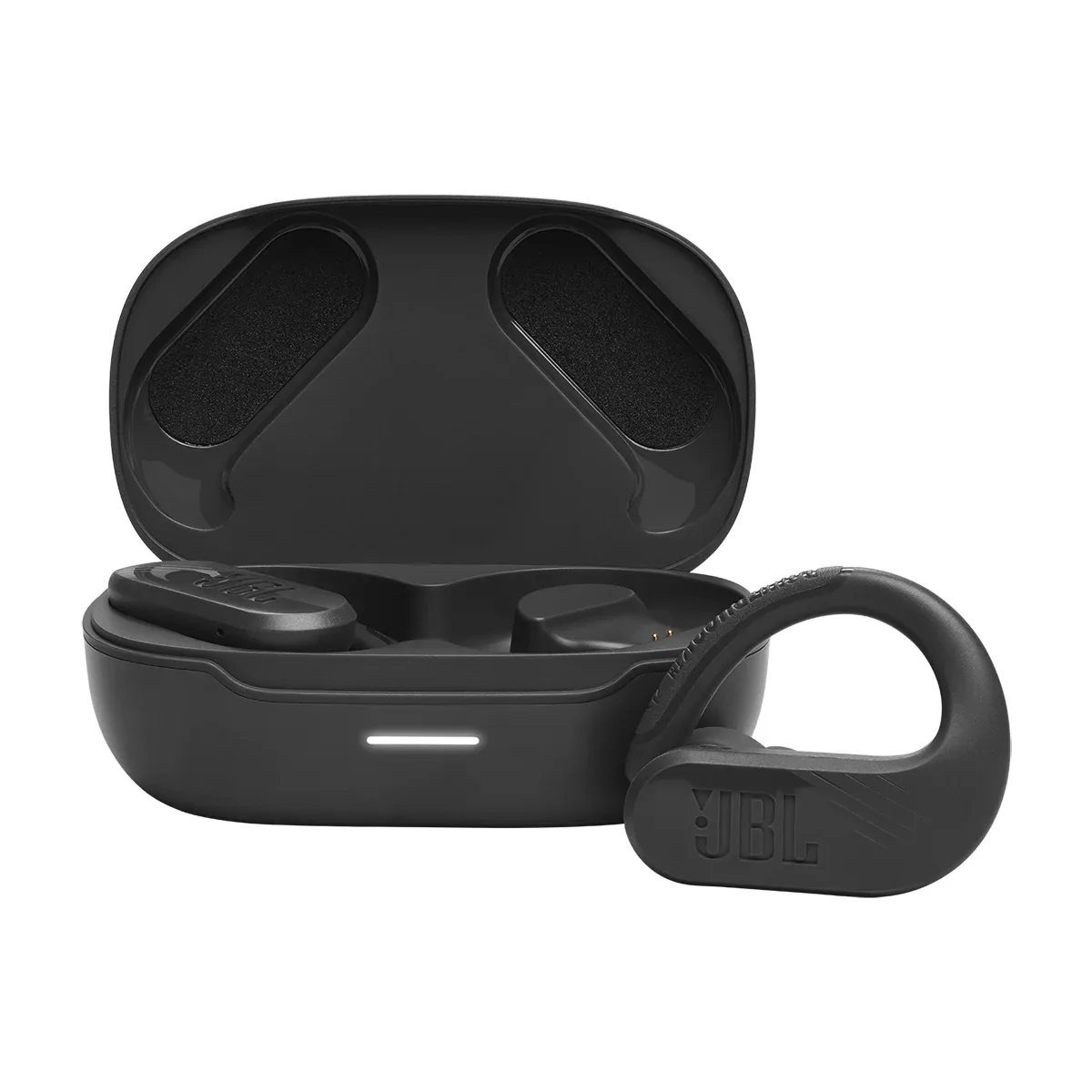
The durability king of this list: IP68 means dust-proof and survivable for 30 minutes at 1.5 meters in fresh or salt water, a rating almost nothing else in earbuds matches. The bendable PowerHook wraps over your ear and the bud physically can't fall off mid-sprint, though at 12.5g each these are chunky, and glasses wearers will feel the crowding. JBL's Pure Bass tuning is exactly what you'd expect — big, warm low end via 10mm drivers — and the Headphones app EQ can tame it. Ambient Aware and TalkThru handle awareness since nothing this sealed lets sound in naturally. Ten hours per bud and 50 total is excellent. Downsides owners cite: touch controls misfire when sweaty (ironic for gym buds), there's no multipoint or wireless charging, and mids sound recessed out of the box. At around $80 it's the beach-and-pool workout pick.
Best for swim-adjacent and beach workouts where buds get soaked
JBL
Wireless Earbuds
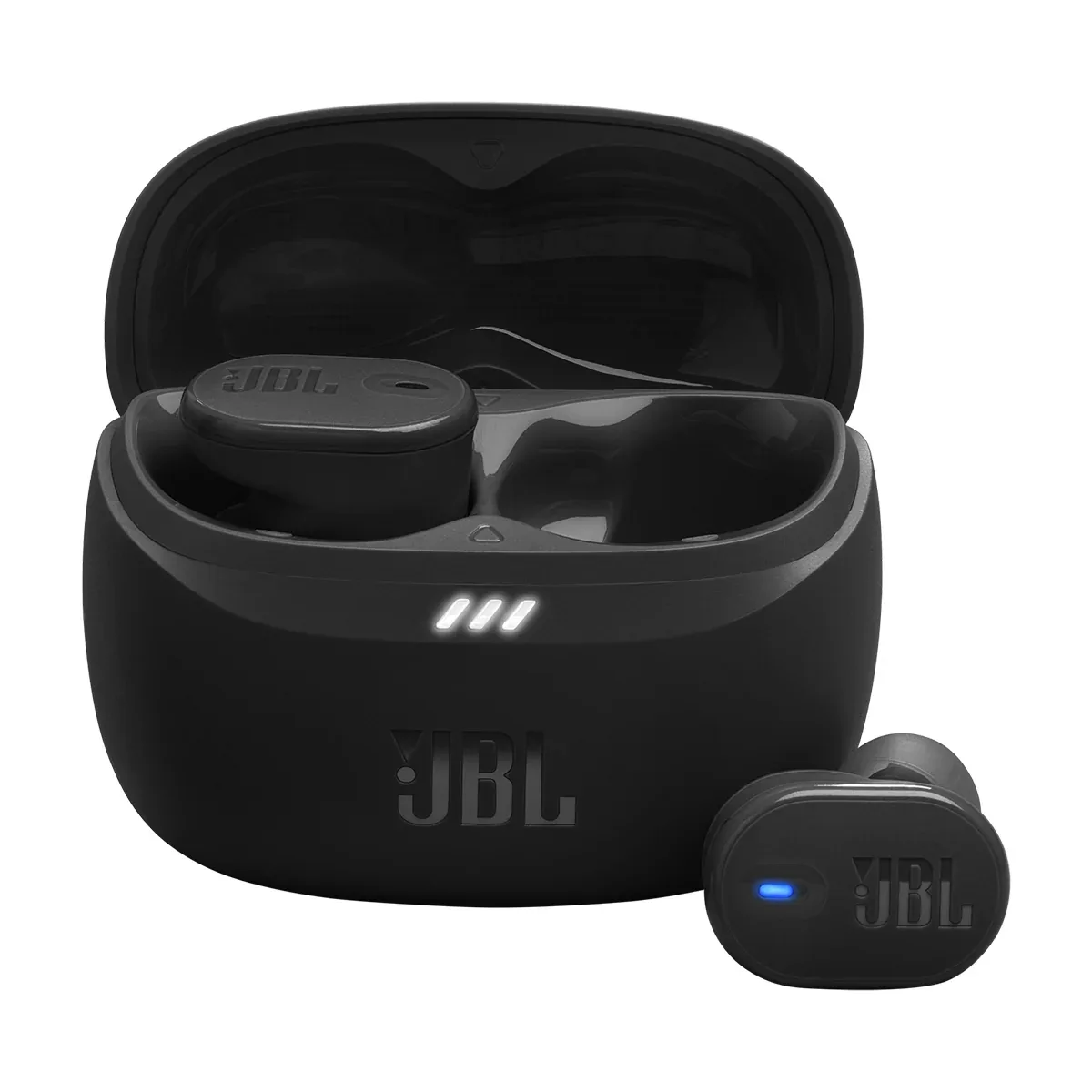
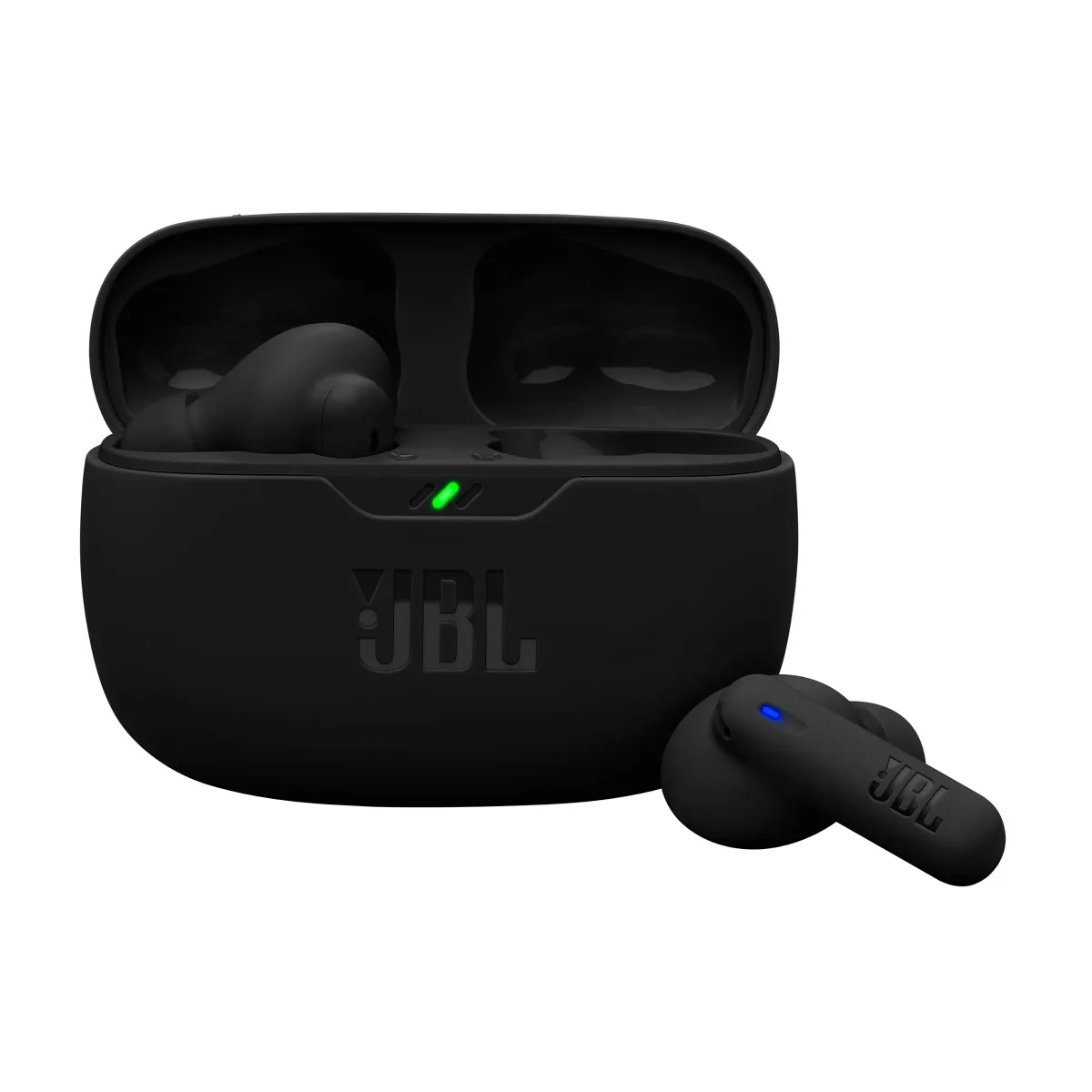
The Tune Buds 2 is JBL's 2025 refresh of its mid-budget workhorse, and the upgrade list is real: Adaptive Noise Cancelling that adjusts to your surroundings instead of the fixed system on the original, a 6-mic array (two beamforming per bud plus an inner mic), JBL Spatial Sound, and Personi-Fi 3.0, which builds a hearing profile and tunes the sound to your ears — a feature that used to live only on JBL's $200 Tour line. Battery is the headline: 12 hours per charge and 48 total with ANC off, still 10 and 40 with it on, which beats nearly everything at this price. Reviewers say the adaptive ANC handles commute drone and office hum well without threatening Bose, and unlike the cheaper Vibe Beam 2, call quality here draws praise — the six mics hold up even in wind. The 10mm Pure Bass tuning is warm and bass-heavy by default; the app's EQ and the Personi-Fi calibration can tame or sharpen it considerably, and it's worth doing. Honest gaps: no wireless charging, no published hi-res codec support, IP54 covers the buds but not the case, and at 5.5 grams the buds are a bit chunkier than the Vibe line. Street price floats between $50 and $70 on sale against a $100 list — at the low end of that range they're a steal.
Best for All-day wearers who take calls between playlists
JBL
Wireless Earbuds
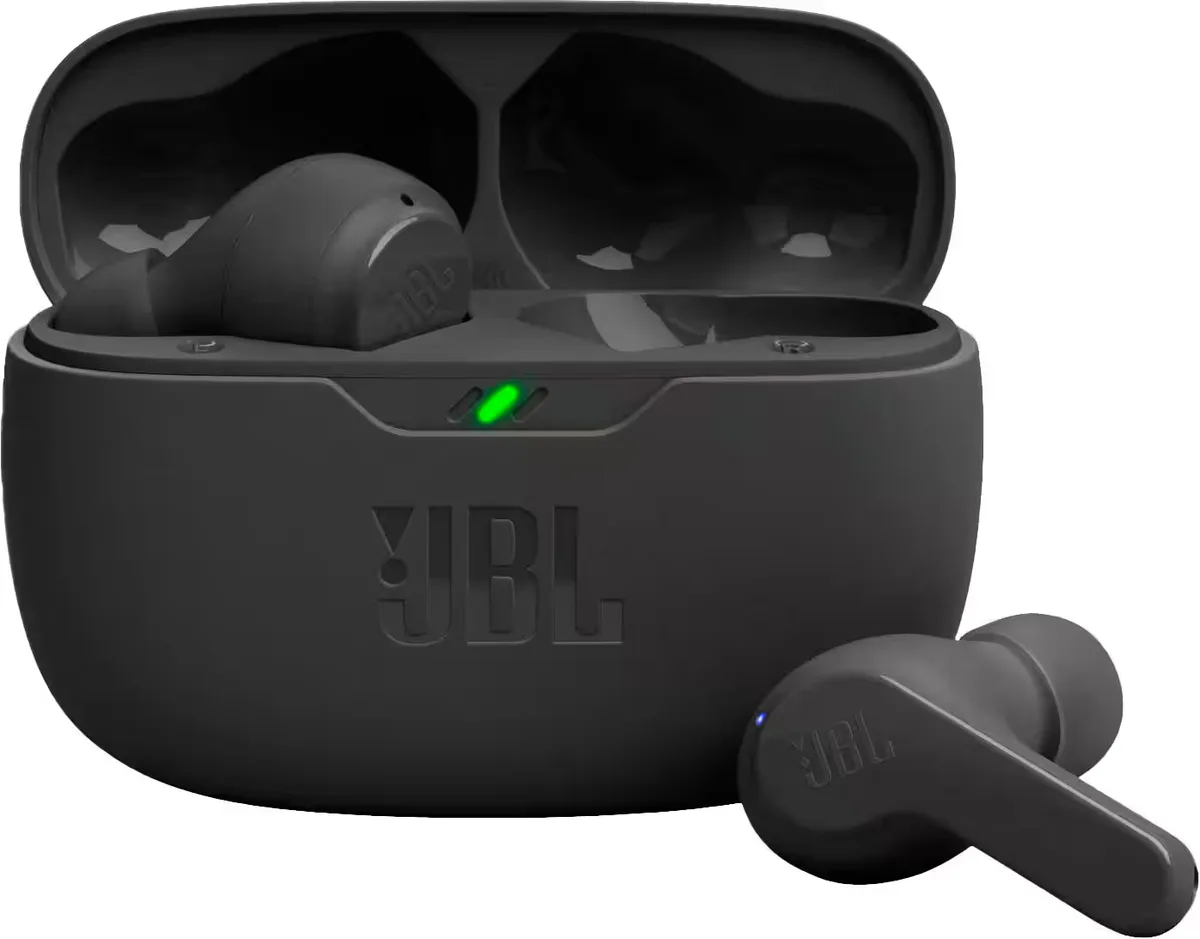
The Vibe Beam 2 packs an almost suspicious amount into a $40 earbud: real ANC with a Smart Ambient transparency mode, multipoint for two devices, IP54 dust and water resistance (the case itself is even IPX2 rated, which nobody else bothers with), and a 40-hour total battery that owners say translates to charging the case about once a week. The 8mm drivers deliver JBL's Pure Bass house sound — warm and bass-forward — and the JBL Headphones app gives you preset and fully custom EQ if you want to rein it in; some owners still wish they went louder and dug deeper. Battery math is honest: 10 hours per charge with ANC off, 8 with it on, and a 10-minute speed charge buys a full 3 hours, one of the best quick-charge ratios in the class. The ANC is a fixed system rather than adaptive, and it handles office hum and commute drone well for the price without threatening anything at $100+. The real weak spot is calls: despite the 4-mic array, multiple owners report the other end struggles to hear them anywhere noisier than a quiet room. No wireless charging either. As an everyday set-and-forget bud for music and podcasts, though, this is one of the strongest value plays JBL makes.
Best for Weekly chargers who hate babysitting a battery case
JBL
Wireless Earbuds
The Vibe Beam is JBL's volume seller, and it earns that by doing the unglamorous stuff well. The stick design fits securely, IP54 handles gym sweat, the battery runs a real 8 hours, and unusually for $30 you get Ambient Aware and TalkThru transparency modes plus full EQ customization in the genuinely good JBL Headphones app. What's missing is exactly what you'd guess: no ANC, no multipoint, no wireless charging, SBC/AAC only over Bluetooth 5.2. Owner gripes center on the mic — fine indoors, but windy calls turn robotic — and touch controls that misread taps. A few report that the case's weaker IPX2 rating means a soaked gym bag kills it even when the buds survive. If brand-name reliability matters more than a feature list, this is the safe $30 spend.
Best for casual listeners upgrading from freebie earbuds
JBL
Over-Ear Headphones
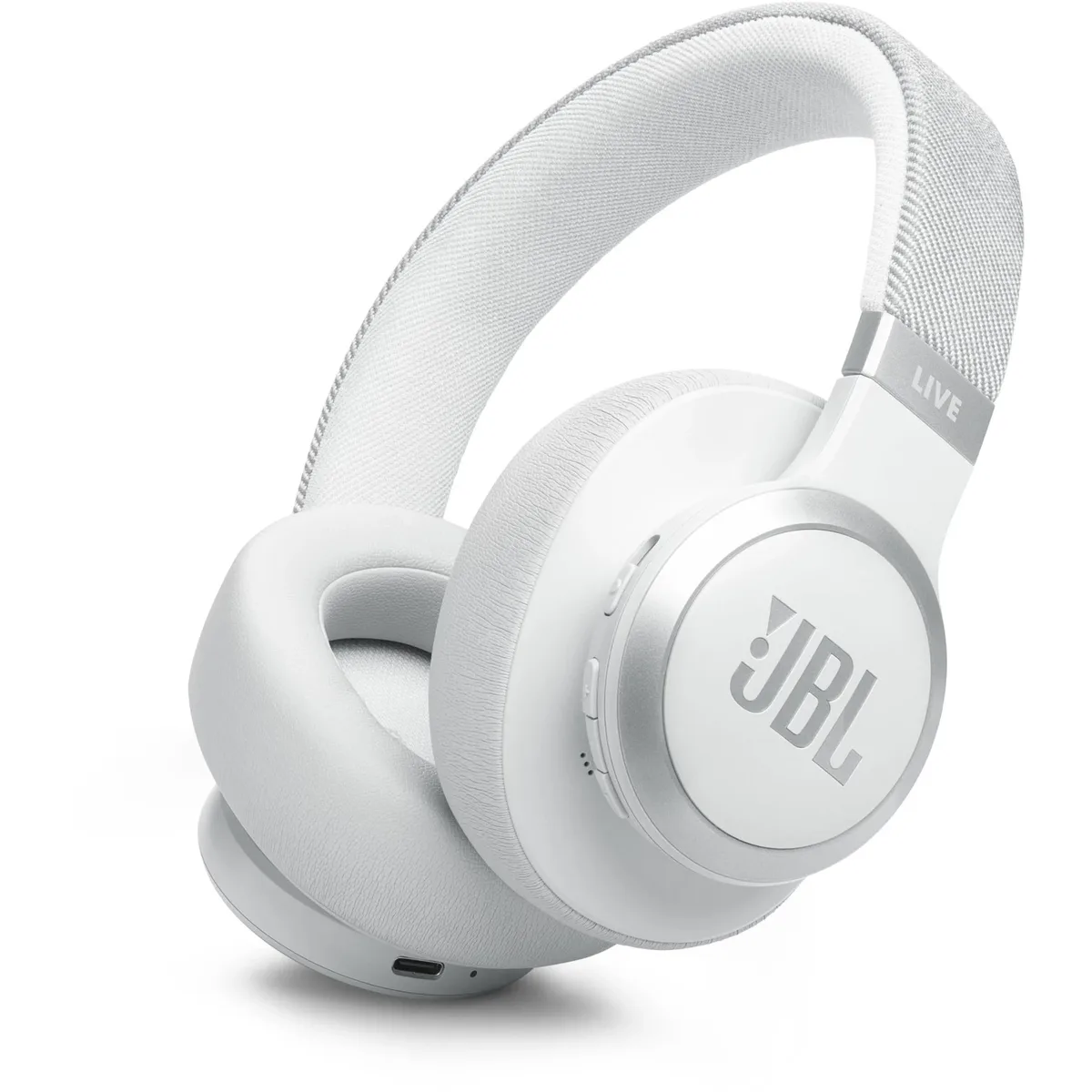
The Live 770NC is JBL's do-everything mid-ranger, and its headline act is stamina: a rated 65 hours with ANC off, 50 with it on, plus a 5-minute charge that buys 4 more — numbers that embarrass headphones costing twice as much. The tuning is classic JBL, big punchy bass out of the box, and the JBL Headphones app has one of the better EQs in the business if you want to rein it in. You also get a genuinely modern feature list: Bluetooth 5.3 with LE Audio/LC3, multipoint, wear detection, spatial sound, and Ambient Aware/TalkThru transparency modes. The catch is that JBL's 'True Adaptive' noise cancellation writes checks the four mics can't cash — it takes the edge off engine rumble but trails the Sony ULT Wear and anything from Bose, and owners notice on flights. Reviewers and owners also ding the mostly plastic build and the flimsy soft pouch, which feel below the $200 list price. Treble detail and layering are merely okay, so detail-oriented listeners should look elsewhere. The value math changes completely at its frequent $120-150 street price, where it's one of the most complete feature sets you can buy — just pick it for battery and features, not for class-leading ANC.
Best for Commuters who value marathon battery over top-tier ANC