Shokz
Shokz OpenMove
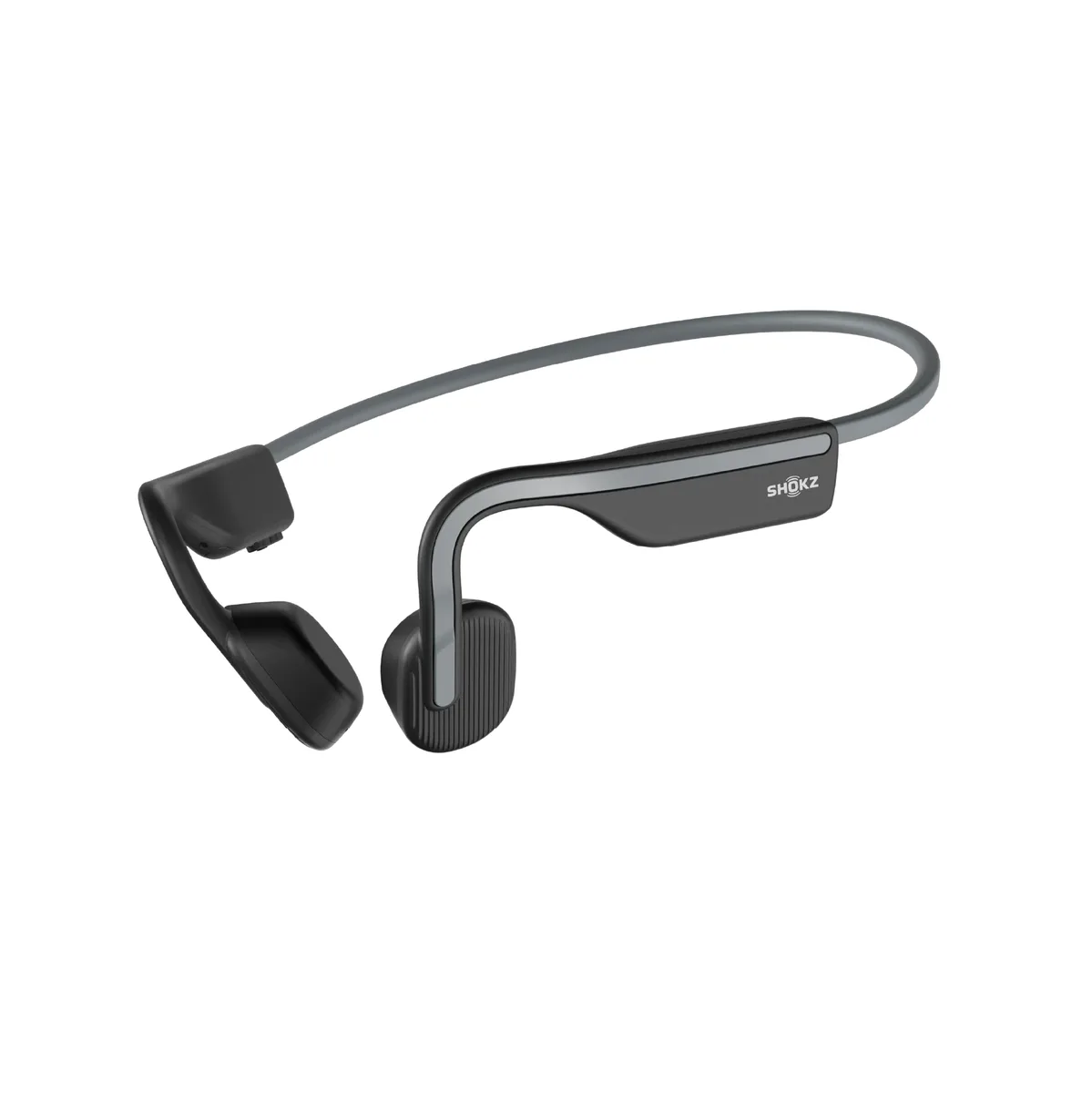
The cheapest way into real bone conduction, and it's been the gateway drug for years. The 29g titanium band is the same basic recipe as the expensive Shokz: transducers rest on your cheekbones, ears stay completely open, and IP55 shrugs off sweat and rain. The cuts are honest — six hours of battery instead of twelve, older-generation transducers with noticeably thinner bass, and more of the trademark tickle when you push the volume. It streams SBC only and skips the Shokz app entirely; EQ is three on-device modes (Standard, Vocal Booster, Earplug) toggled by holding the volume buttons, which nobody remembers how to do. It does support multipoint and charges over USB-C, both unusual at this price. Leakage is audible in quiet rooms. If you're bone-conduction-curious, spend $80 here before committing $180 to the OpenRun Pro 2.
We may earn a commission. Price and availability on Amazon’s site may differ.
Specifications
Highlights
Pros
- ✓Cheapest genuine bone conduction from the category leader
- ✓USB-C and multipoint are rare at $80
- ✓Same IP55 titanium band as pricier Shokz
- ✓29g weight stacks fine with sunglasses
- ✓Ears stay fully open for traffic awareness
- ✓Smart tryout before committing $180 to OpenRun Pro 2
Cons
- ✗Six hours of battery, half the OpenRun's twelve
- ✗Older transducers mean noticeably thinner bass
- ✗Trademark cheek tickle returns when volume climbs
- ✗SBC only, and no Shokz app support
- ✗Hidden button-hold EQ toggles nobody remembers how to use
Owner Insights(130 discussions)
The OpenMove is the gateway drug of bone conduction, and owners talk about it in exactly those terms: an $80 experiment that either converts you to the format or saves you $100 before you learn it's not for you. The recipe is the real Shokz one — transducers on the cheekbones, ears fully open, IP55 titanium band — and the daily-use reports are reassuring, with owners logging five-plus hours every day for months. USB-C and multipoint at this price were unheard of when it launched and still stand out.
The cuts from the premium models are honest and owners feel each one. Sound is the big compromise: thin, sometimes tinny, with little bass and no boost EQ, and pushing volume past about 85% brings distortion plus the classic cheekbone tickle on bassy tracks. The rated six hours is conservative — owners at moderate volume report far more — but the older-generation transducers, a slightly clumsier earhook than the OpenRun line, and the absence of any app (EQ modes toggle via an unmemorable two-button hold) mark it clearly as the entry model. In loud environments the open design gets overwhelmed, which is true of every Shokz but hits hardest when the baseline output is already modest.
Buy the OpenMove if you're bone-conduction-curious, need gym-and-run awareness on a budget, or want a durable beater for dog walks and yard work. The OpenRun Pro 2 (~$150-180) is the obvious upgrade — double the battery, real bass, better comfort — and owners who convert usually make that jump within a year. If sound quality matters more than the bone-conduction format itself, the Soundcore AeroFit 2 (~$70) delivers noticeably fuller audio from an air-conduction hook design at the same money.
Pros
- +The cheap ticket into real bone conduction — owners consistently recommend it as the try-before-you-commit step ahead of the $180 OpenRun Pro 2
- +Daily-driver durability shows up in owner reports: people using them 5+ hours every day for months without failures
- +Battery frequently beats its 6-hour rating — one owner logged over 11 hours with 40% remaining at moderate volume
- +Physical buttons instead of touch controls, which owners actively prefer for sweaty hands and gloves
- +USB-C and multipoint at $80, both rare in the bracket and a step up from the proprietary cables on older Shokz
- +The voice/EQ mode genuinely helps podcasts and audiobooks — voices come through crisp for spoken-word listening
- +Full open-ear awareness with the same IP55 titanium band recipe as the expensive models
Cons
- −Bass is the shortfall everyone names: even PremiumPitch 2.0 delivers thin, sometimes tinny sound with no bass-boost EQ to rescue it
- −Push volume past ~85% and sound distorts while the trademark cheekbone tickle returns, especially on bass-heavy tracks
- −Six hours of rated battery is half the OpenRun Pro 2 — enough for a run, tight for a full workday of calls plus music
- −Loud environments swallow the audio entirely — traffic or a noisy gym can make podcasts unintelligible
- −The earhook shape is less refined than pricier Shokz and some owners find it less comfortable over long sessions
- −No app support at all — EQ modes hide behind a hold-both-volume-buttons combo nobody remembers
- −Leakage is audible in quiet rooms, so office neighbors hear a tinny version of your audio
Common Questions
Compare the Shokz OpenMove
Related headphones
More from Shokz →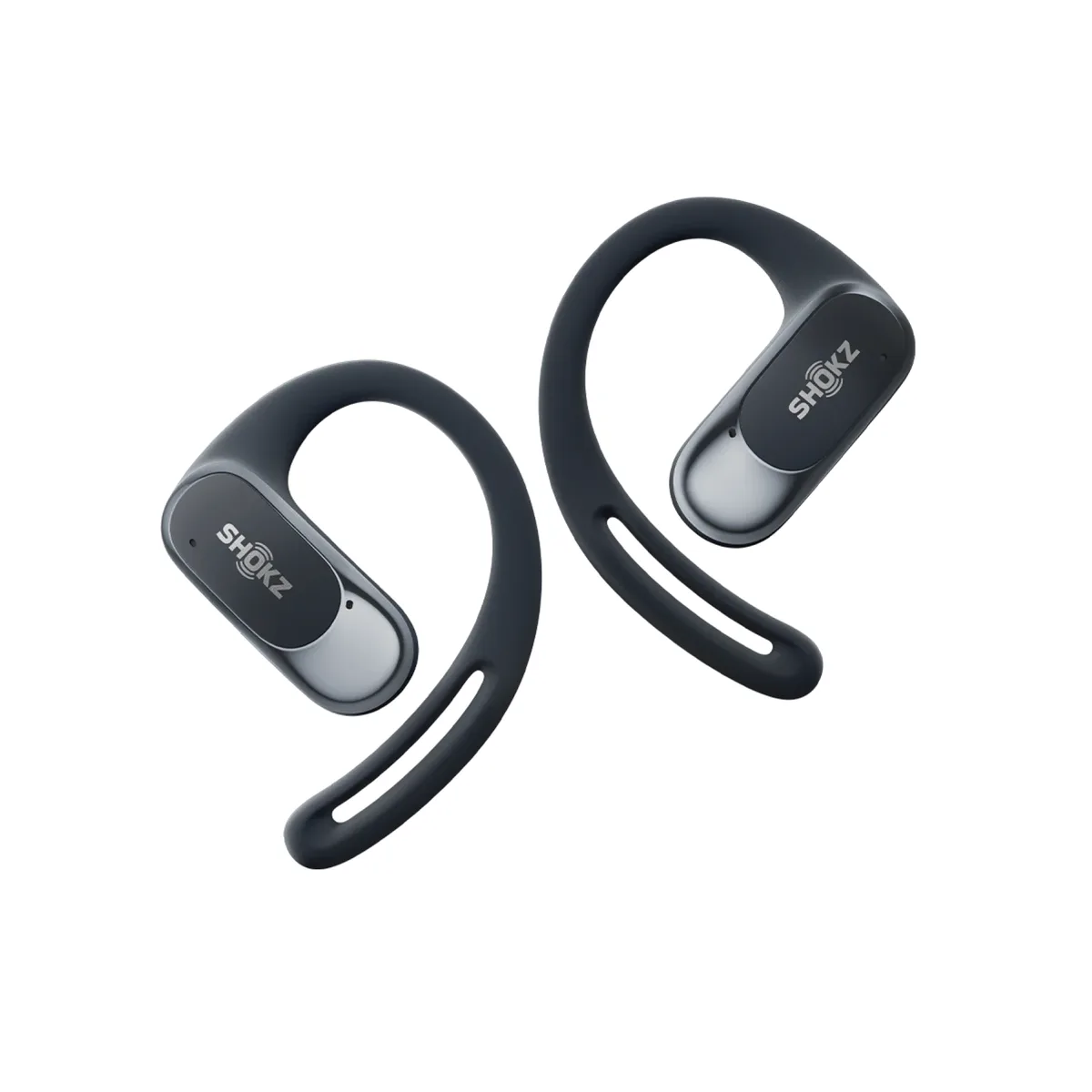
Shokz
Open-Ear & Bone Conduction
This is Shokz's budget earhook bud — not bone conduction, but a small air-conduction speaker on an ultra-thin nickel-titanium memory-alloy hook that curls over your ear and fires down at the canal. At 8.7g per bud it's one of the lighter earhook designs, and because nothing seals, you keep full awareness of traffic and gym announcements. Sound is a clear step up from Shokz's bone-conduction models — there's actual usable bass via the OpenBass processing — but a step below the pricier OpenFit and OpenFit 2, which is exactly how it's positioned. Battery runs 6 hours per charge and 28 with the case, with a 10-minute charge covering a 2-hour session, and Bluetooth 5.2 brings multipoint. The recurring owner complaints are two: microphone quality on calls is mediocre, and like all open designs it struggles in wind and loud environments where there's no seal to fight the noise. The earhook also occupies the same real estate as glasses arms, which works for most people but takes adjusting. IP54 covers sweaty workouts and rain. If you're choosing within Shokz: get this over the bone-conduction OpenMove for sound, get the OpenRun instead if you need a bounce-proof band for serious running, and step up to the OpenFit 2 if sound quality matters more than the $60 you'd save.
Best for gym-goers who want awareness without bone-conduction sound
Shokz
Open-Ear & Bone Conduction
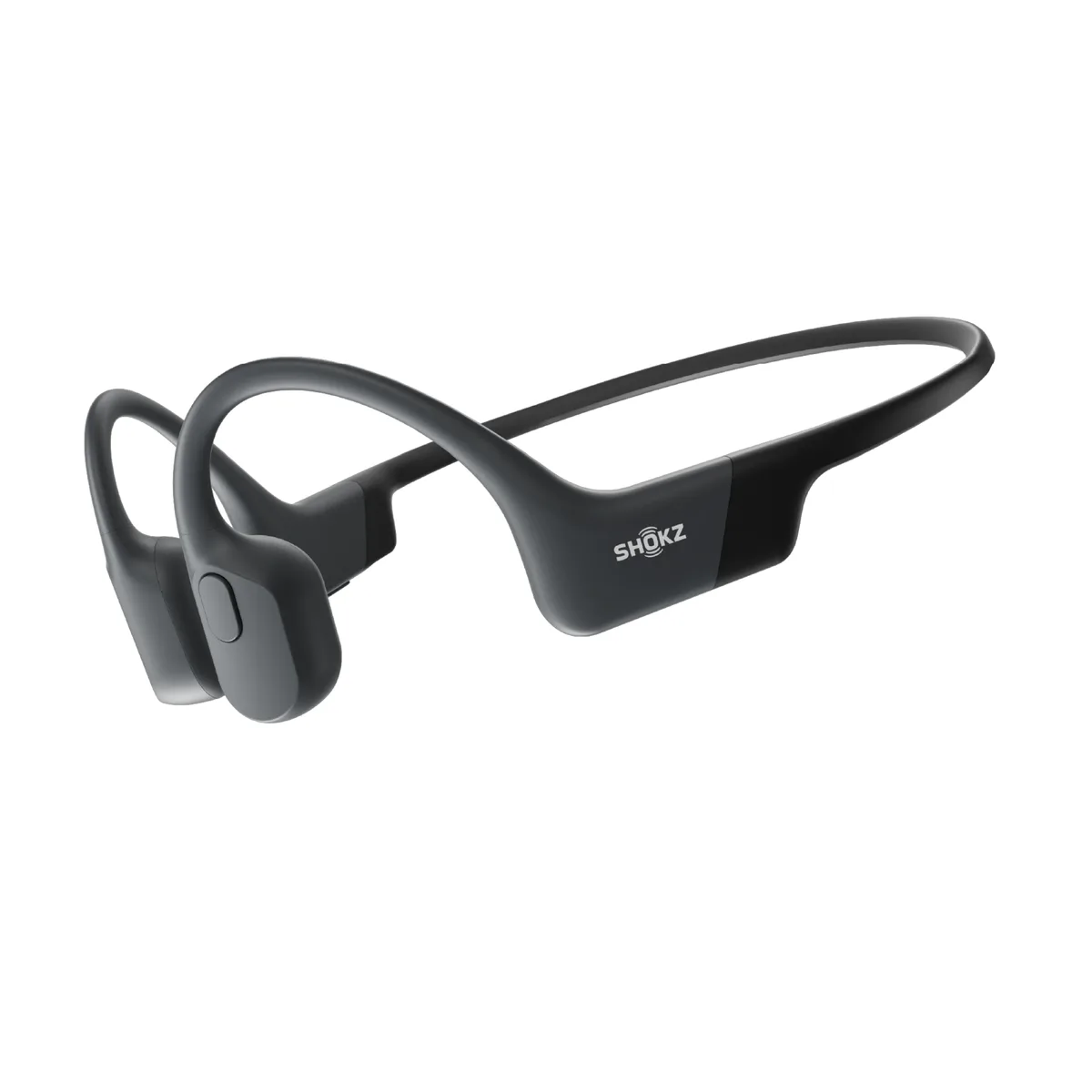
This is the default recommendation for runners and cyclists, and years of owner reports back it up. The titanium wraparound band weighs 26 grams, never bounces, and the bone-conduction pads sit in front of your ears so you hear traffic, other riders, and your own footsteps at full volume. IP67 means sweat and rain are non-issues (just don't swim with it), and the 8-hour battery with a 10-minute top-up covering a 90-minute run fits how people actually train. The honest trade-off is physics: bone conduction can't pressurize your ear canal, so bass is thin and overall sound quality is the weakest thing about it — owners are blunt that these are for podcasts and keeping-you-company music, not critical listening. At higher volumes the pads visibly buzz on your cheekbones and people next to you can hear your music. The most common practical complaint isn't the sound at all — it's the proprietary magnetic charging cable, which is easy to lose and impossible to replace with a generic cable. It's also SBC-only over Bluetooth 5.1, which matters not at all for its intended use. If you want more bass in this form factor, the OpenRun Pro 2 adds an air-conduction driver; if you want awareness on a run at a fair price, this is the safe pick.
Best for runners and cyclists who need to hear everything around them
Shokz
Open-Ear & Bone Conduction
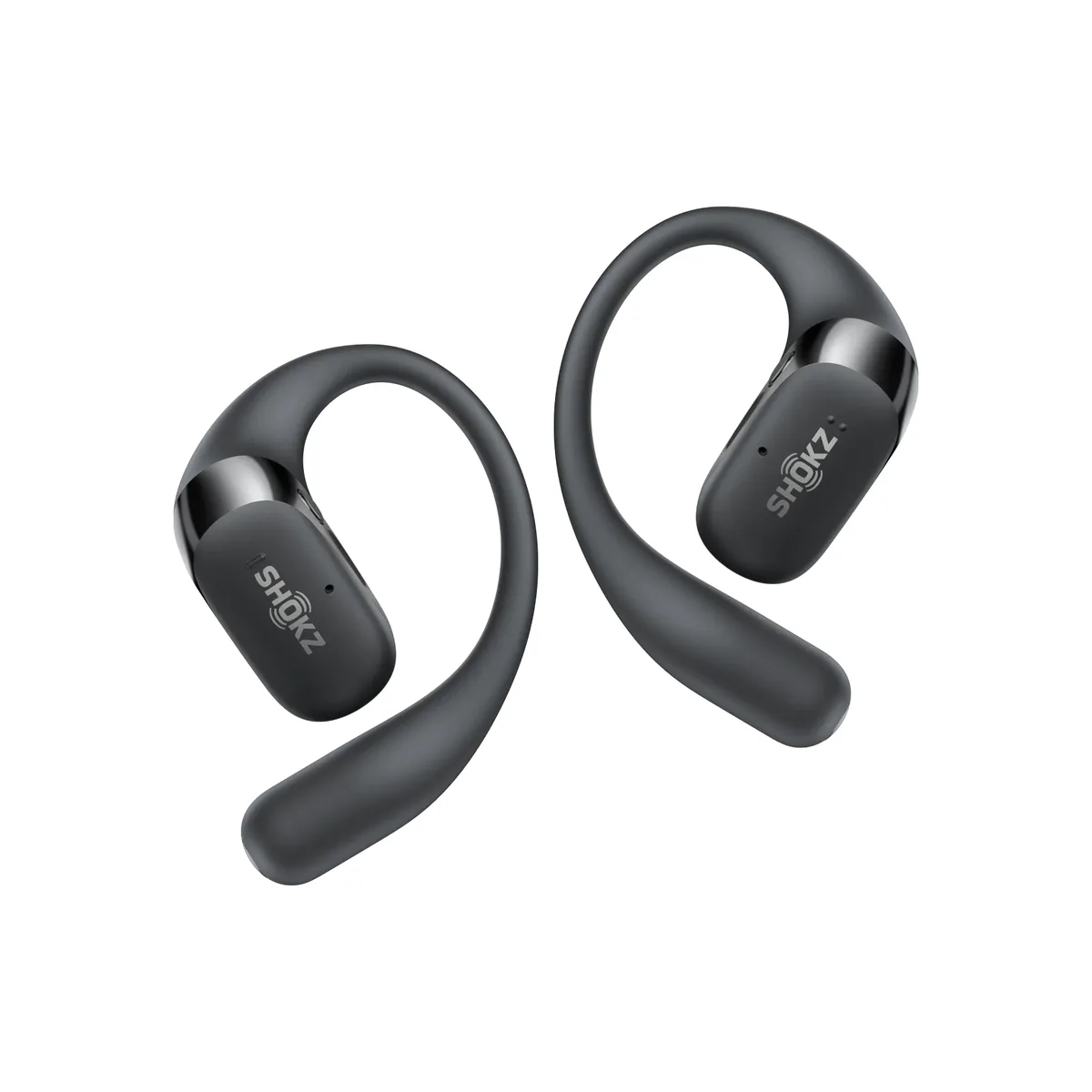
Shokz's earhook buds, not bone conduction — a tiny air-conduction speaker floats over your ear canal, so sound quality is a clear step up from the OpenRun line. DualBoost dual drivers give these more low-end than the first OpenFit, though physics still applies: bass is polite, not punchy, because nothing seals your ear. At 9.4g each with ultra-soft silicone hooks, owners regularly forget they're wearing them, and they coexist with glasses better than most hook designs. Eleven hours per charge is best-in-class for the style, with 48 total from the case. Shokz added a real physical button this generation, fixing the flaky touch controls people hated on gen one. Leakage is modest but present — coworkers will hear a whisper of your podcast in a silent office. No wireless charging; that's reserved for the pricier OpenFit 2+.
Best for all-day open-ear wear at the desk and gym
Shokz
Open-Ear & Bone Conduction
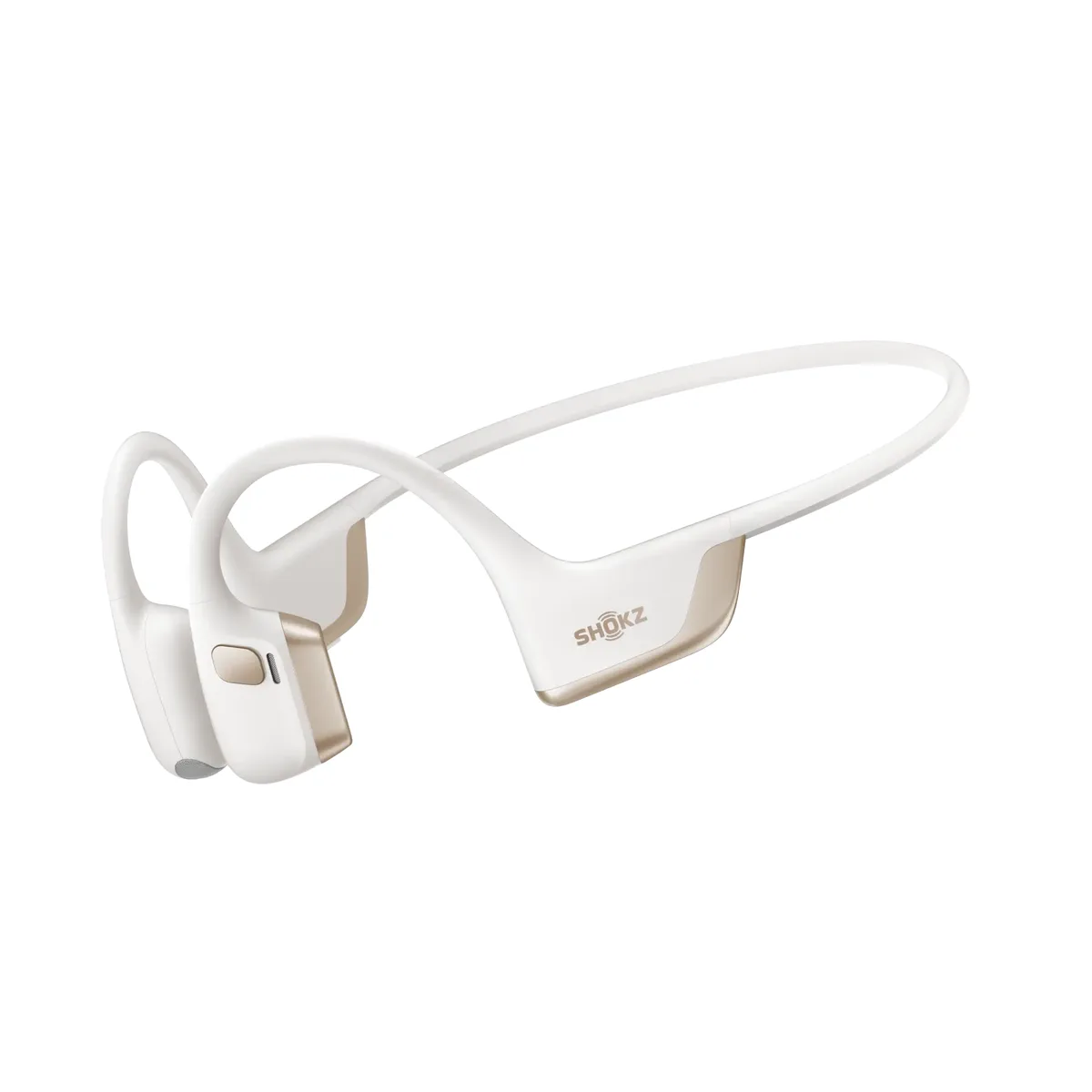
The best bone-conduction headphones you can buy, and the first Shokz that don't feel like a compromise. The trick is DualPitch: bone conduction handles mids and highs while a small air-conduction driver fills in bass, which mostly kills the cheek-tickle older models gave you at high volume. Weight is 30.3g for the whole titanium band, and Shokz finally switched to USB-C after years of proprietary cables. Twelve hours of battery is genuinely enough for an ultra, and a 5-minute charge buys 2.5 more hours. Reality check: it's SBC-only, sound leakage is real in a quiet room, and IP55 means sweat and rain, not swimming — get the OpenSwim for laps. The band stacks with sunglasses fine, though helmet straps can be fiddly. If you need to hear traffic while running, this is the category benchmark.
Best for runners and cyclists who need full situational awareness
Shokz
Open-Ear & Bone Conduction
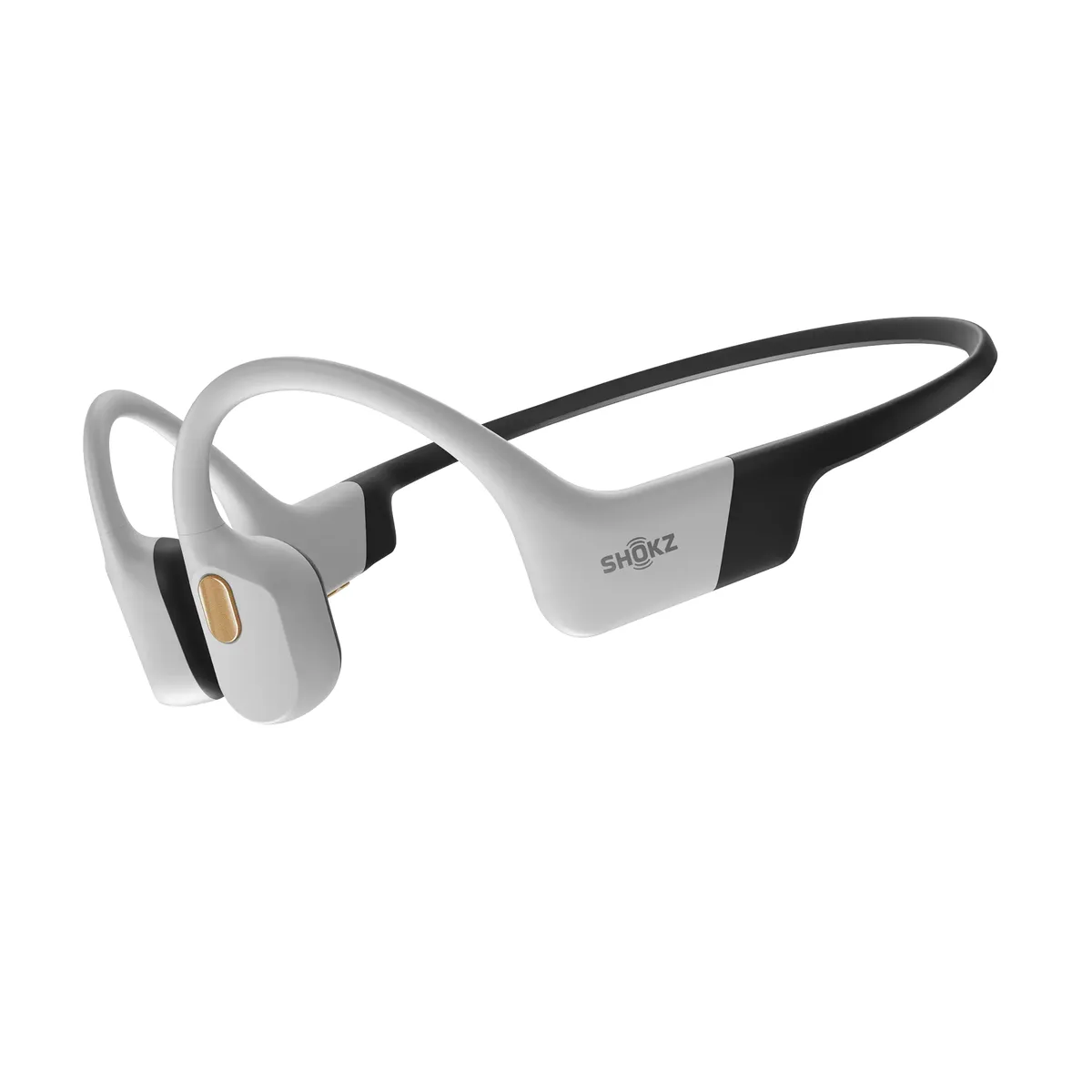
This is the headphone swimmers actually use, and it's important to understand how: Bluetooth doesn't work underwater — radio waves die within an inch of submersion — so in the pool you're playing files from the built-in 32GB MP3 player (it handles MP3, WAV, FLAC, AAC, and M4A, roughly 8,000 songs). That dual-mode design is the whole appeal: Bluetooth 5.4 with multipoint on land for your run, then flip to MP3 mode for laps. The IP68 rating is genuine swim-grade — good to about 2 meters — unlike the IP67 OpenRun, which Shokz explicitly says not to swim with. Swimmers who've fought with in-ear waterproof buds falling out at every flip turn love that the wraparound band just stays put, cap or no cap, and bone conduction actually sounds better underwater than in air. Battery runs 9 hours over Bluetooth or 6 in MP3 mode, and a 10-minute charge buys 3 hours. The caveats: the physical buttons are fiddly to learn (the app helps remap them), dry-land sound has the usual thin bone-conduction bass, and loading music means dragging files over USB like it's 2008 — no Spotify offline. It also uses Shokz's proprietary charging cable, so don't lose it. If you don't swim, buy the cheaper OpenRun; if you do, there's really nothing better.
Best for swimmers who want music during laps
Shokz
Open-Ear & Bone Conduction
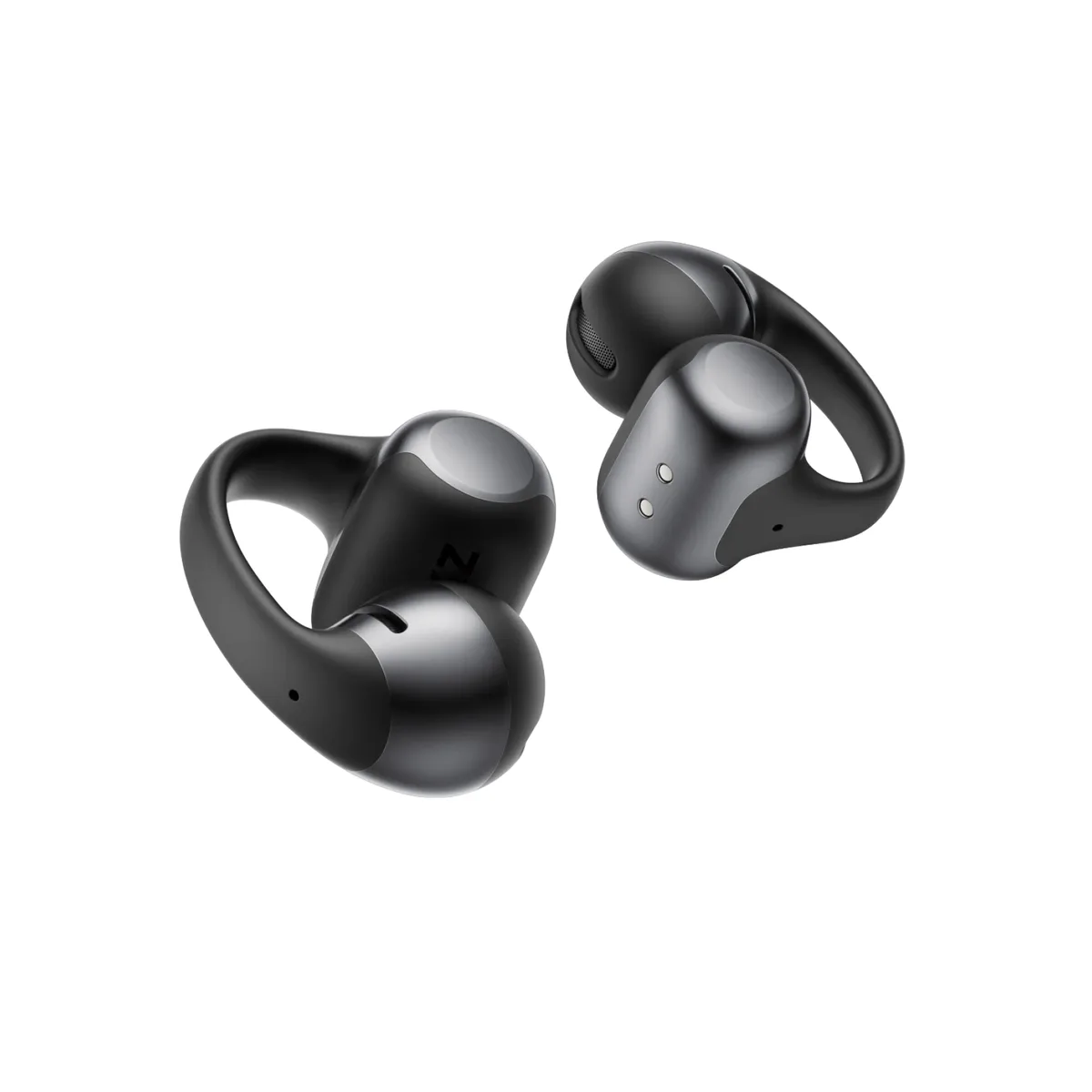
Shokz's first clip-on earbud is its answer to the Bose Ultra Open, and it's a genuinely strong one. Each 6.5g bud cuffs onto the edge of your ear via a flexible nickel-titanium joint, so nothing sits in your ear canal and nothing hooks over the top — glasses wearers in particular appreciate that. Long-term reviews consistently rate the fit as the best in the clip-on category: light enough to forget, secure enough for running and cycling. Sound is the other surprise — a dual-driver setup with real bass for an open design, plus Dolby Audio processing, though you're capped at SBC/AAC with no hi-res codec. Battery is class-leading at 10 hours per charge and 40 with the Qi-compatible wireless charging case; owners report going weeks between charges. The honest caveats: the touch controls are the recurring complaint — reviewers report roughly coin-flip reliability before enabling the app's high-sensitivity mode, and sweaty fingers make it worse. Like every open design it leaks sound at volume and can't compete with sealed buds in a loud gym. And at $200 it costs as much as flagship ANC earbuds while doing a very different job. If you want all-day ear-canal-free comfort with awareness, this is the premium pick over the cheaper soundcore C40i.
Best for all-day open-ear wear with glasses or sensitive ear canals