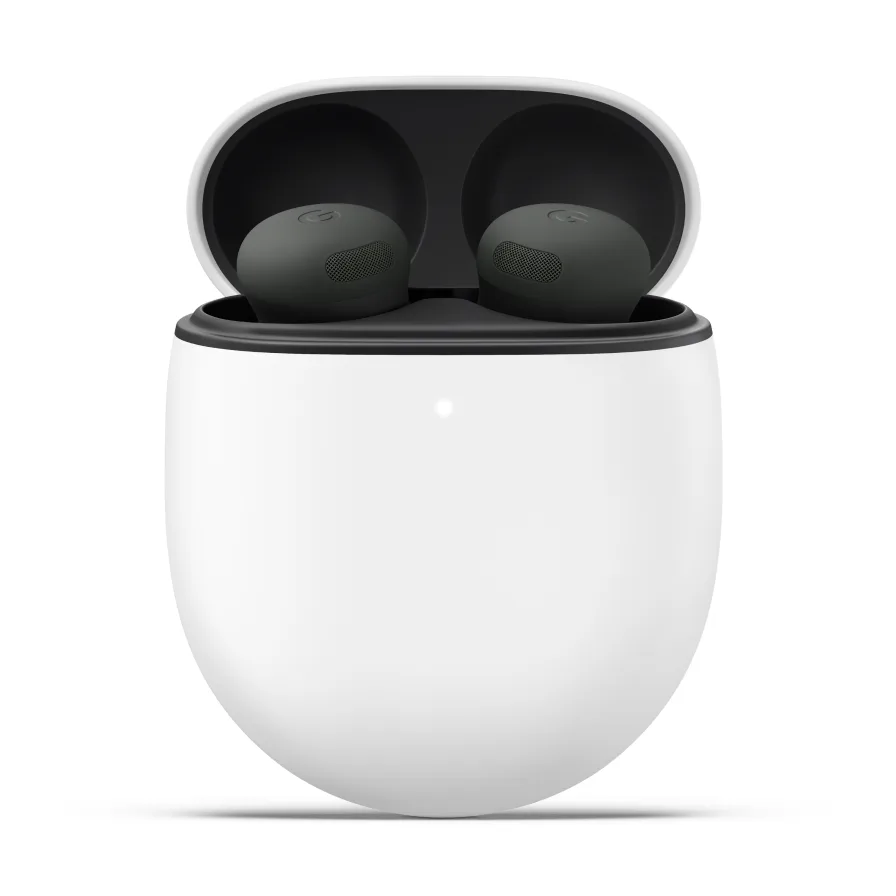
Google Pixel Buds 2a
Google's budget buds grew up: the Pixel Buds 2a run the same Tensor A1 chip as the Pro 2, which means real ANC with Silent Seal 1.5 at $129 — reviewers called them 'diet Pixel Buds' and mostly meant it as a compliment. The 11mm driver sounds clean for the price, seven hours with ANC on beats plenty of flagships, the twist-to-lock fit is secure, and at 4.7g per bud they disappear in your ears. Hands-free Gemini works well if you live in Google's world, and in a first for earbuds this cheap, the case battery is user-replaceable. The cost-cutting is easy to list: no wireless charging, no multipoint (it hurts — you reconnect manually when switching devices), the case is plastic-basic and only rated IPX4, and total battery with the case is a modest 20 hours. There's no head-tracked spatial audio, and iPhone owners lose most of the smart features. As gym-and-commute buds for Android people they're one of the best value picks of 2026; power users juggling a laptop and phone will curse the missing multipoint weekly.
We may earn a commission. Price and availability on Amazon’s site may differ.
Specifications
Highlights
Pros
- ✓Tensor A1 ANC genuinely competes above its price
- ✓7-hour ANC-on battery beats several flagships
- ✓Featherweight 4.7g twist-to-lock fit stays secure
- ✓Hands-free Gemini and Fast Pair on Android
- ✓User-replaceable case battery — rare at any price
- ✓IP54 buds shrug off gym sweat
Cons
- ✗No multipoint — manual reconnects between devices
- ✗No wireless charging on the case
- ✗Modest 20-hour total with the case
- ✗No head-tracked spatial audio
- ✗Most smart features are Android-only
Owner Insights(220 discussions)
The Pixel Buds 2a are Google's 'diet Pixel Buds' — the same Tensor A1 chip as the Pro 2 in a $129 package — and owner sentiment says the diet mostly worked. Real ANC, near-7-hour bud battery, and a comfortable twist-to-lock fit make them one of the strongest value picks for Android users, and multiple owners who stepped down from the Pixel Buds Pro 2 say they barely noticed the difference in daily use. The reputation isn't spotless, though: owner sentiment runs mixed, dragged down almost entirely by the charging case.
That case is the recurring gripe: it self-drains fast enough that owners report topping it up every two to four days even with light use, it has no wireless charging, and it feels cheaper than the buds it holds. The ANC handles commute rumble well but has a measured gap in the 4-9kHz band, so screechy, high-pitched noise slips through. Controls draw complaints too — no swipe volume, and touch pads sensitive enough to trigger when you adjust a bud. Fit splits by ear shape: most find them secure and comfortable all day, while larger-eared owners report loosening and the occasional seal-whine. On the plus side, the case battery is user-replaceable — a rare piece of future-proofing at this price.
These are gym-and-commute buds for Android people, ideally Pixel people — that's where hands-free Gemini and instant pairing earn their keep. At $129 they undercut the AirPods 4 with ANC while offering a sealed fit that base AirPods can't match, and they're the obvious pick over the Galaxy Buds 4's fit lottery. The strongest alternative is the Anker Soundcore Liberty 5 at around $79: better battery, LDAC, and real multipoint, if you can live without the Google integration.
Pros
- +Real ANC at $129 that owners call genuinely useful — the Tensor A1 chip and Silent Seal 1.5 attenuate roughly three-quarters of outside noise, unheard of in Google's A-series before
- +Battery per charge beats plenty of flagships: just under 7 hours with ANC on in testing, enough for a full workday of calls and music without touching the case
- +The twist-to-lock fit with stabilizer plus 4.7g weight earns consistent comfort praise — many owners forget they're wearing them over long sessions
- +Sound is clean and balanced for the price, and several owners who downgraded from the Pixel Buds Pro 2 say they didn't miss much day to day
- +Hands-free Gemini and instant pairing work seamlessly on Pixel phones — the 'it just works' Google experience owners cite as the reason to stay in-ecosystem
- +User-replaceable case battery — a first at this price, and a real answer to the dead-case problem that kills most earbuds after a few years
- +The case recharges in about an hour over USB-C, and long-term owners report bud batteries holding up well
Cons
- −The case is the top owner complaint: it self-drains noticeably even when idle — reports of the case losing 30% while charging the buds only 8%, needing a top-up every 2-4 days versus a week for competitors
- −No wireless charging at this price stings, and the plastic case feels basic next to the buds themselves
- −Device switching is friction: there's no true multipoint — Audio Switch mainly covers devices on your Google account, and owners juggling a work laptop report manual reconnecting
- −ANC has a measured blind spot between 4-9kHz, so high-pitched sounds — screeching brakes, kids, some office chatter — cut through even when low rumble is handled well
- −No swipe volume control on the buds and touch controls run over-sensitive, causing accidental pauses when adjusting fit
- −Fit is polarizing despite the stabilizer: owners with larger ears report the buds working loose or falling out, and a poor seal can produce a high-pitched whine
- −Heavy feature lock-in: hands-free Gemini, ear detection extras, and settings need a Pixel or at least Android — iPhone owners get a basic AAC bud with no app
Common Questions
Compare the Google Pixel Buds 2a
Related headphones
More from Google →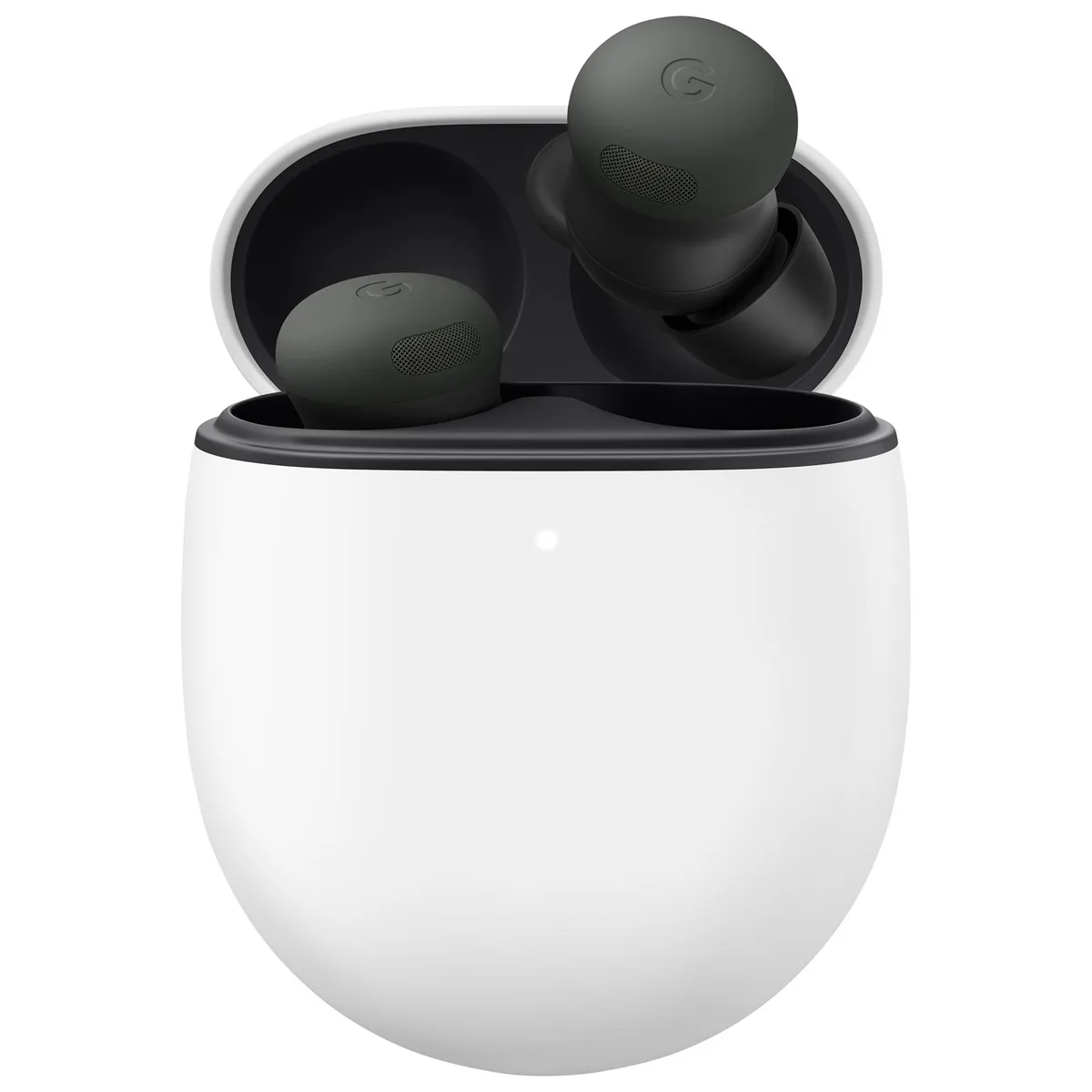
Wireless Earbuds
The comfort champions. At 4.7g and 27% smaller than the originals, with a twist-to-adjust stabilizer fin, these are the buds people with small ears keep recommending after everything else fell out. The Tensor A1 chip doubled the ANC over gen one — solidly mid-pack now, behind Bose but ahead of most — and 8 hours with ANC plus 30 total is among the best endurance here. Real multipoint works across any two devices, not just Google's. The dealbreaker for audio nerds: SBC and AAC only, no LDAC or aptX, so hi-res streaming is off the table even on a Pixel (LE Audio/LC3 is arriving via updates). Sound is clean and balanced but needs the app's 5-band EQ to add excitement. Gemini voice features are hit-or-miss, and some owners report occasional case-charging quirks. On sale around $169 they're an easy recommendation.
Best for small-eared Android users prioritizing comfort and battery
JBL
Wireless Earbuds
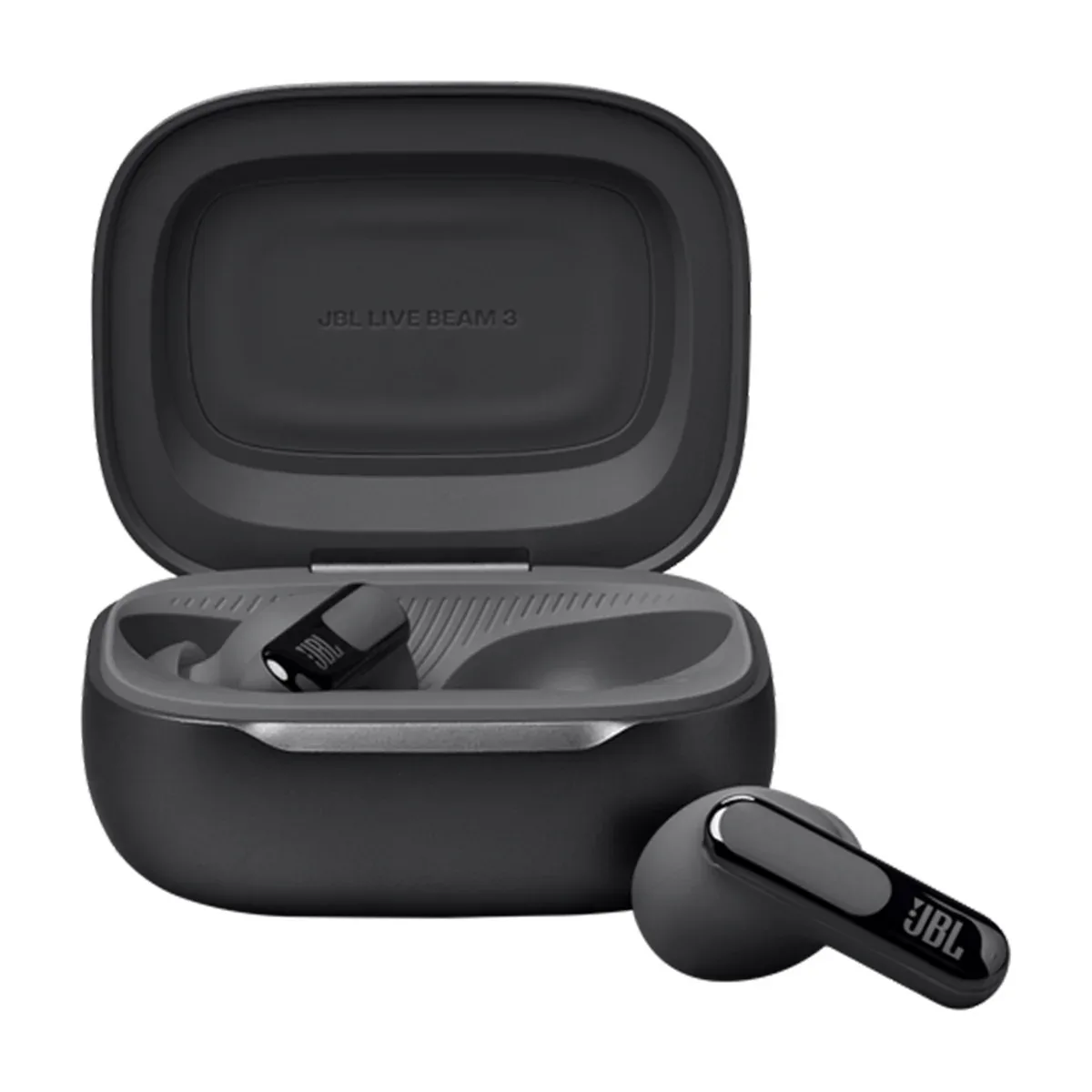
The party trick is the case: a 1.45-inch touchscreen that handles volume, EQ, ANC modes, messages, and even photo wallpapers without touching your phone — the same screen as the $300 Tour Pro line for less. The stamina is just as notable: 10 hours per charge with ANC on (12 off) and 48 total with the case embarrasses most flagships, and the case still charges wirelessly. Sound is classic JBL — deep bass, 10mm drivers, LDAC hi-res — and Personi-Fi 3.0 in the app tunes it to your hearing; multipoint plus Google Audio Switch covers device juggling. Where they fall short of the flagship tier: reviewers agree the True Adaptive ANC is decent but clearly below Bose, Sony, and Samsung at silencing chatter, and JBL's spatial audio adds an artificial echo most people turn off. The stick-shaped body isn't especially grippy either — some owners find a yawn can loosen them — and there's a long-standing quirk where single-bud mode sometimes disables ANC entirely. IP55 covers workouts and rain. If battery life and the gadget-lover case matter more to you than class-leading silence, these earn their spot; street prices well under the $200 list make them an easy recommendation.
Best for battery-life obsessives who love a gadget case
Apple
Wireless Earbuds
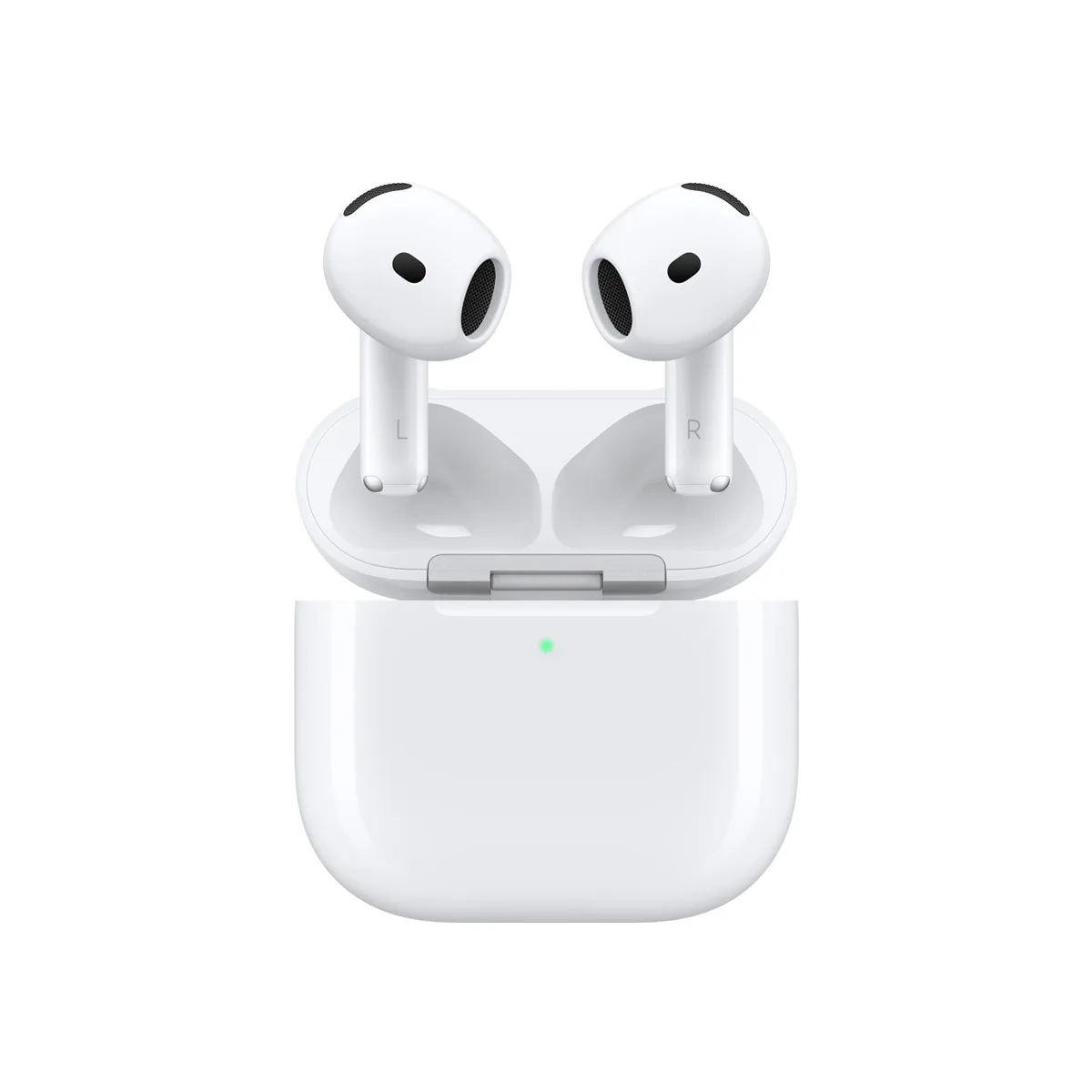
These are for people who hate silicone ear tips but still want some noise cancellation — and on that narrow promise they deliver. ANC on an open-fit earbud shouldn't work as well as it does here; it takes the edge off planes and offices, though physics means it can't touch a sealed bud like the Pro 3, and bass depends entirely on how the hard plastic sits in your particular ears. That's the real gamble: fit is a lottery, and if AirPods have never stayed put for you, nothing changed. Battery is the other weak spot — 4 hours with ANC on is bottom of the class. Call quality is excellent, the H2 chip does Adaptive Audio and Conversation Awareness, and the ANC version of the case adds wireless charging and a Find My speaker. AAC-only and no EQ app, as always with Apple.
Best for ear-tip haters who still want noise cancellation
Nothing
Wireless Earbuds
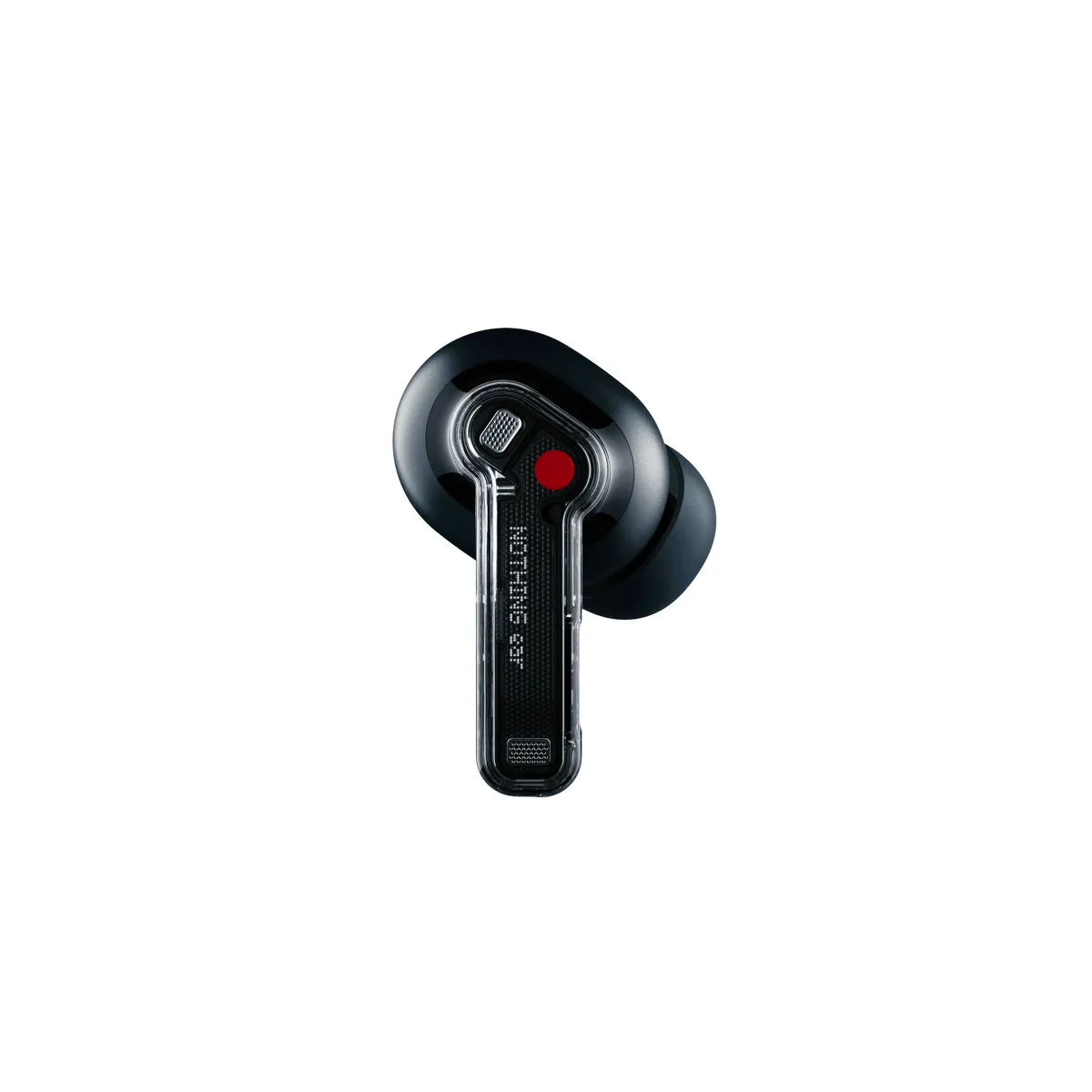
Pound for pound the best value on this list. For way under half the price of the flagships you get an 11mm ceramic-diaphragm driver, both LDAC and LHDC 5.0 hi-res codecs, a genuinely useful 8-band EQ with a custom profile system, multipoint, wireless charging, and the transparent design that still gets comments. The sound is punchy and fun, and surprisingly tweakable. Where the budget shows: 5.2 hours with ANC on is short — commuters notice — and the 45dB Smart ANC handles office hum fine but loses to plane roar. Mics are only okay in wind, and some owners report occasional single-bud connection hiccups that a re-pair fixes. The pinch controls work better than most touch surfaces. No spatial audio, and the ChatGPT integration is a party trick. If you're not paying flagship money, this is what to buy instead.
Best for value hunters who want hi-res codecs cheap
Beats
Wireless Earbuds
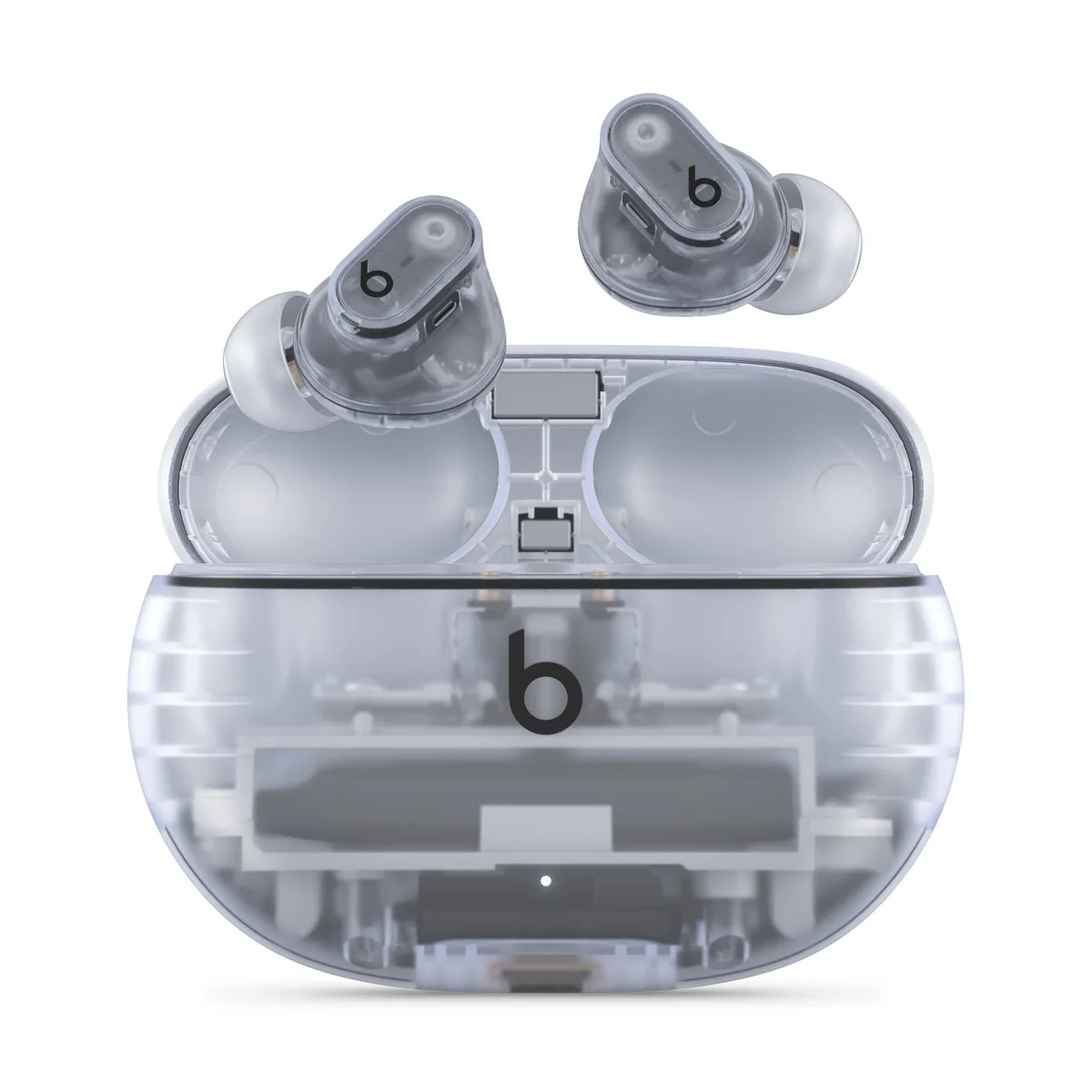
The Studio Buds+ occupy a unique niche: near-native behavior on both platforms, with one-touch pairing and Find My on iPhone plus Fast Pair and Find My Device on Android — no other brand bridges the gap this cleanly. The transparent shell looks great, transparency mode is genuinely natural, spatial audio works with Apple Music, and Fast Fuel adds an hour in five minutes. The compromises are real, though: ANC is noticeably weaker than a Space A40 at half the price, and there's no multipoint, no wireless charging, no wear detection, and no EQ of any kind. Battery runs 6 hours with ANC on, and owners note the 36-hour case total assumes ANC off. Owner sentiment is dragged down by intermittent dropout complaints and a left-bud drain issue on early units. At the frequent $100 sale price they make sense; at $170 list they don't.
Best for households split between iPhone and Android
Apple
Wireless Earbuds
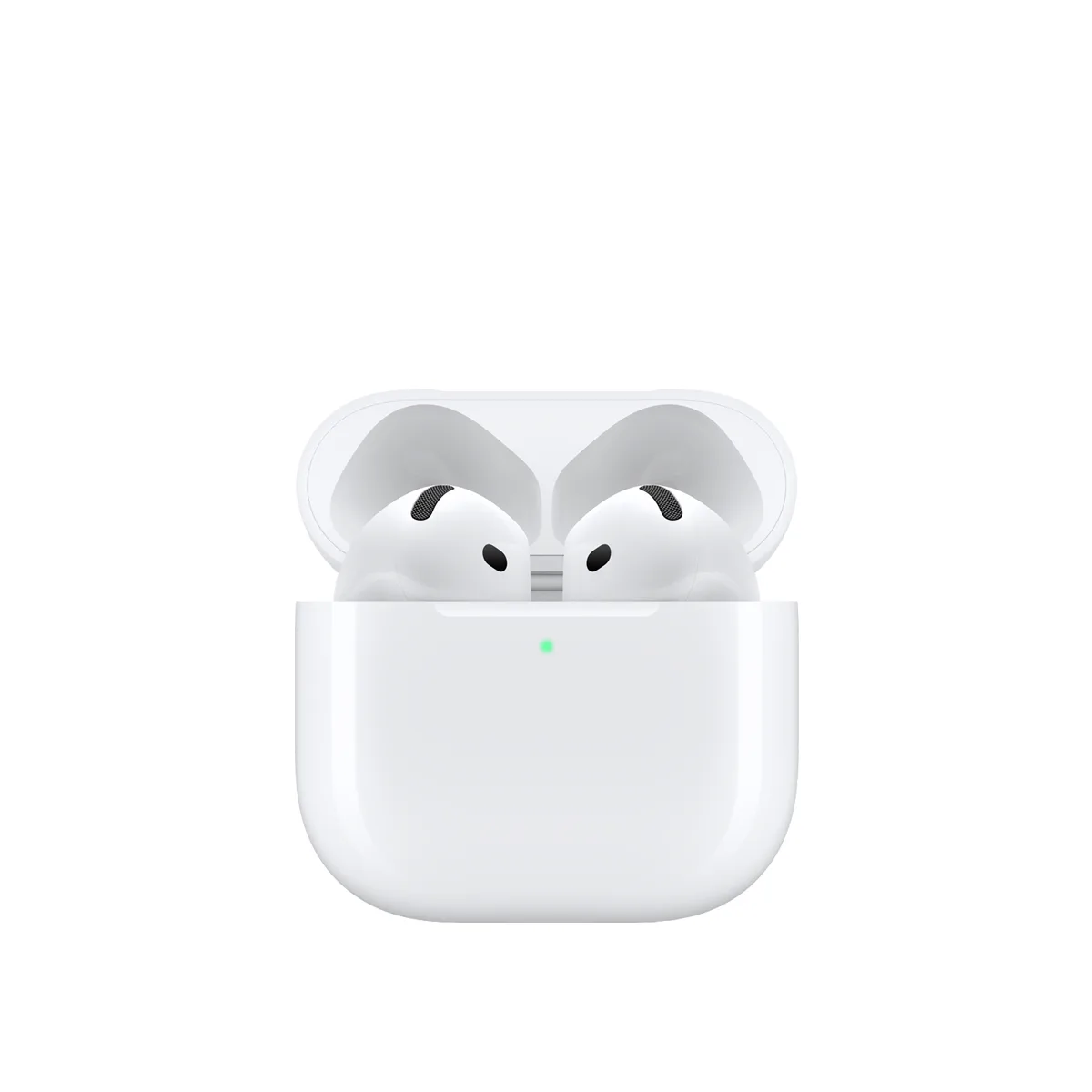
The cheapest current AirPods, and the version to buy only if you're sure you don't want noise cancellation — because the ANC variant costs just a little more and adds a lot. You get the same H2 chip, the same comfortable hard-shell open fit, excellent call quality, Personalized Spatial Audio, and Voice Isolation; owners like how the redesigned shape stays put better than older base AirPods and how light 4.3g feels over long wear. What the base model drops: ANC, Transparency, Adaptive Audio, the case speaker for Find My, and — the one that stings — wireless charging, since this case is USB-C only. Reviewers who measured both versions also found the non-ANC model rolls off sub-bass harder, so music sounds a bit leaner. Battery is 5 hours per charge and 30 with the case, and a 5-minute top-up buys an hour. The usual Apple fine print applies: AAC only, no EQ app, and half the features don't work on Android. If AirPods have never fit your ears, this shape won't change your mind — and if you're tempted at all by ANC, spend up for the other version.
Best for iPhone users who want basic AirPods and skip ANC