HyperX
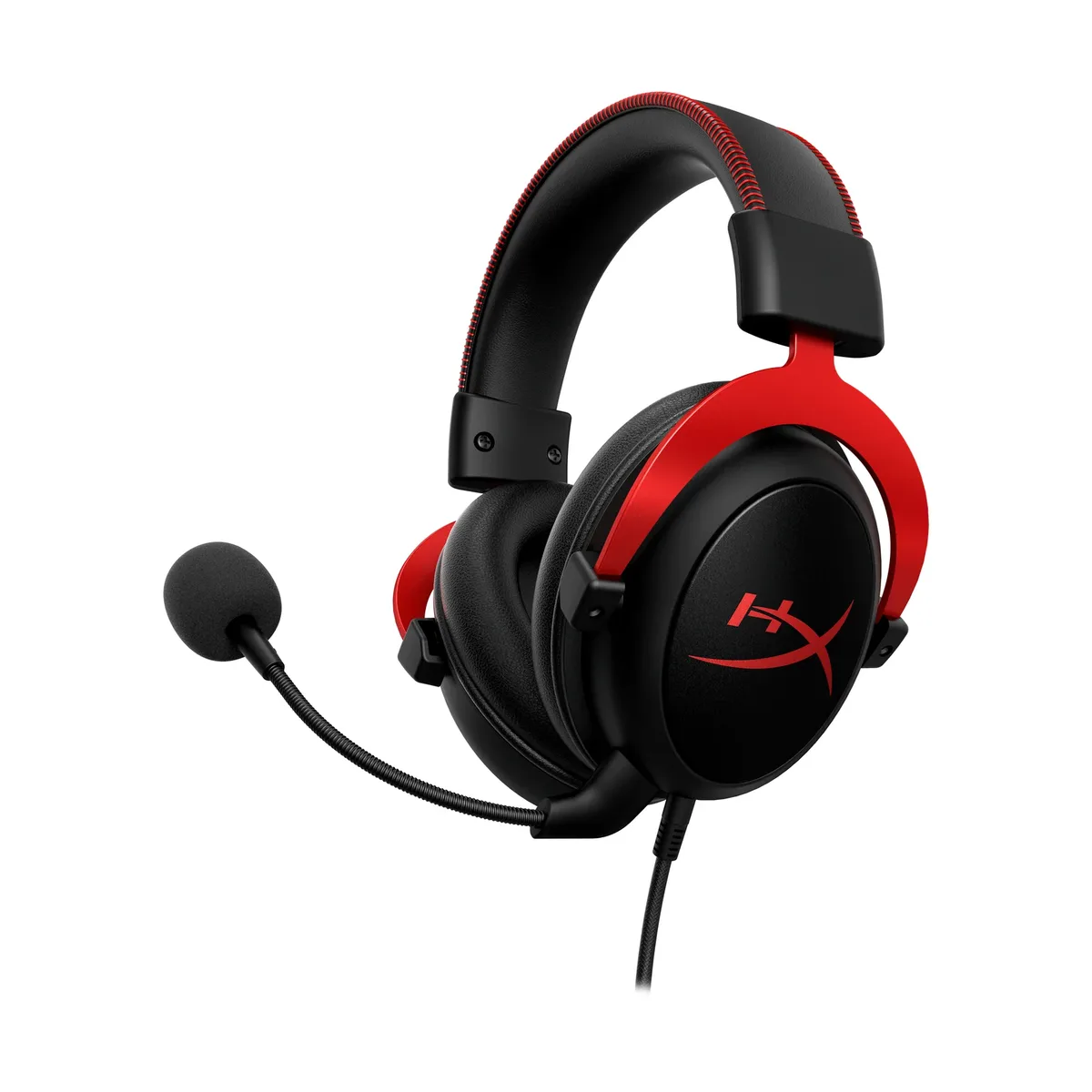
HyperX Cloud II
This is the headset that made HyperX, and a decade later it's still one of the safest cheap buys in gaming. The formula hasn't changed: an aluminum frame that survives years of abuse, memory-foam leatherette pads that stay comfortable through long sessions, and big 53mm drivers with a warm, bass-forward tune. Owners routinely report six to ten years of daily use before anything gives out, and when the pads finally do, replacements are cheap and standard-sized. The honest caveats: the sound is dated next to modern competition — perfectly fine for games, mediocre for music — and the USB control box's virtual 7.1 surround is a button most owners press once and never again. The mic is serviceable rather than great, and there's no software support, wireless option, or EQ. Compatibility is simple because it's analog: the 3.5mm plug works on PS5, Xbox, Switch, and anything with a headphone jack, while the USB box adds volume/mic controls on PC and PlayStation. If you want a no-fuss wired headset that will outlive two console generations, this is still the answer; if you care about sound refinement, spend a little more on the Cloud III.
We may earn a commission. Price and availability on Amazon’s site may differ.
Specifications
Highlights
Pros
- ✓Aluminum frame durability is legendary — owners report 6-10 years of daily use
- ✓Memory foam leatherette pads stay comfortable through marathon sessions
- ✓3.5mm connection works on PS5, Xbox, Switch, PC, and mobile without adapters
- ✓Warm, bass-forward 53mm drivers suit action games well
- ✓Detachable noise-cancelling mic is fine for parties and Discord
- ✓Replacement ear pads are cheap and standard-sized
- ✓Frequently on sale around $50 or less
Cons
- ✗Sound quality is dated — fine for games, mediocre for music
- ✗USB box's virtual 7.1 surround is widely considered a gimmick
- ✗No software support, EQ, or firmware updates
- ✗Leatherette pads get sweaty in warm rooms
- ✗Mic is average by modern standards
- ✗Non-detachable main cable — a snag can total the headset
Owner Insights(280 discussions)
The HyperX Cloud II is the cockroach of gaming headsets — in the best possible way. Released in 2015 and still selling by the pallet a decade later, it holds an 84% positive rate across hundreds of owner reviews, and the recurring story is the same: bought it years ago, replaced the ear pads once, still using it daily. The aluminum-fork frame shrugs off drops and backpack abuse that kill plastic rivals, and among owners it has become the default answer to 'what headset should I buy under $100.'
In daily use the memory-foam pads are the star — long sessions and glasses both go easier here than on stiffer headsets, though the leatherette does flake after a year or two and most veterans just buy $10 replacement pads. The detachable mic is the classic Discord workhorse: clear, well-suppressed, and reliable — but plug the headset into a real 3.5mm port, because the bundled USB dongle is where complaints cluster, with some owners describing faint, distorted mic output through it. The '7.1 surround' button on that dongle is fake upmixed stereo that experienced owners leave off. The fixed cable is the main long-term failure point; treat it gently since it can't be swapped.
Buy the Cloud II if you want a no-software, works-on-everything headset that will outlive two GPUs. At ~$60 its main rival is its own successor: the Cloud III adds USB-C, a better mic, and smoother sound for about $10 more, while the Razer BlackShark V2 X undercuts it at $40 with lighter weight but flimsier build. If your priority is a mic that sounds great through USB or true software EQ, step up to the Cloud III or an Arctis Nova 5 instead.
Pros
- +Legendary durability — long-term owners routinely report 5-7 years of daily use with nothing failing but the ear pads, which cost about $10 to replace
- +Memory-foam pads and a lightweight aluminum frame stay comfortable through 6+ hour sessions, and glasses wearers say the plush foam doesn't clamp arms into their temples the way stiffer headsets do
- +Positional audio in FPS games punches far above the price — owners of $150+ headsets say footstep placement is nearly as good here
- +Detachable mic sounds clear on Discord when plugged in via the 3.5mm jack, with effective background-noise suppression teammates notice
- +Works on literally everything — PC, PS5, Xbox (3.5mm), Switch, phone — with zero software or pairing required
- +No mandatory companion app: plug in and play, so there's no driver suite to break after a Windows update
- +Consistently on sale near $60, and owners overwhelmingly call it the best value in gaming headsets
Cons
- −The bundled USB sound card is the weak link — several owners report the mic sounds faint or distorted through the dongle and only clean when wired straight into a 3.5mm port
- −The famous '7.1 surround' is fake upmixed stereo, and experienced owners recommend leaving it off because it smears positional cues
- −Non-detachable cable is a known failure point — reports of curling, glitchy audio, and loose-jack behavior after months of rough handling, and you can't just swap the cable
- −Stock leatherette ear pads flake and crack after 1-2 years of daily use, so budget for replacements
- −Mic boom is sensitive to being bumped — some units produce static or briefly cut out when the boom is moved mid-call
- −Sound signature is dated for music — bass-forward and grainy in the highs compared to the Cloud III or a Razer BlackShark V2 X
- −No volume-wheel-free option: the inline USB controller adds cable clutter some desk setups hate
Common Questions
Compare the HyperX Cloud II
Related headphones
More from HyperX →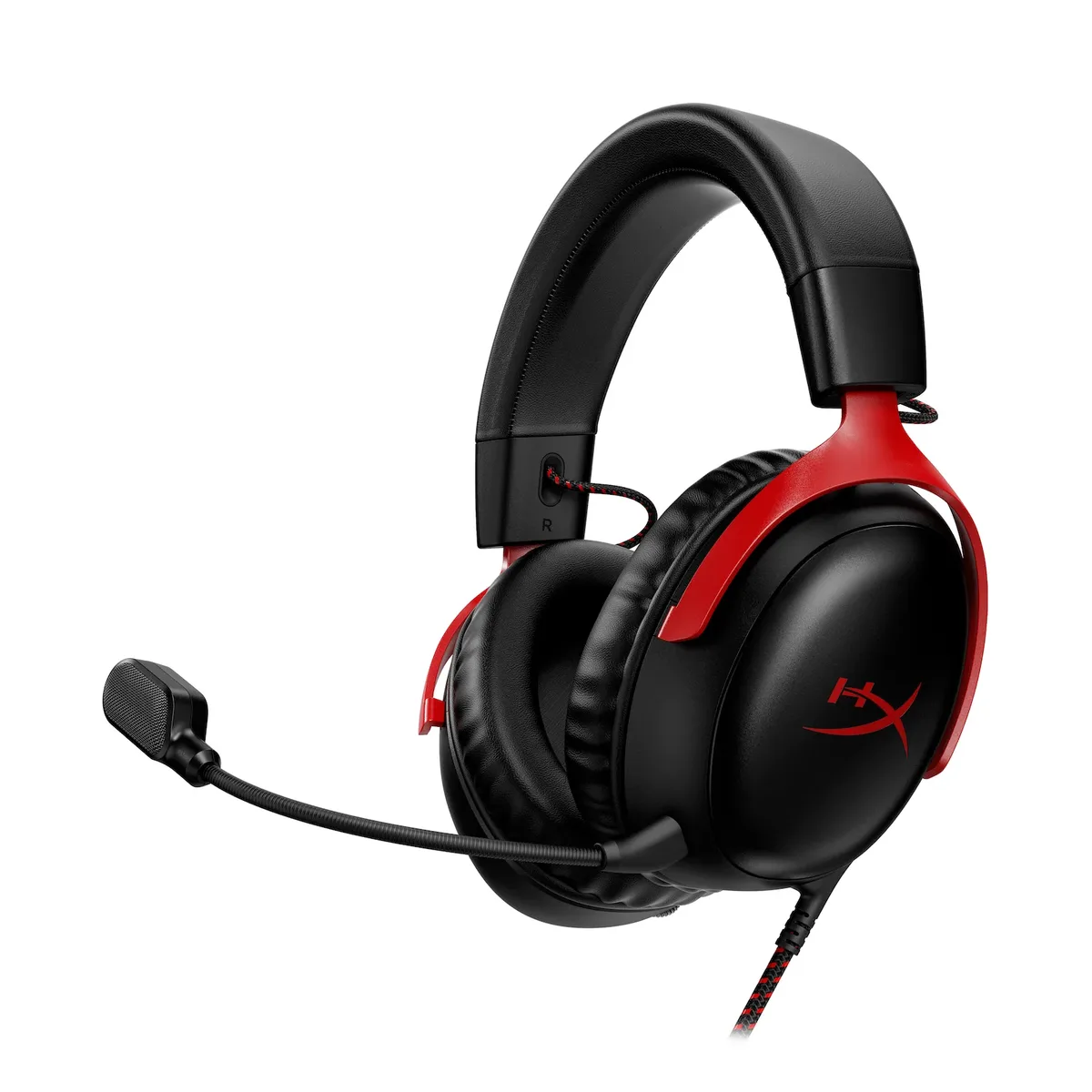
HyperX
Gaming Headsets
The Cloud III takes everything owners loved about the Cloud II — the aluminum frame, the memory-foam comfort, the tank-like build — and quietly fixes the weak points. The angled 53mm drivers sound cleaner and better separated than the old warm mush, and the 10mm mic is the real headline: long-term reviews consistently rank it among the best microphones on any gaming headset at any price, with an LED mute indicator on the tip so you always know when you're muted. You get three ways to connect: 3.5mm analog for PS5, Xbox, and Switch, plus USB-C and a USB-A adapter for PC and PlayStation, where DTS spatial audio and EQ come via HyperX's Ngenuity software. The honest caveats: it's a modest step over the Cloud II rather than a leap, there's no wireless or noise cancellation at this price, and the leatherette pads still run warm. Some owners also note the fixed USB-C cable deserves care — it's not the invincible part of the package. But at its typical street price it undercuts most of the competition while beating them on mic quality and comfort, which is why it's become the default recommendation for wired headset buyers.
Best for Wired gamers who talk as much as they play
HyperX
Gaming Headsets
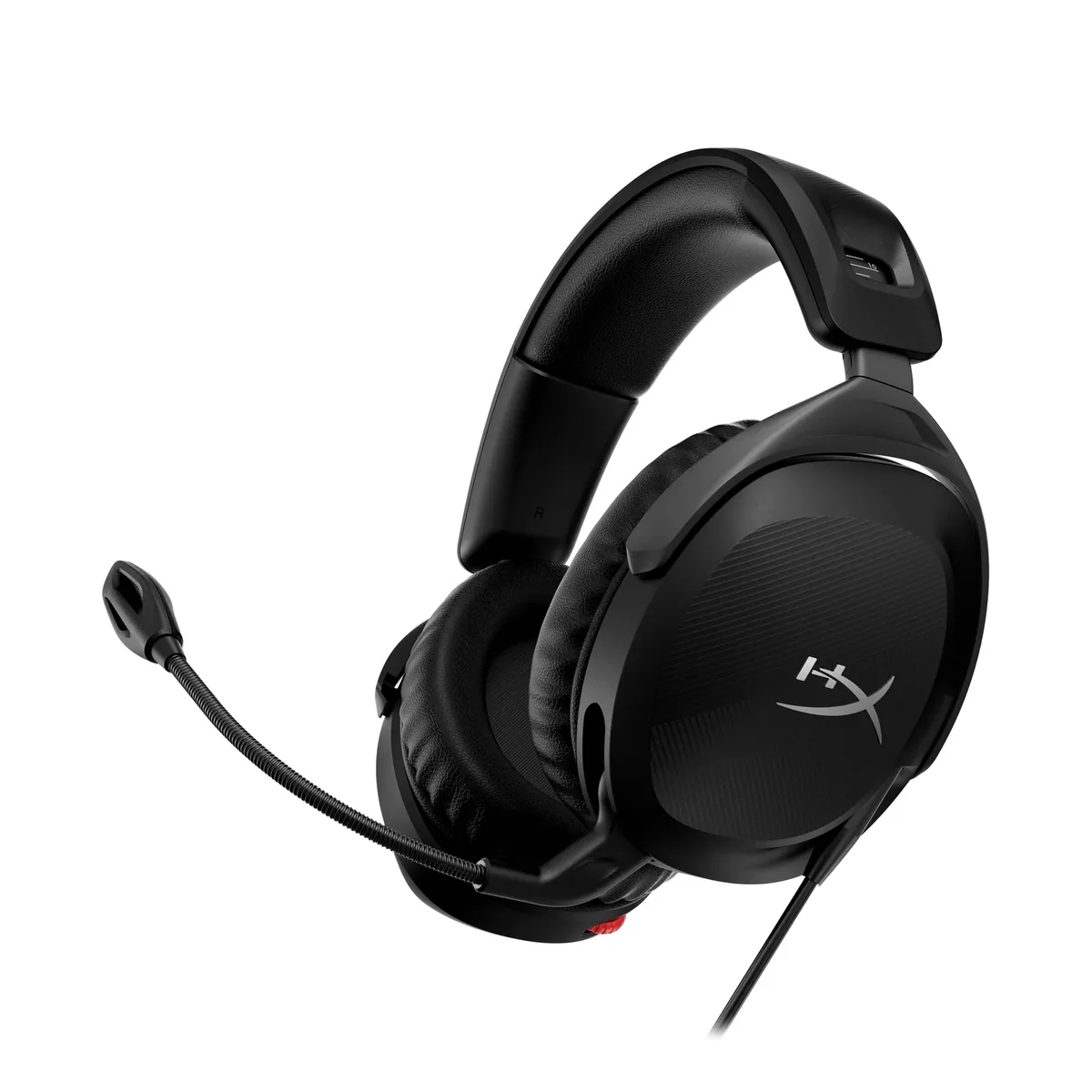
The Stinger 2 is HyperX's entry-level wired headset, and it nails the basics that matter at $30-50: comfortable for long sessions at a light 275g, decent 50mm sound with a bass-forward tilt, and a swivel-to-mute mic — rotate it up and you're muted, no button hunting. Owners consistently call HyperX the safest name in budget wired headsets, and the Stinger 2 is why: it just works, and it's regularly on sale near $30. A DTS Headphone:X license adds virtual spatial audio on PC, though there's no EQ software beyond that. The honest caveats are exactly what you'd expect at the price: the all-plastic chassis feels flimsy next to the aluminum-framed Cloud II (a few owners report cracked cups after a year or two of rough handling), the mic is serviceable rather than good, the cable doesn't detach, and there's nothing to customize. It's a plain 3.5mm headset, so it plugs into PS5, Xbox, and Switch controllers fine even though HyperX markets this base version for PC. If you can stretch to the Cloud III, do — but if the budget stops here, the Stinger 2 and Corsair HS55 are the two safe answers, with the Stinger winning on mute convenience and the HS55 on plushness.
Best for First headsets and backup rigs on a tight budget
Logitech G
Gaming Headsets
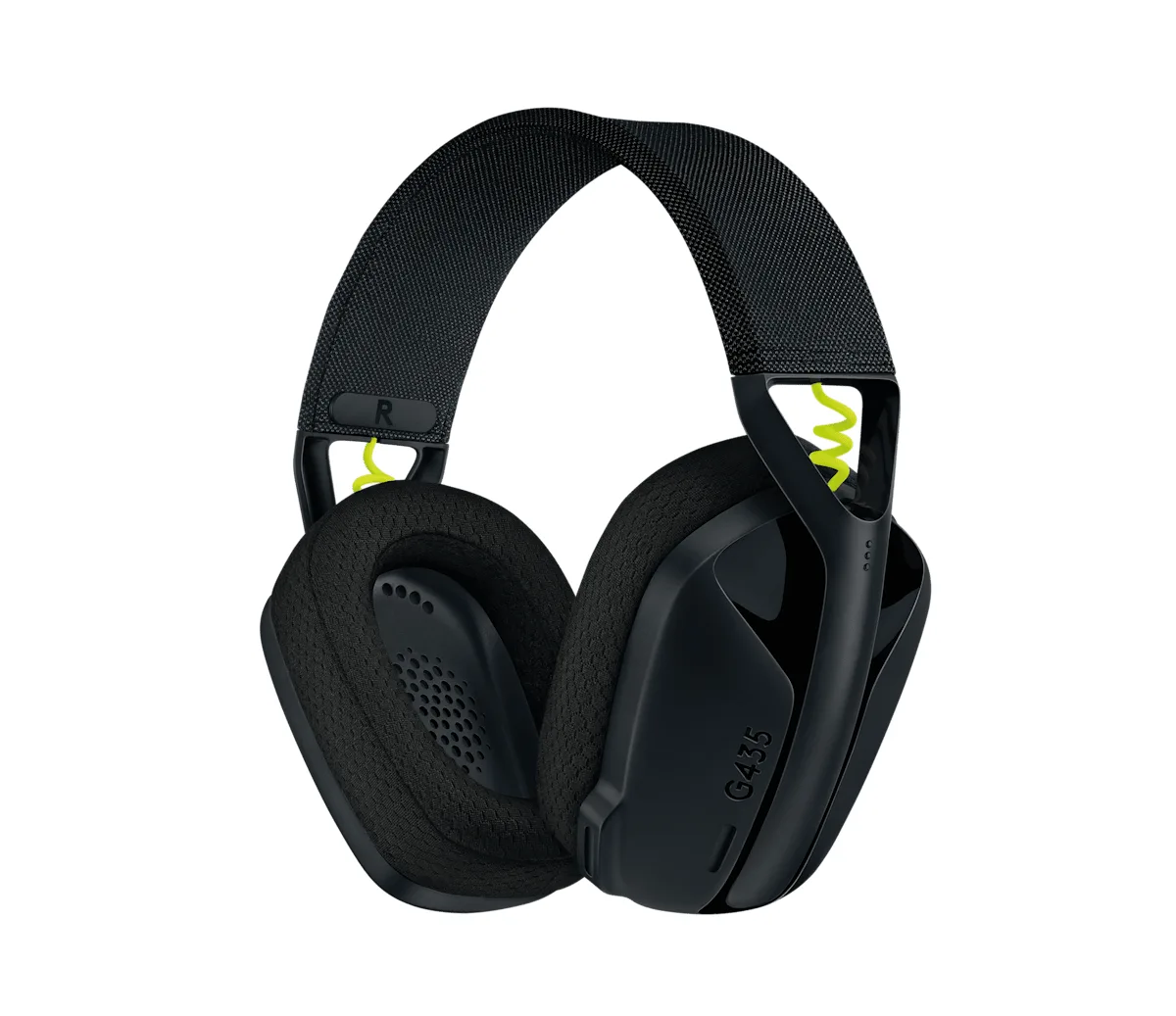
At 165 grams the G435 is one of the lightest wireless gaming headsets ever made, and that's the whole pitch: you put it on and forget it's there. It's built for smaller heads — Logitech designed it with teens and tweens in mind — which makes it the default answer for kids and anyone who finds normal headsets heavy and clampy, and the colorways lean playful rather than gamer-aggressive. You get both a low-latency Lightspeed dongle (PC, PS5/PS4, Switch) and Bluetooth for phones, plus 18 hours of battery and Dolby Atmos compatibility. The honest caveats stack up at this price: there's no boom mic — the built-in beamforming mics are fine for casual Discord but noticeably worse than any boom arm — there's no companion software or EQ, the materials feel cheap even if they hold up, and the battery is modest by 2026 standards. The big one: it does not work with Xbox at all, over dongle or Bluetooth. Sound is decent, safe, and a bit flat, which owners forgive at the street price of $35-50. For a light, cable-free headset for a kid, a Switch, or a secondary rig, it's hard to argue with; adults with big heads should size up.
Best for Kids, teens, and small-headed gamers who want cheap wireless
Razer
Gaming Headsets
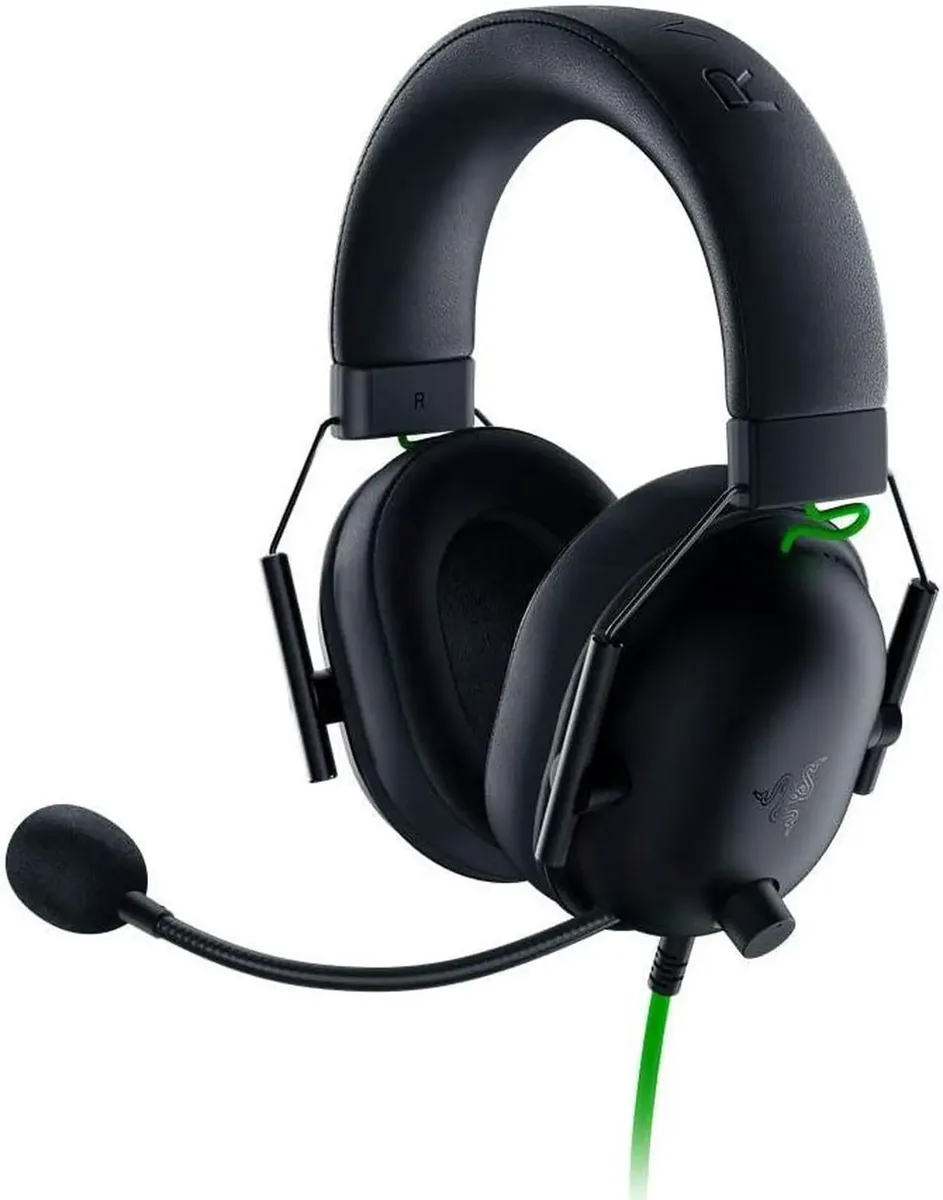
The BlackShark V2 X is the budget cut of Razer's esports line, and it's quietly one of the best $40 headsets you can buy. You keep the important parts of the pricier V2: the 50mm TriForce drivers with strong positional audio, a light 240g frame with a steel-core headband, and thick memory foam pads that passively block a surprising amount of noise. Owners are consistently impressed by the mic for the price — clear enough that teammates don't complain, which is not a given at $40 — though it's fixed to the headset rather than detachable. Because it's a plain 3.5mm analog headset, compatibility is universal: PS5, Xbox, Switch, Steam Deck, PC, and phones with a jack all just work, no dongles or pairing. The honest caveats: the 7.1 surround requires a Windows-only app that owners frequently describe as finicky (stereo sounds fine anyway), there's no EQ software, the cable doesn't detach, and the leatherette pads get warm. Sound leans bass-heavy out of the box, which suits action games more than music. If you want maximum competitive performance per dollar and don't care about wireless, this and the Corsair HS55 are the two names that keep coming up — the Razer wins on isolation and mic.
Best for Budget competitive players on any platform
Corsair
Gaming Headsets
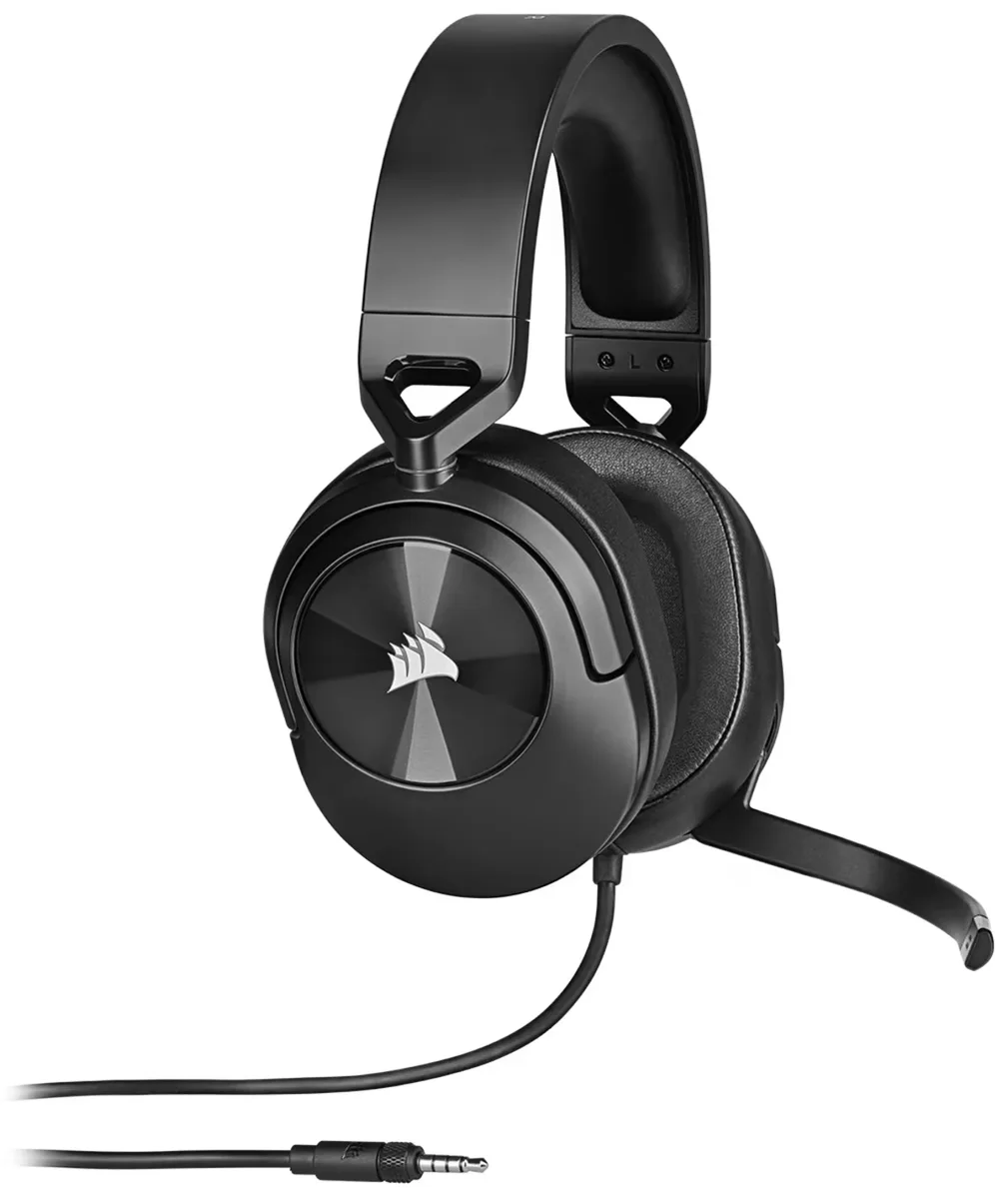
The HS55 Stereo is the comfort pick of the budget wired class. Corsair swapped the stiff foam of its older cheap headsets for genuinely plush leatherette memory foam, and owners regularly wear it through four- and five-hour sessions without pressure complaints — a real feat under 300 grams and often under $40. The 50mm drivers are tuned safe and balanced rather than exciting, and because it's plain 3.5mm analog (with a Y-splitter included for PC), it works on PS5, Xbox, Switch, Steam Deck, and anything else with a jack. The flip-to-mute omnidirectional mic is Discord-certified and gets the job done, though owners note a faint background fuzz that clearer boom mics don't have. The honest caveats: this is the Stereo model, so there's no surround sound, no software, and no EQ — competitive FPS players who live on positional audio should look at the BlackShark V2 X instead, which images better at the same price. The mic and cable don't detach, and the leatherette gets sweaty on hot days. But if your priority is a cheap, comfortable, everything-compatible headset for long casual sessions and party chat, this is one of the two names that dominate the budget conversation.
Best for Comfort-first budget buyers on any platform
BENGOO
Gaming Headsets
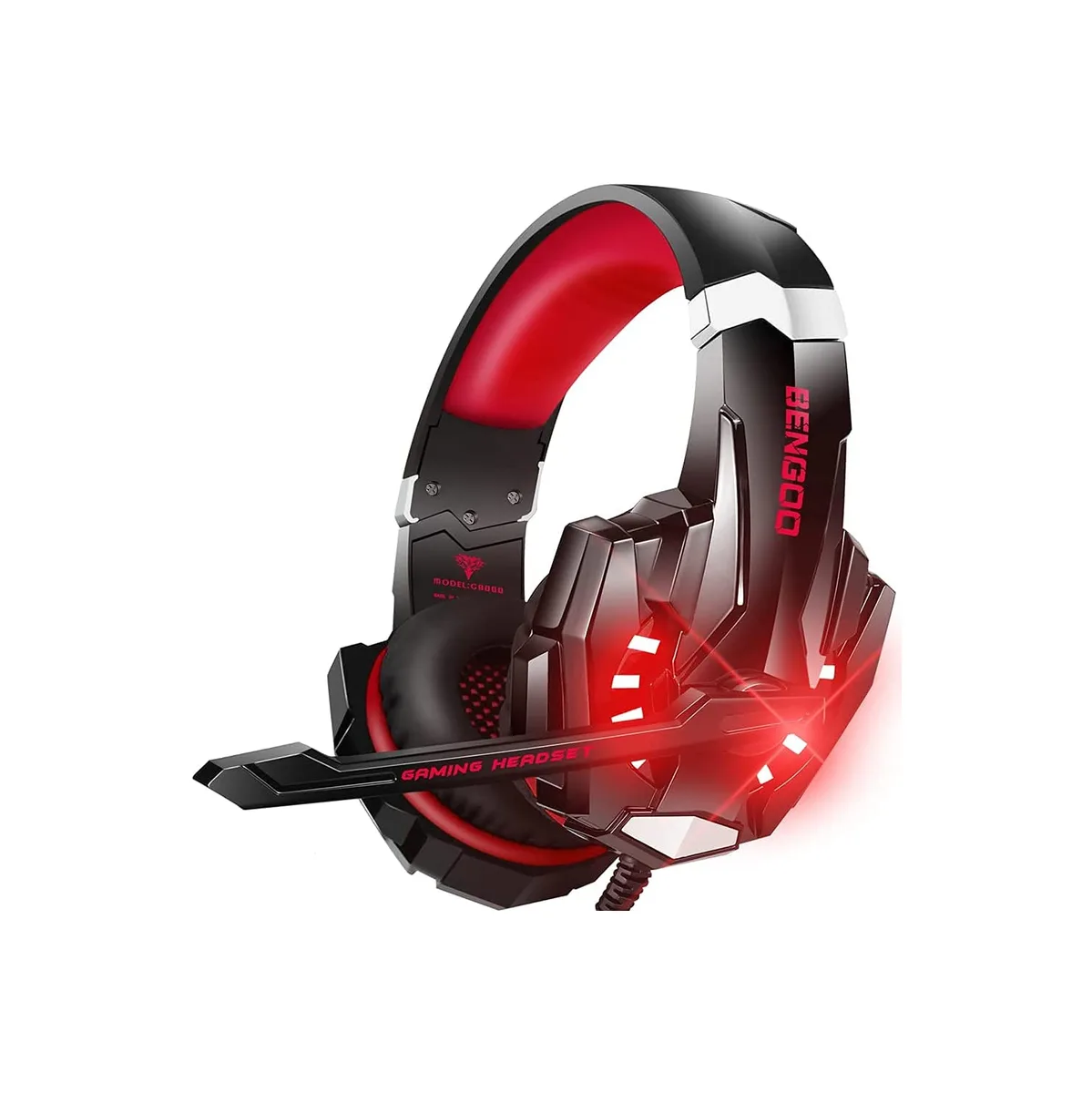
The G9000 is the perennial Amazon best-seller of the sub-$30 tier, and it's important to be clear about what that buys: audio that owners agree is genuinely decent for the price — punchy bass from 40mm drivers, fine for casual games and YouTube — wrapped in hardware that is exactly as cheap as it costs. It's a 3.5mm analog headset that plugs into PS5, PS4, Xbox, Switch, and PC controllers (the separate USB plug powers only the LED glow, which can't be turned off while connected), and despite the '7.1 surround' on the box, it's plain stereo. The honest caveats are substantial: the mic is the weak point — overly sensitive to fans and background noise, and a common failure item, with owner reports of mics dying within weeks or snapping off — the plastic frame creaks and loosens, and the shallow cushions start hurting ears around the two-hour mark. Longevity is a coin flip; plenty of owners are happy for a year, plenty see breakage in the first month. As a starter headset for a kid, a stopgap, or a spare for guests, it's an acceptable $25 gamble. If you can spend $10-15 more, the HyperX Cloud Stinger 2 or Corsair HS55 are meaningfully better built and better sounding.
Best for Starter or spare headset on the tightest budget