Audio-Technica ATH-M50x vs Sony MDR-7506
Quick take: The Sony MDR-7506 costs $61 less.
Which one to buy
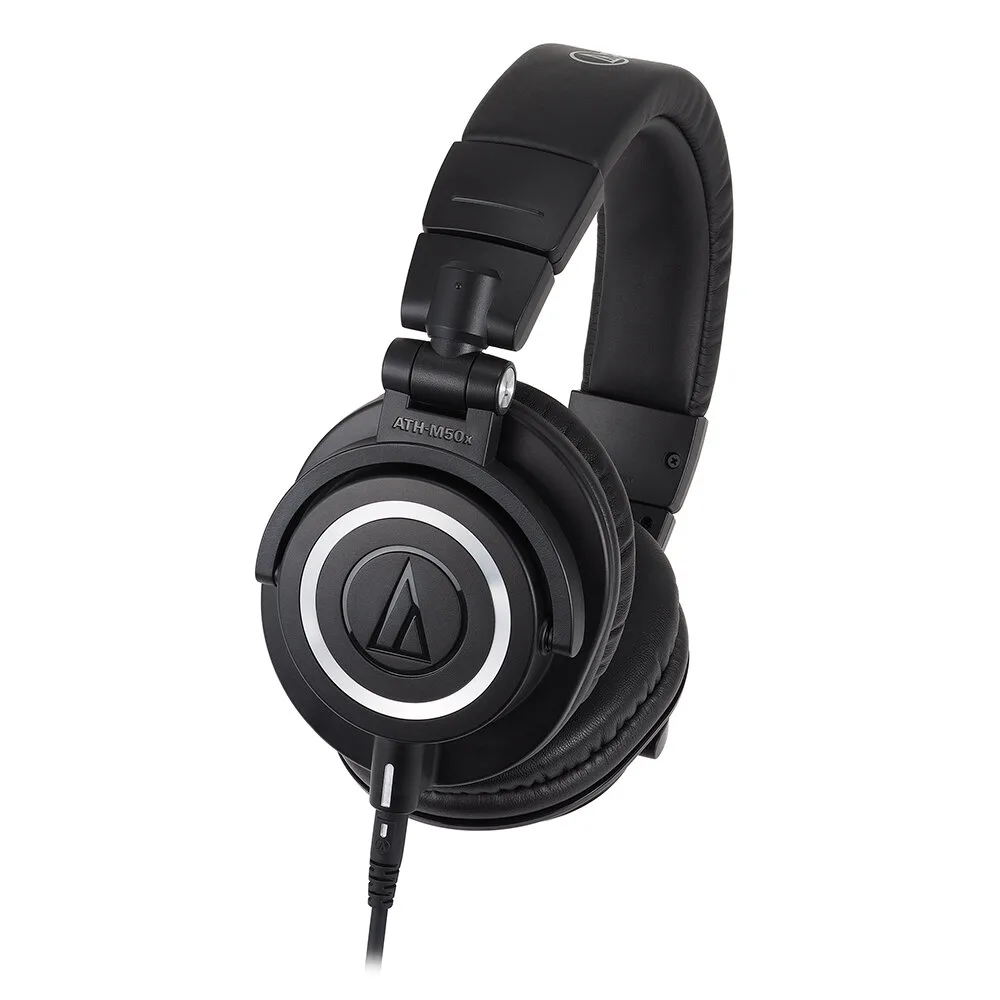
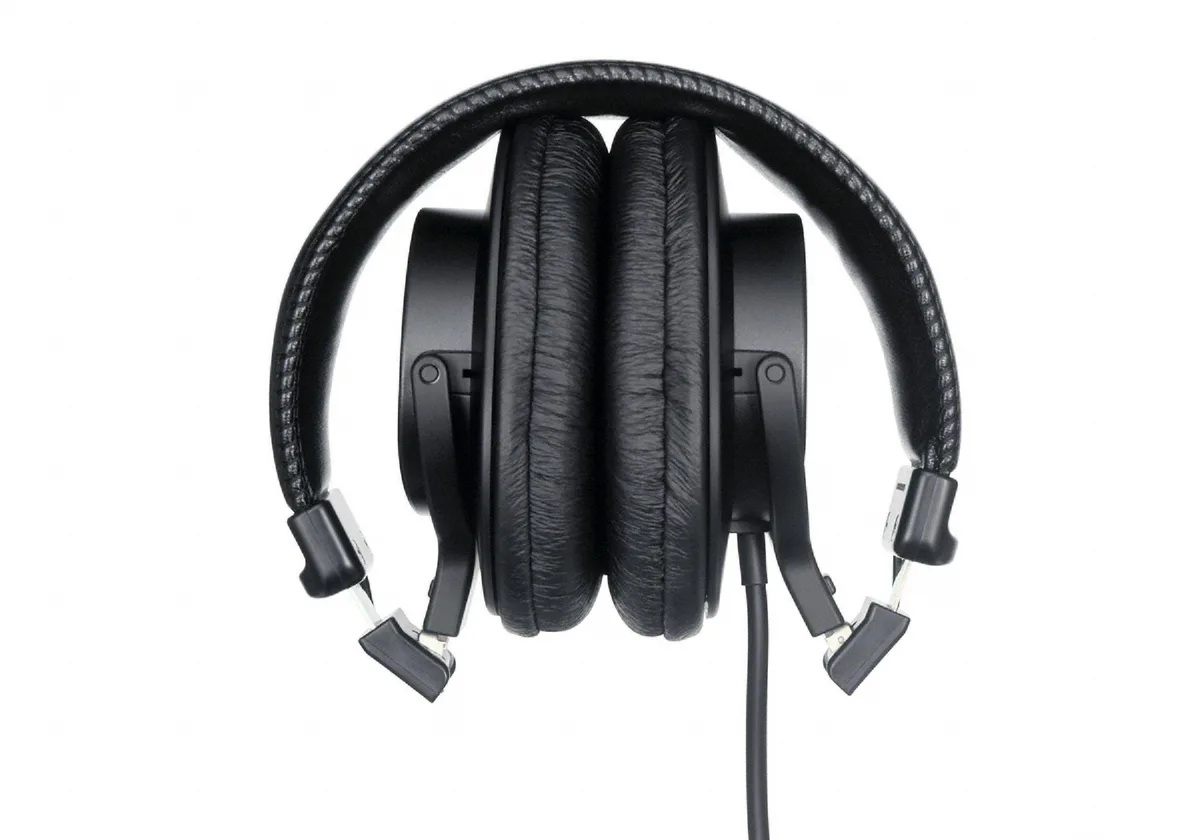
This is the oldest argument in studio headphones, and owners have more or less settled it: the two do different jobs. The MDR-7506 is the honest one. It's flatter through the bass and brighter on top, so hum, sibilance, mouth clicks and bad edit points jump out, which is why broadcast booths and video crews have used it since 1991. The ATH-M50x is the fun one. Its mid-bass bump and forward treble flatter hip-hop and electronic music but hide detail, and producers who mix on it learn to check their low end elsewhere.
The ergonomics follow from those roles. The Sony is a featherweight 230g that disappears through a long editing day, and its 3-meter coiled cable is permanently attached: good on a camera rig, an annoying spring at a laptop. The M50x is heavier at 285g with a firmer clamp that gives larger heads and glasses wearers sore spots until it breaks in. In exchange you get three detachable cables (most owners retire the heavy coiled one right away) and better isolation for tracking vocals or commuting.
They share the same well-known weakness. Both sets of stock pleather pads crack and shed, the Sony's within a year or two and the M50x's within one to three years. Owners of both treat new pads as routine maintenance, and the frames outlast several sets. One catch on the Sony: thick velour replacement pads audibly soften the bright reference sound you bought it for.
Neither needs an amp. The M50x is 38 ohms, the Sony is 63 ohms with high sensitivity, and phones, cameras and interfaces drive both. On price the Sony is about $60 cheaper at $98 against $159, and for spoken-word and dialogue editing owners say it's the better tool anyway. The M50x earns the extra money if you want one headphone that also works for music you listen to for pleasure.
Audio-Technica ATH-M50x
For when you want one durable, foldable headphone for tracking, travel and listening for pleasure, and value detachable cables and better isolation over a neutral bass.
Sony MDR-7506
If you edit podcasts, dialogue or video and need problems exposed rather than flattered. It's lighter for all-day sessions and about $60 cheaper.
| Spec | Audio-Technica ATH-M50x | Sony MDR-7506 |
|---|---|---|
| Approx. price | ~$159 | ~$98 |
| Rating | — | — |
| Type | Wired & Studio | Wired & Studio |
| Noise Cancelling | None | None |
| Battery (single charge) | — | — |
| Battery (with case) | — | — |
| Quick Charge | — | — |
| Codecs | — | — |
| Bluetooth | — | — |
| Multipoint | No | No |
| Driver Size | 45 mm | 40 mm |
| Weight | 285 g | 230 g |
| Water Resistance | — | — |
| Wireless Charging | No | No |
| Transparency Mode | No | No |
| Spatial Audio | No | No |
| App EQ | No | No |
Pros & cons
Audio-Technica ATH-M50x
- ✓Runs happily from a phone dongle at 38 ohms
- ✓Legendary durability — years of backpack abuse, still working
- ✓Folds flat with three detachable cables included
- ✓Punchy tuning flatters hip-hop and electronic
- ✓Cheap replacement pads make it effectively immortal
- ✓Decade-plus default first studio headphone for a reason
- ✗Coiled cable is heavy enough to tug your head
- ✗Pleather pads run hot and flake by year two
- ✗Clamp is firm on larger heads
- ✗Mid-bass bump and forward treble aren't mixing-flat
- ✗Trails the DT 770 for long-session comfort
Sony MDR-7506
- ✓Broadcast-booth standard since 1991 for good reason
- ✓Any camera or phone drives it, no amp
- ✓Detail-forward sound exposes hum, sibilance, and edit points
- ✓Featherweight 230g folding frame for all-day wear
- ✓Under $100 for a genuine industry tool
- ✓Folds compact into any camera bag
- ✗Stock pads famously disintegrate into black flakes yearly
- ✗3-meter coiled cable is permanently attached
- ✗Bright treble fatigues casual listeners quickly
- ✗Zero updates in decades — no detachable-cable revision
- ✗Aftermarket pads are effectively part of the price
Audio-Technica ATH-M50x vs Sony MDR-7506: common questions
Which is better for podcast editing, the M50x or the MDR-7506?▾
The MDR-7506. Its brighter, flatter presentation exposes sibilance, hum and mouth noise that the M50x's mid-bass bump can mask, and its light 230g frame suits long editing sessions. That's why it stays standard kit for spoken-word work.
Is the MDR-7506 too bright for listening to music?▾
For many listeners, yes. Owners say cymbals and horns turn brittle at volume and fatigue comes on faster than with warmer headphones. The M50x is the more enjoyable music listen, at the cost of honesty in the bass.
Is the M50x's or the MDR-7506's cable setup better?▾
The M50x's, for most desk users: it ships with three detachable cables, so you can skip the heavy coil. The Sony's 3-meter coiled cable is hard-wired. That suits a camera rig or mixing desk, but you can't swap it without soldering.
Will I be replacing pads on both the M50x and the MDR-7506?▾
Yes. Both sets of stock pleather pads famously flake, the Sony's typically within one to two years and the M50x's within one to three. Replacements are cheap and quick on both, but on the Sony, thick velour pads change the reference sound.