Skullcandy Dime 3 vs Skullcandy Crusher Evo

Quick take: The Skullcandy Dime 3 costs $115 less; the Skullcandy Crusher Evo lasts longer per charge (40 hrs); only the Skullcandy Dime 3 supports multipoint (two devices at once).
Which one to buy
These two share a brand and little else: a $25 pair of pocket earbuds and a $140 over-ear headphone built around bass you can feel. If you're cross-shopping them, the real question is what job you want headphones for.
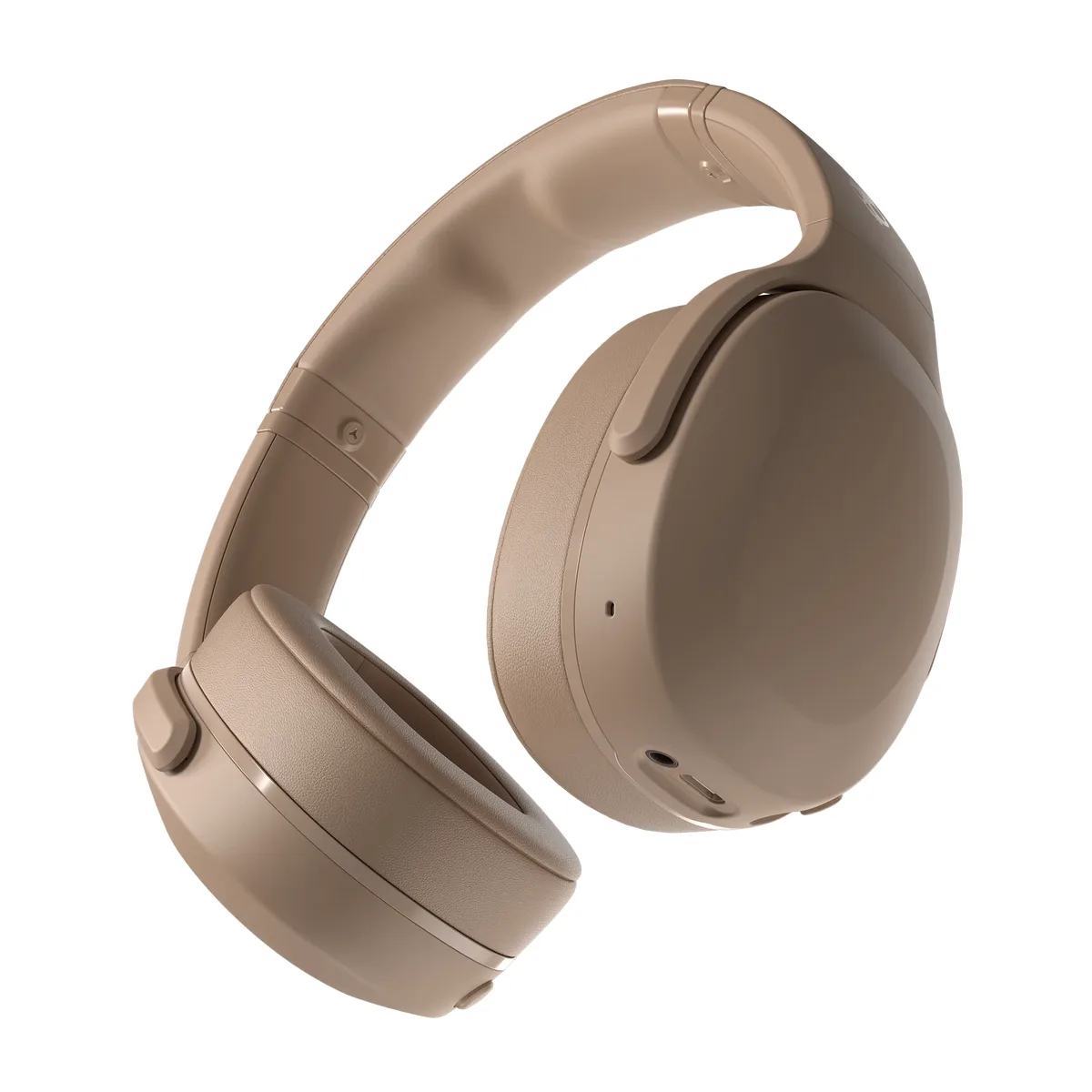
The Crusher Evo's reason to exist is its haptic slider, which makes the earcups vibrate, like a small subwoofer strapped to your head, for hip-hop, EDM and movies. Set it to zero and owners describe a warm, respectable headphone, and the app's Personal Sound test tunes it to your hearing. It gets 40 hours per charge. The Dime 3 has no app at all, only three button-cycled EQ presets, but owners say it sounds clearer and bassier than $25 buds should.
The odd twist is that the cheap earbuds have multipoint and the $140 headphones don't. If you switch between a laptop and phone all day, the Dime 3 handles it and the Crusher Evo makes you reconnect by hand. The Dime 3 also has IPX4 for sweaty gym sessions. Both have built-in Tile tracking, and neither has ANC.
Durability complaints follow the form factor. Crusher Evo owners report cracked folding hinges often enough that replacement parts are a whole aftermarket, plus a clamp that takes weeks to loosen and a headband that pulls hair. Dime 3 owners report charging cases that die early in a minority of units, plus buds that occasionally refuse to reconnect until re-paired. At $25 a dead Dime 3 is an annoyance, while a cracked Crusher hinge costs real money.
Skullcandy Dime 3
For tiny, cheap, losable buds for the gym or a kid, with multipoint and a physical button.
Skullcandy Crusher Evo
Worth it when bass you can feel through the earcups is the whole point and you'll mostly listen at home or on the couch, since there's no ANC. Buy it near $140, not at the $200 list.
| Spec | Skullcandy Dime 3 | Skullcandy Crusher Evo |
|---|---|---|
| Approx. price | ~$25 | ~$140 |
| Rating | — | — |
| Type | Wireless Earbuds | Over-Ear Headphones |
| Noise Cancelling | None | None |
| Battery (single charge) | 8 hrs | 40 hrs |
| Battery (with case) | 20 hrs | — |
| Quick Charge | 10 min = 2 hrs | 10 min = 4 hr |
| Codecs | SBC, AAC | — |
| Bluetooth | 5.3 | 5.0 |
| Multipoint | Yes | No |
| Driver Size | 6 mm | 40 mm |
| Weight | 4 g | — |
| Water Resistance | IPX4 | — |
| Wireless Charging | No | No |
| Transparency Mode | No | No |
| Spatial Audio | No | No |
| App EQ | No | Yes |
Pros & cons
Skullcandy Dime 3
- ✓Multipoint pairing at $25 — rivals charge four times more
- ✓Built-in Tile tracking helps find lost buds
- ✓Tiny 4-gram shells fit small ears bulkier buds can't
- ✓Warmer, more balanced sound than any $25 bud should have
- ✓10-minute quick charge buys 2 hours
- ✓Three EQ presets cover music, bass boost, and podcasts
- ✗No app at all — controls and EQ can't be customized
- ✗Multi-press button combos take real memorizing
- ✗Wind shreds the mic on outdoor calls
- ✗Featherweight lanyard case feels flimsy in hand
- ✗Modest 8-hour buds, 20 hours total with case
Skullcandy Crusher Evo
- ✓Haptic Crusher bass slider delivers physical, subwoofer-like rumble no rival matches
- ✓40-hour battery with 10-minute quick charge for 4 extra hours
- ✓Bass slider at zero yields a respectable, near-neutral everyday sound
- ✓Personal Sound (Mimi) hearing test in the Skullcandy app customizes the tuning
- ✓Plush memory-foam earcups owners find comfortable for long sessions
- ✓Folds flat and comes with a travel pouch
- ✓Built-in Tile tracking to locate lost headphones
- ✗No active noise cancellation at a price where ANC is now standard
- ✗No multipoint — reconnecting between laptop and phone is manual
- ✗Folding hinges are the build's weak point in long-term reports
- ✗Max haptic bass muddies mids and is fatiguing for some owners
- ✗No aptX or LDAC support published
- ✗$200 list price is poor value — only buy at its frequent $110-145 street price
Skullcandy Dime 3 vs Skullcandy Crusher Evo: common questions
Why does the cheaper Dime 3 have multipoint when the Crusher Evo doesn't?▾
The spec sheets don't explain it, but owners of the Crusher Evo list the missing multipoint among their main complaints, and it runs an older Bluetooth 5.0 radio against the Dime 3's 5.3. If you need to stay connected to a phone and laptop at once, the Dime 3 is the only one of the two that does it.
Can I get the Crusher bass effect from the Dime 3?▾
No. The haptic slider is exclusive to the Crusher's over-ear drivers. The Dime 3's bass-boost preset adds some low end, but nothing physically vibrates.