Skullcandy
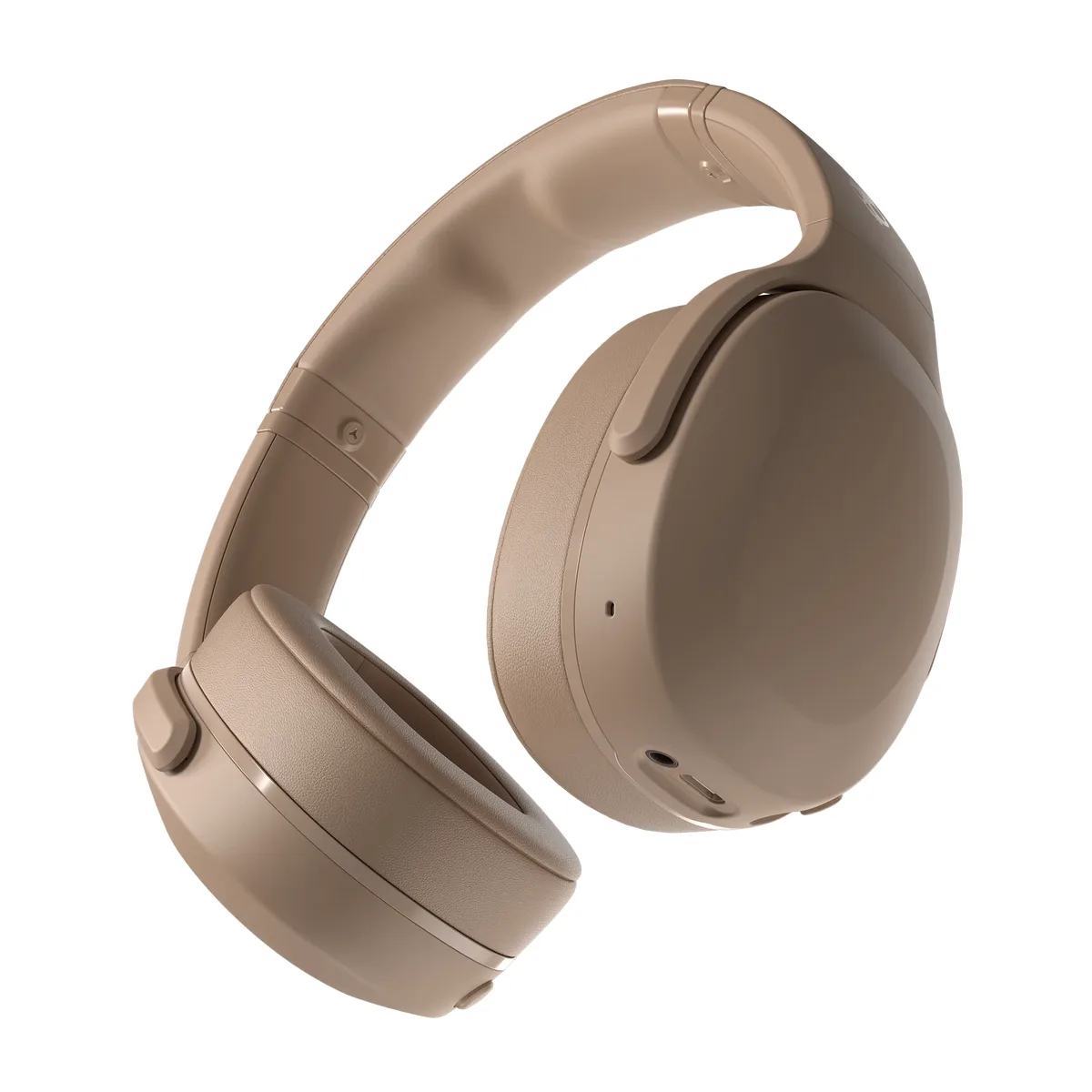
Skullcandy Crusher Evo
The Crusher Evo exists for exactly one reason: bass you can physically feel. A slider on the left earcup drives Skullcandy's haptic 'Crusher' bass drivers, and at full tilt the earcups literally vibrate against your head — owners describe it as a subwoofer strapped to your skull, and for hip-hop, EDM, and movies it's genuinely fun in a way no flat-tuned headphone is. Dial the slider to zero and you get a surprisingly normal, decent-sounding 40mm headphone, and the app's Personal Sound hearing test tailors the tuning to your ears. Battery is a strong 40 hours with a 10-minute quick charge good for 4 more. The honest caveats: there's no active noise cancellation and no multipoint, which stings now that both are standard under $150, and long-term owners flag the folding hinges as the build's weak point. It also rarely deserves its $200 list price — it sells in the $110-145 range constantly, and that's the price at which owners say it's worth it. If you want accuracy, look elsewhere; if you want to feel the drop, nothing else at this price does what the Crusher slider does.
We may earn a commission. Price and availability on Amazon’s site may differ.
Specifications
Highlights
Pros
- ✓Haptic Crusher bass slider delivers physical, subwoofer-like rumble no rival matches
- ✓40-hour battery with 10-minute quick charge for 4 extra hours
- ✓Bass slider at zero yields a respectable, near-neutral everyday sound
- ✓Personal Sound (Mimi) hearing test in the Skullcandy app customizes the tuning
- ✓Plush memory-foam earcups owners find comfortable for long sessions
- ✓Folds flat and comes with a travel pouch
- ✓Built-in Tile tracking to locate lost headphones
Cons
- ✗No active noise cancellation at a price where ANC is now standard
- ✗No multipoint — reconnecting between laptop and phone is manual
- ✗Folding hinges are the build's weak point in long-term reports
- ✗Max haptic bass muddies mids and is fatiguing for some owners
- ✗No aptX or LDAC support published
- ✗$200 list price is poor value — only buy at its frequent $110-145 street price
Owner Insights(850 discussions)
The Crusher Evo owns a niche nobody else seriously contests: bass you feel in your skull. Owner sentiment is remarkably consistent — people buy them for the haptic slider, and the ones who love bass-heavy genres or action movies keep them for years and evangelize them. Long-term reviews describe the sensation as a personal subwoofer, and the fact that the effect is adjustable from zero to absurd means the headphone scales from normal listening to a full sensory event. Among bass-first headphones owners rank it above anything from JBL or Sony for pure physical impact.
The practical experience is more mixed than the fun factor suggests. With the slider at zero the tuning is warm and respectable, and the app's Personal Sound hearing test meaningfully improves clarity for owners who take it. Battery is a real 40 hours with a fast top-up. But there's no ANC and no multipoint, the clamp arrives tight and takes weeks to break in, the headband rubber pulls hair, and glasses wearers lose both seal and some of the haptic effect. The most serious long-term complaint is the folding hinges — enough of them crack that replacement parts are a thriving aftermarket, so owners who toss them in bags unpadded tend to learn the hard way.
Buy the Crusher Evo if physical bass is the point — at its typical $80-140 street price it's the definitive choice for hip-hop, EDM, and movies, and nothing at any price replicates the sensation. Skip it if you need ANC or work across two devices; the Sony ULT Wear costs a little more and adds real noise cancellation plus a milder version of the bass-boost idea, and it's the alternative owners most often land on when they want fun bass and a commute-ready feature set.
Pros
- +The haptic bass slider is genuinely unlike anything else — owners describe R&B, hip-hop, and EDM at 30-50% slider as feeling like a club subwoofer, and movie explosions physically rumble
- +Slider at zero turns them into a surprisingly normal, decent-sounding warm headphone, so you're not locked into the gimmick
- +40-hour battery claim holds up in real use, and the 10-minute quick charge for 4 hours saves owners who forget to plug in
- +Personal Sound hearing-test tuning in the app is a sleeper feature — owners who bother with the test say it noticeably sharpens detail for their ears
- +Roomy earcup openings keep ears free inside, so multi-hour sessions stay comfortable once the clamp breaks in
- +Physical buttons and the bass slider are easy to operate by feel — no fussy touch surfaces
- +Consistently sells in the $80-140 range well under its $200 list, where owners agree it's an easy recommendation for bass lovers
Cons
- −No active noise cancellation at all — commuters expecting quiet at this price point are disappointed, since ANC is standard under $150 now
- −No multipoint, so owners juggling a laptop and phone have to manually reconnect every switch
- −Folding hinges are the known long-term weak point — replacement hinge and headband parts have a whole aftermarket, which tells you how often they crack
- −Clamp is tight out of the box; owners with larger heads say the first weeks are uncomfortable until the band loosens
- −The soft rubber under the headband grabs and pulls hair, a complaint that comes up repeatedly in long-term use
- −Glasses wearers get a weaker seal, and the haptic vibration transfers less convincingly through glasses arms — the party trick is diminished
- −Bass slider above roughly 70% buries vocals and detail entirely — owners call max-slider listening a novelty you demo for friends, not a daily setting
- −No EQ beyond the Personal Sound profile for fine-tuning the standard drivers — tweakers feel boxed in versus Soundcore or JBL apps
Common Questions
Compare the Skullcandy Crusher Evo
Related headphones
More from Skullcandy →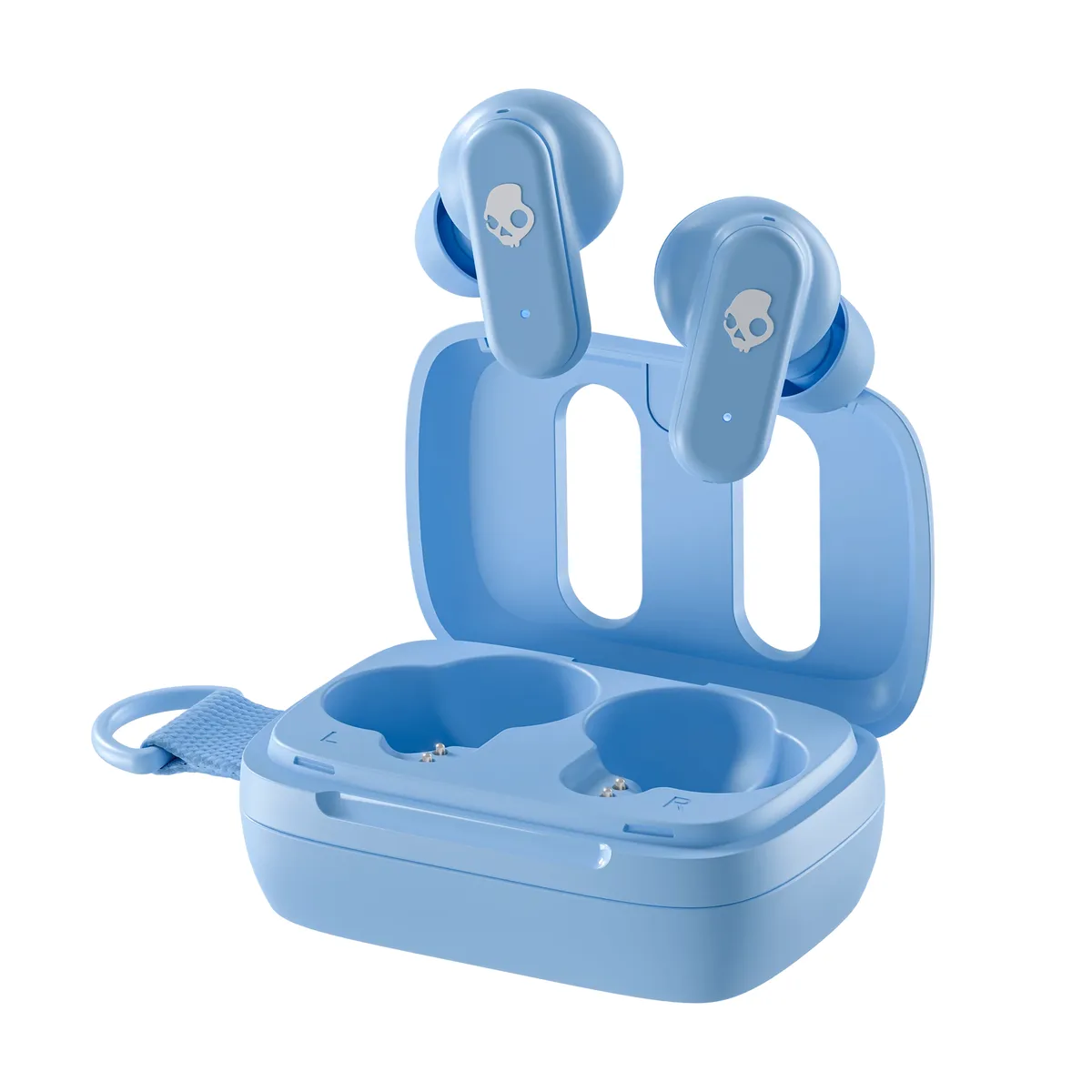
Skullcandy
Wireless Earbuds
The Dime 3 is the rare $25 bud with multipoint pairing and built-in Tile tracking, and its thumbnail-sized shells fit small ears that bulkier budget buds can't. Sound is warmer and more balanced than the price implies, and three EQ presets (music, bass boost, podcast) cover the basics. The catch is that everything is button-driven: there's no app at all, so remapping controls or fine-tuning EQ isn't possible, and the multi-press combos take memorizing. Battery is a modest 8 hours per charge and 20 total, charging is USB-C only, and the mic is serviceable indoors but wind shreds it. The lanyard-equipped case feels featherweight to the point of flimsy, and IPX4 covers sweat, not submersion. These are the default cheap, cheerful, losable recommendation.
Best for kids, gifts, and easy-to-lose situations
Sennheiser
Over-Ear Headphones
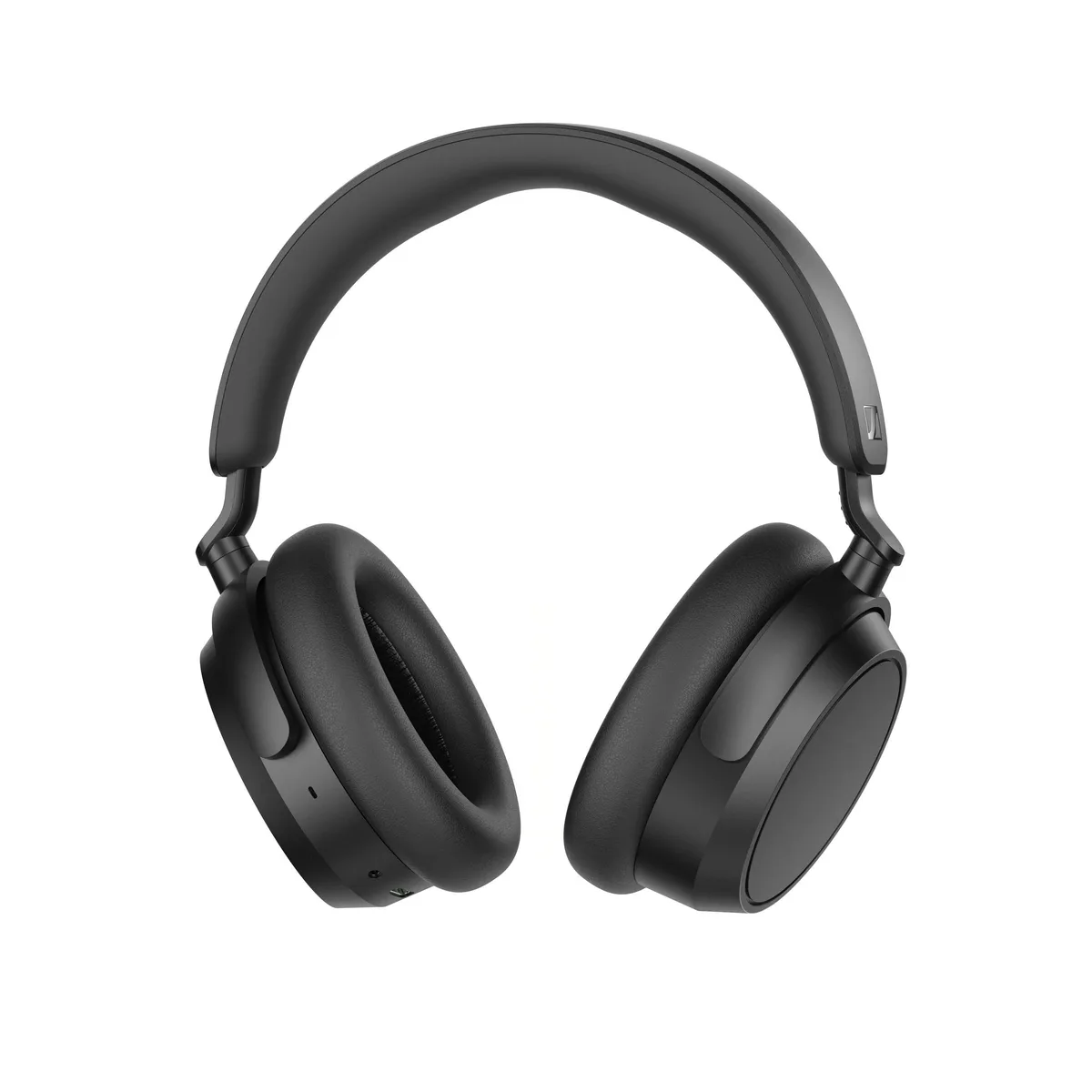
The Accentum Plus is the budget gateway to Sennheiser's house sound: refined, balanced, less bass-bloated than anything else in this price bracket, with aptX Adaptive for Android users and a legitimate 50-hour battery with ANC running. Street price has settled around $130 from a $230 list, which changes the value math entirely. The adaptive hybrid ANC is competent — good on steady rumble, a clear step behind Sony and Bose flagships on voices — and wind handling is weak. The understated matte-plastic build is light at 227 grams but feels unremarkable for the brand, the earcups only swivel flat rather than folding, and there's no wear detection, so music keeps playing when you take them off. Touch controls work but occasionally misread swipes. The Smart Control app adds a 5-band EQ and multipoint management. If sound quality per dollar is the priority, this is the pick of the batch.
Best for listeners stepping up to audiophile-brand sound on a budget
Sony
Over-Ear Headphones
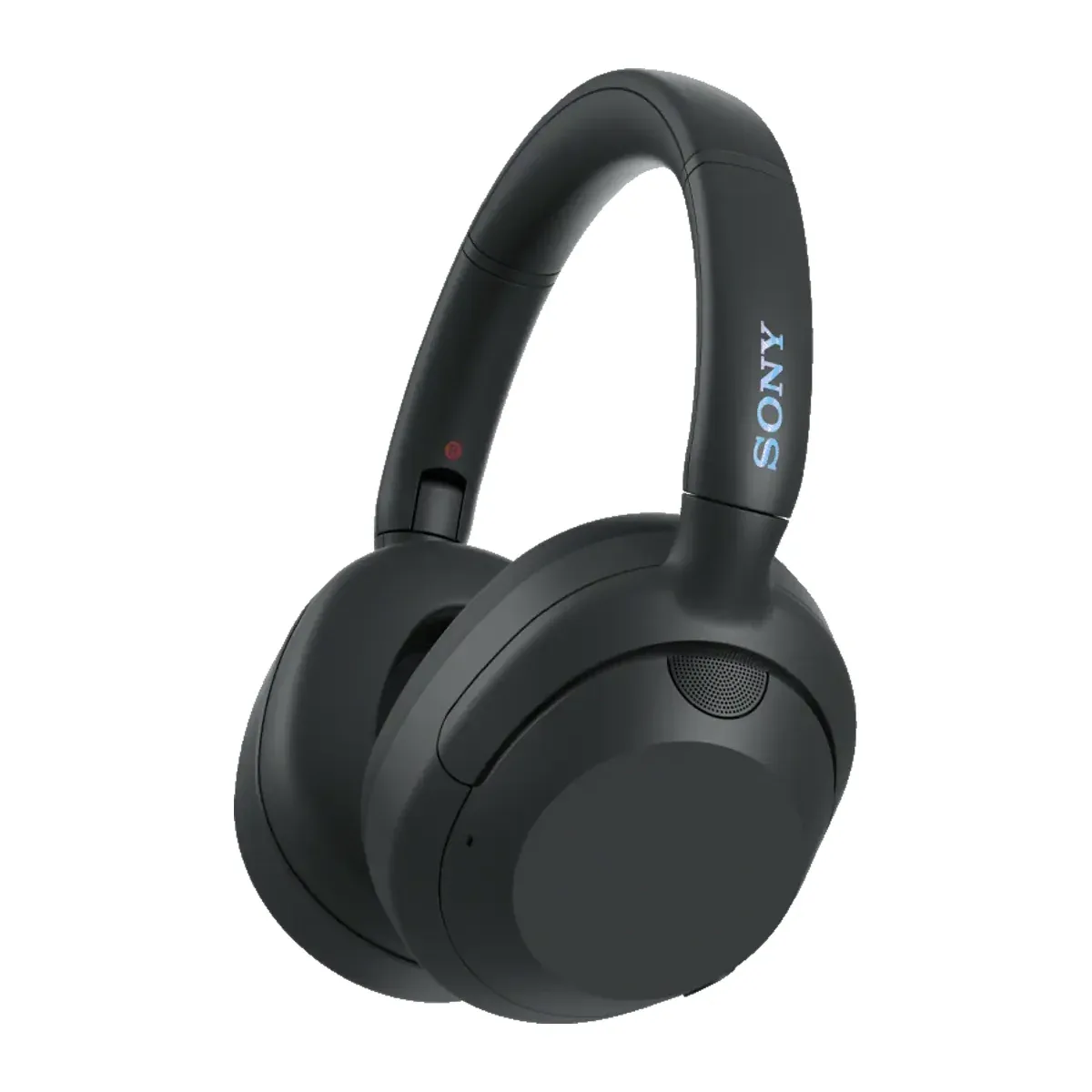
This is Sony's bass-cannon spin on its 1000X formula: the same V1 processor and genuinely good ANC trickled down from the flagship line, bolted to a dedicated ULT button that cycles two levels of bass boost. Owners are consistent on the split verdict — the default tuning is solid and warm, ULT1 is fun for EDM and hip-hop, and ULT2 is a caricature that buries everything above the bass line, so most people try it twice and leave it off. Noise cancellation is the real draw at this price; it's a clear step below the WH-1000XM5 but beats almost everything else under $200, and you get LDAC, multipoint, wear detection, and Sony's excellent app EQ — a feature list mid-rangers rarely match. Battery runs a rated 30 hours with ANC (50 with it off), and a 3-minute charge buys 90 minutes. Comfort gets high marks for the light 255g build and low clamp, though a few long-term owners report the plastic around the earcup joints cracking after a year-plus. Mic quality on calls is the other recurring complaint — fine indoors, inconsistent in wind and street noise. At its usual $128-150 street price it's one of the best-rounded mid-range ANC headphones; just know you're buying it for features and fun, not fidelity.
Best for Bass-first listeners who want real ANC without flagship prices
JBL
Over-Ear Headphones
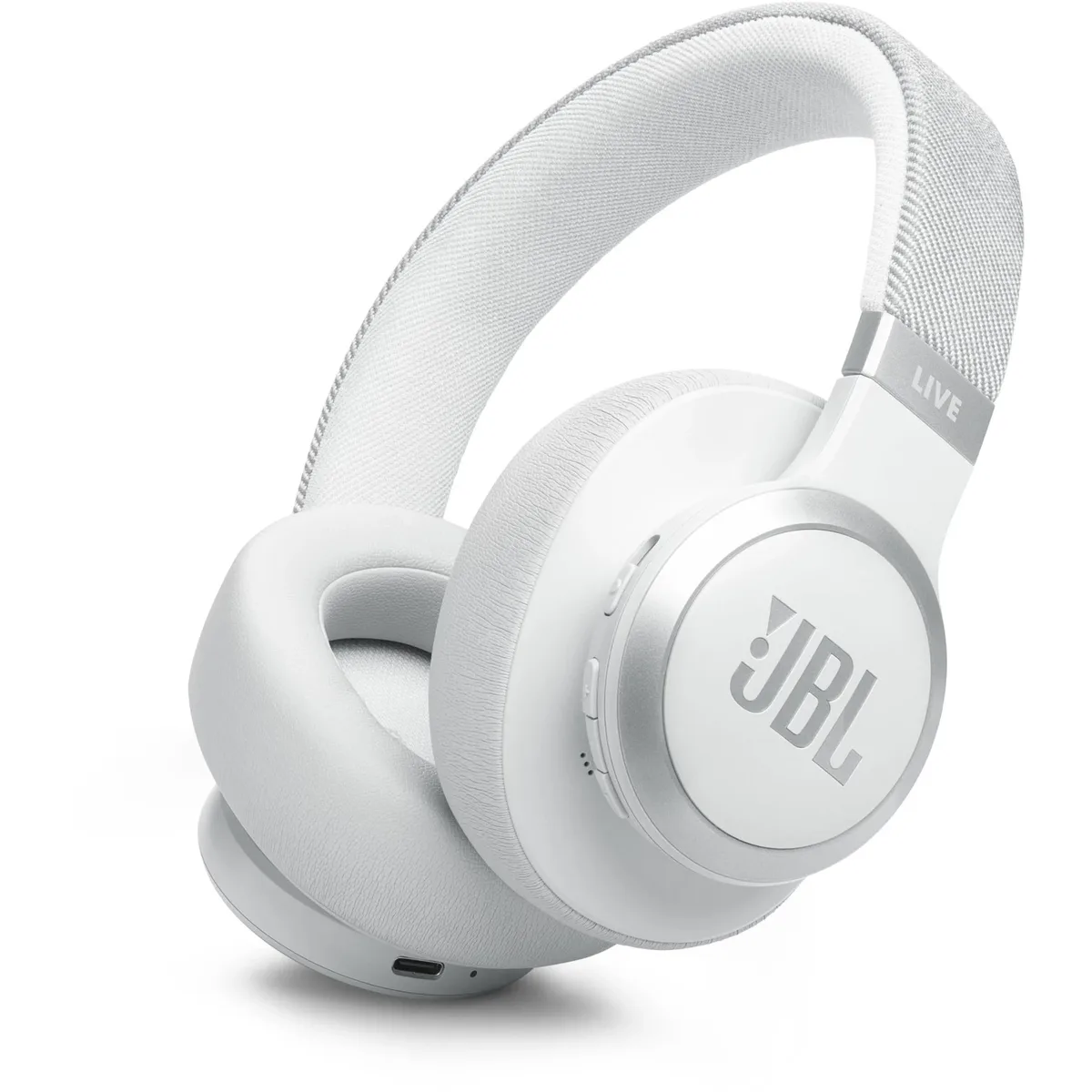
The Live 770NC is JBL's do-everything mid-ranger, and its headline act is stamina: a rated 65 hours with ANC off, 50 with it on, plus a 5-minute charge that buys 4 more — numbers that embarrass headphones costing twice as much. The tuning is classic JBL, big punchy bass out of the box, and the JBL Headphones app has one of the better EQs in the business if you want to rein it in. You also get a genuinely modern feature list: Bluetooth 5.3 with LE Audio/LC3, multipoint, wear detection, spatial sound, and Ambient Aware/TalkThru transparency modes. The catch is that JBL's 'True Adaptive' noise cancellation writes checks the four mics can't cash — it takes the edge off engine rumble but trails the Sony ULT Wear and anything from Bose, and owners notice on flights. Reviewers and owners also ding the mostly plastic build and the flimsy soft pouch, which feel below the $200 list price. Treble detail and layering are merely okay, so detail-oriented listeners should look elsewhere. The value math changes completely at its frequent $120-150 street price, where it's one of the most complete feature sets you can buy — just pick it for battery and features, not for class-leading ANC.
Best for Commuters who value marathon battery over top-tier ANC
Beats
Over-Ear Headphones
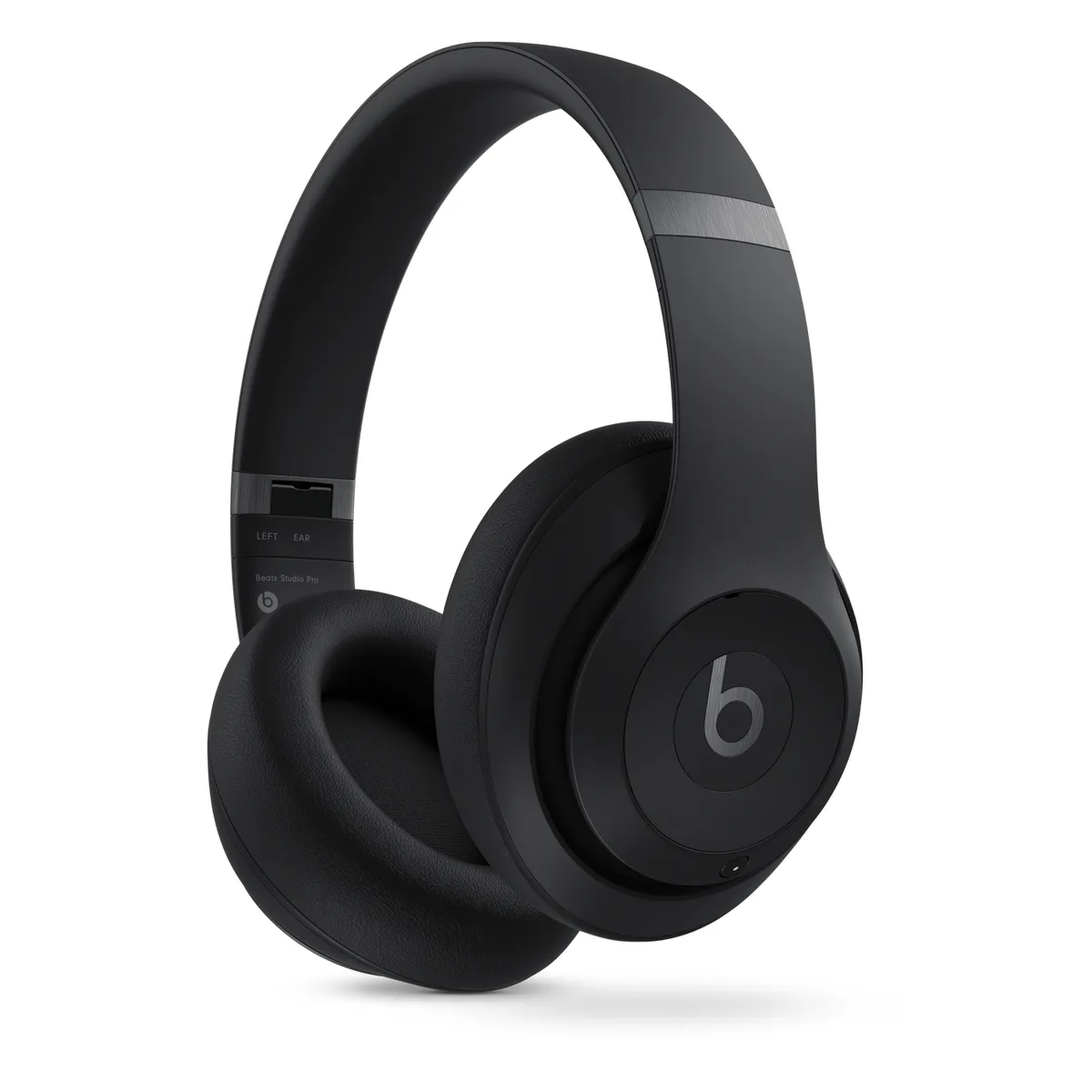
At its $349 list price the Studio Pro was a hard sell; at the $170 it now regularly hits on Amazon — clearance pricing as a successor looms — it's one of the best deals in ANC headphones. The custom 40mm drivers are far better tuned than old Beats, the USB-C port doubles as a lossless DAC with three sound profiles, and it's the rare headphone with first-class features on both iOS (one-tap pairing, Personalized Spatial Audio, Find My) and Android (Fast Pair, Google Find Hub). The corners cut are obvious in daily use: no wear detection, no multipoint, no user EQ, and the design is unchanged 2017 plastic with a headband that transmits clamp to the top of your head. Ear cushions aren't user-replaceable and the pleather runs sweaty. Fine trade-offs at this price.
Best for budget shoppers splitting time between iPhone and Android
Soundcore
Over-Ear Headphones
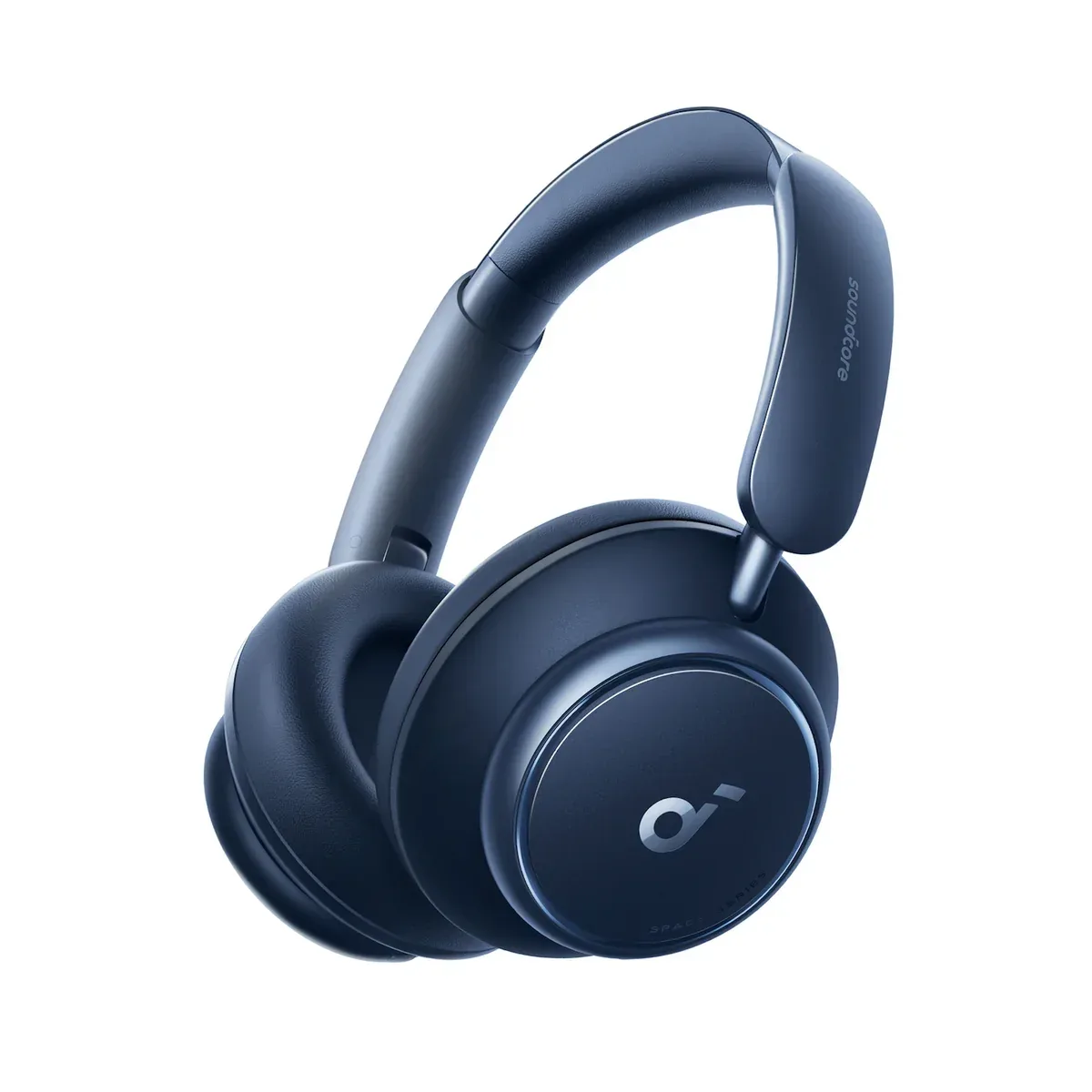
The Space Q45 is Soundcore's travel workhorse: 50 hours with ANC on, three-stage adaptive noise cancelling that legitimately embarrasses some headphones at twice the price on airplane drone, plus LDAC, multipoint, and a folding frame with a proper case. Street price bounces between $90 and $150, so patient buyers should wait for the frequent 40%-off deals. The catch list is honest but tolerable: it's heavier than it looks at roughly 292 grams, clamp is tight on larger heads for the first weeks, and the default V-shaped tuning has boomy mid-bass that needs the app EQ to sort out. ANC adds a touch of ear pressure and hiss in silence, and the mics are merely okay for calls. Versus the cheaper Space One you're buying more battery, stronger low-frequency ANC, and a sturdier build. For long-haul economy seats, it's a bargain.
Best for long-haul flyers who prioritize battery and ANC