Puro Sound Labs
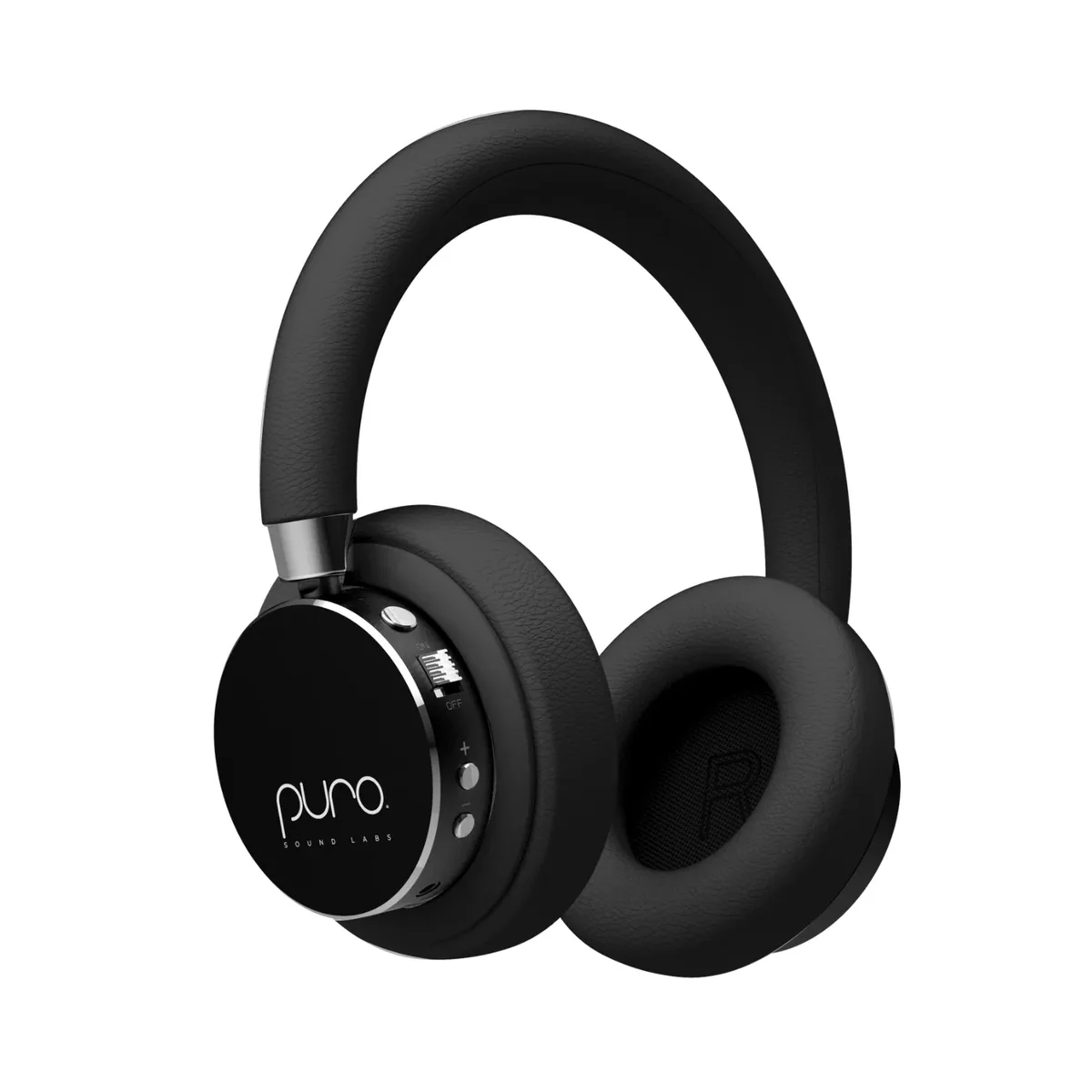
Puro Sound Labs BT2200 Plus
This is the premium kids headphone, and much of the $99 shows: aluminum frame instead of creaky plastic, a hard travel case, vegan-leather pads in two swappable sizes (on-ear for small kids, over-ear as they grow), and a mic that long-term reviews rate as genuinely good for school video calls — clear even in noisy rooms. Puro's signature move is the included 3.5mm cable with a built-in limiter, and that's where the 85dB promise actually holds: wired through Puro's own cable, measurements stay at or under the limit. Over Bluetooth the story is murkier — independent testing measured music peaking around 89dB and worst-case test signals higher, so it's meaningfully safer than most kids headphones but still not an absolute ceiling. Passive isolation is strong (Puro claims 83% of ambient noise blocked), which matters more than it sounds: kids turn volume up to fight background noise, and these don't make them. The honest knocks: battery testing came in around 12 hours against the claimed 20, there's no water resistance at all, and swap in a random third-party aux cable and the limiter is gone entirely. A daisy-chain cable lets two Puros share one tablet — genuinely useful on flights with siblings. If hearing protection is the reason you're shopping, this is the closest thing to doing it right; just charge it more often than the box suggests and hide the spare cables.
We may earn a commission. Price and availability on Amazon’s site may differ.
Specifications
Highlights
Pros
- ✓Included limiter cable keeps wired listening at or under 85dB — rare among kids headphones
- ✓Strong passive isolation means kids don't crank volume to fight background noise
- ✓Interchangeable on-ear and over-ear pads fit ages 3 through the tween years
- ✓Mic quality is genuinely good for school video calls, even in noisy rooms
- ✓Aluminum build and hard-shell case survive backpack life
- ✓Daisy-chain cable lets two kids share one tablet on flights
- ✓Balanced, non-fatiguing tuning instead of the usual kids-headphone bass bloat
Cons
- ✗Bluetooth mode measured above 85dB in independent testing (about 89dB with music) — the hard limit only holds on the included wired cable
- ✗Battery tested around 12 hours against the claimed 20
- ✗Third-party aux cables bypass the volume limiter completely
- ✗No water or sweat resistance at all
- ✗$99 is triple the price of the mainstream kids options
- ✗No app, EQ, or ANC at a price where adults get all three
Owner Insights(130 discussions)
The BT2200 Plus is the premium kids headphone, and its owner reputation rests on build and trust: an aluminum frame that survived six months of daily abuse from a 5-year-old in one long-term test, swappable on-ear/over-ear pads that grow with the child, and the category's best school-call mic. Puro's signature move is putting the volume limiter in the included cable itself — and measurements confirm wired-through-Puro's-cable is the one mode in the entire category where 85dB genuinely holds, even on worst-case signals.
The fine print matters, though. Over Bluetooth the limiter is looser than advertised — music measured around 89dB and harsh test signals near 100dB — and a generic third-party aux cable bypasses the limiter completely, hitting 105dB-plus. The practical rules parents land on: use the Puro cable for wired listening, keep source volume moderate over Bluetooth, and never substitute a drawer cable. Battery is the other gap between box and reality — about 12 measured hours versus the claimed 20 — and the gentle clamp that makes them comfortable lets them slip on very young, very active kids. Strong passive isolation partly stands in for the ANC these don't have, by removing the reason kids crank volume in the first place.
These are for parents who prioritize hearing safety and build quality enough to pay triple the budget-pick price — best for roughly ages 4-12, school calls, and families who'll actually use the wired mode. If verified limiting at a low price is the goal, the $30 ONANOFF BuddyPhones POP Fun measures dead-on 85dB over Bluetooth and is the strongest alternative; if airplane noise is the real problem, the JBL JR460NC's ANC does more for half the money.
Pros
- +The included Puro cable has the limiter built into the cable itself, and it's where the 85dB promise actually holds — measured at roughly 85.4dB even on worst-case test signals, the most trustworthy wired mode in the category
- +Genuinely premium build for a kids product: aluminum frame instead of creaky plastic, vegan-leather pads, and a hard travel case — one long-term review reports six months of daily rough use by a 5-year-old with no damage
- +Two swappable pad sizes grow with the kid — smaller on-ear pads for little heads, larger over-ear pads as they grow — stretching useful life for the $99 price
- +Strong passive isolation (Puro claims ~83% of ambient noise blocked), which matters more than it sounds: kids crank volume to fight background noise, and these remove the reason
- +The mic is a standout for school video calls — long-term reviews rate call quality excellent and clear even in noisy rooms, better than any of the budget kids pairs
- +Balanced, non-boomy tuning that doesn't need bass bloat to keep kids happy — the rare kids headphone reviewers describe as actually sounding good
- +Light clamping force keeps pressure-sensitive kids comfortable through movie-length sessions
Cons
- −The Bluetooth limiter is looser than the box implies: independent measurement found music peaking around 89dB and worst-case white-noise signals hitting roughly 100dB — safer than most, but not an absolute ceiling
- −Any third-party 3.5mm cable bypasses the limiter entirely — measured up to ~105dB — so if the Puro cable is lost, replace it with Puro's, not a generic one from the drawer
- −Measured battery fell far short of the claim: about 12 hours in testing versus the advertised 20 — enough for a travel day, but plan on charging more often than the box suggests
- −At $99 it costs three times the budget picks, and parents of serial headphone-breakers and losers balk at the stakes
- −The gentle clamp that makes it comfortable also makes it loose on very young kids — it can slip during active play, and the smallest heads are better served elsewhere
- −No water or sweat resistance rating at all, and the frame squeaks when flexed
- −No ANC — passive isolation is good, but for airplane use the cheaper JBL JR460NC actually quiets the cabin more
Common Questions
Compare the Puro Sound Labs BT2200 Plus
Related headphones
More from Puro Sound Labs →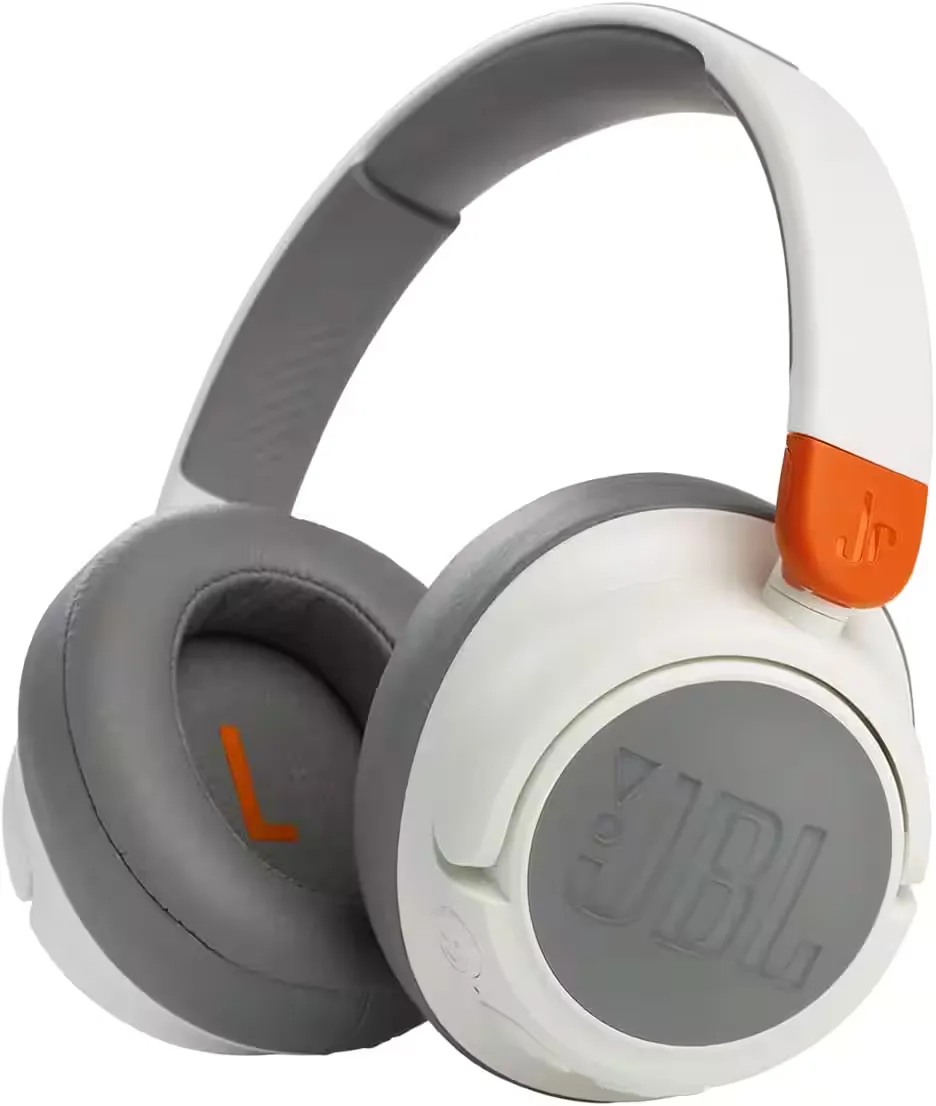
JBL
Kids Headphones
This is the kids headphone you buy for airplanes: real active noise cancelling at a price that doesn't sting when it gets left in a seat pocket. The over-ear cups seal better than typical kids on-ears, the ANC takes the edge off engine drone, and reviewers note the volume stays capped just under 85dB with no way for kids to override it — there isn't even a volume dial to crank. Battery runs 20 hours with ANC on and about 30 with it off, recharging fully in two hours, and the detachable 3.5mm cable means a dead battery on descent isn't a crisis. The built-in mic is fine for school calls, multipoint lets it hop between a tablet and a phone, and Google Fast Pair makes Android setup instant. Honest caveats: at 200g it's noticeably heavier than the on-ear JBLs, and the over-ear sizing runs big on toddlers — this is really a 6-and-up headphone. The tuning is bass-heavy in classic JBL fashion, which kids love and audiophile parents will shrug at. And like most kids headphones, the volume cap is only trustworthy over Bluetooth; on the aux cable, loudness depends on whatever device it's plugged into. For road trips and school use at around $50, it's the sweet spot in JBL's kids line.
Best for families who fly — ANC and a wired backup at a kid-proof price
JBL
Kids Headphones
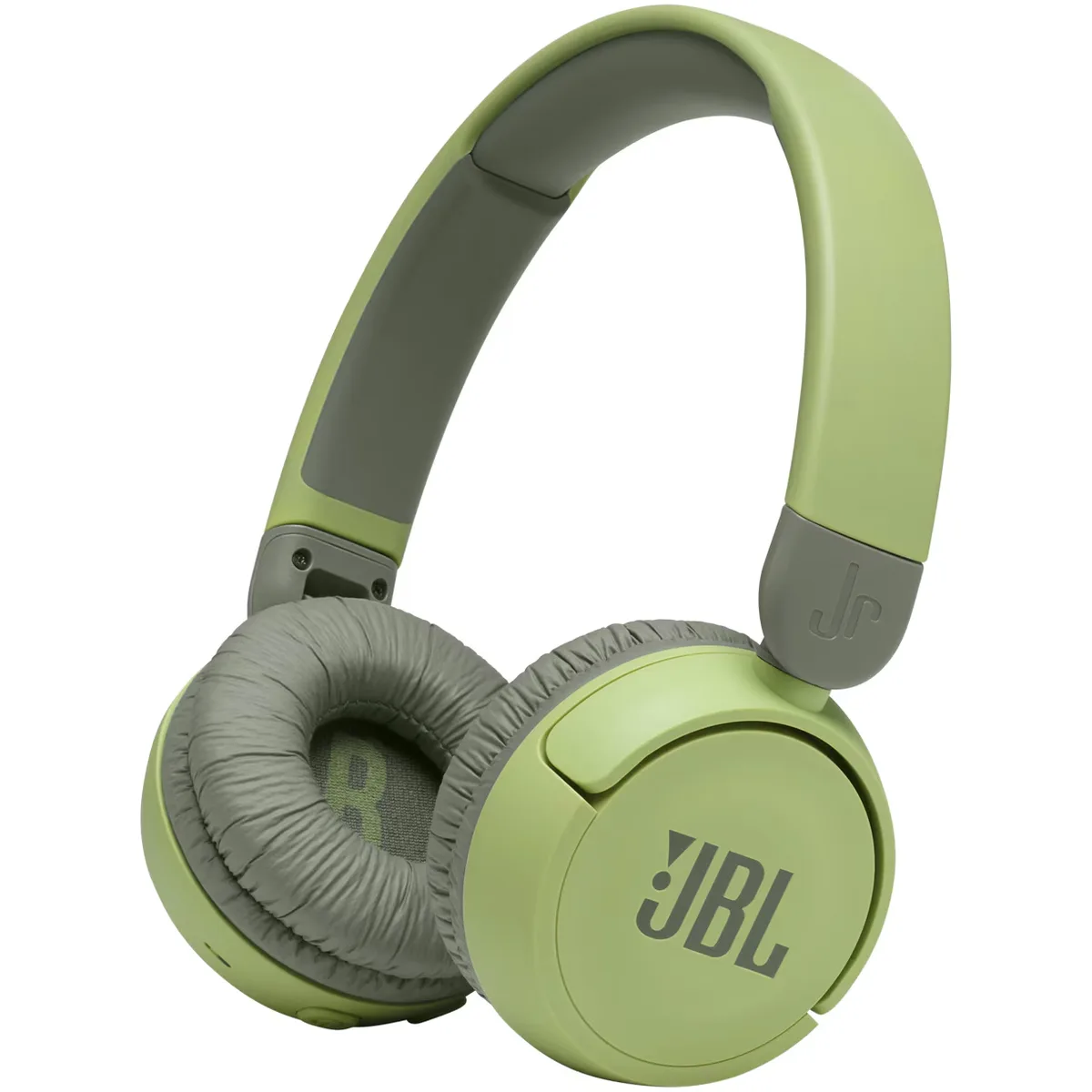
These are the default budget pick for little kids, and they mostly earn it: light at 115g, sized for roughly ages 3 to 10, foldable, and cheap enough that a lost pair isn't a tragedy. Battery is the standout — JBL claims 30 hours and lab testing actually beat that, so weekly charging is realistic, and a 5-minute USB-C top-up buys about 2 hours. The built-in mic handles school video calls fine, and the three-button controls are simple enough for a preschooler to run alone. Now the caveat parents actually care about: the advertised 85dB Safe Sound limit doesn't fully hold — independent lab testing measured roughly 94dB at max volume over Bluetooth, fine as a backstop for short sessions but not the set-and-forget hearing guarantee the box implies, so keep the source volume down on long flights. They're also wireless-only: there's no aux cable, so a dead battery means silence, and the port placement means kids can't listen while charging. The small headband fits little heads snugly but big kids will outgrow it, and children who hate pressure on their ears may fight the on-ear fit. At around $34 they're a fair deal if you treat the volume limit as a safety net rather than a promise.
Best for parents who want cheap, light wireless headphones for ages 3-10
Belkin
Kids Headphones
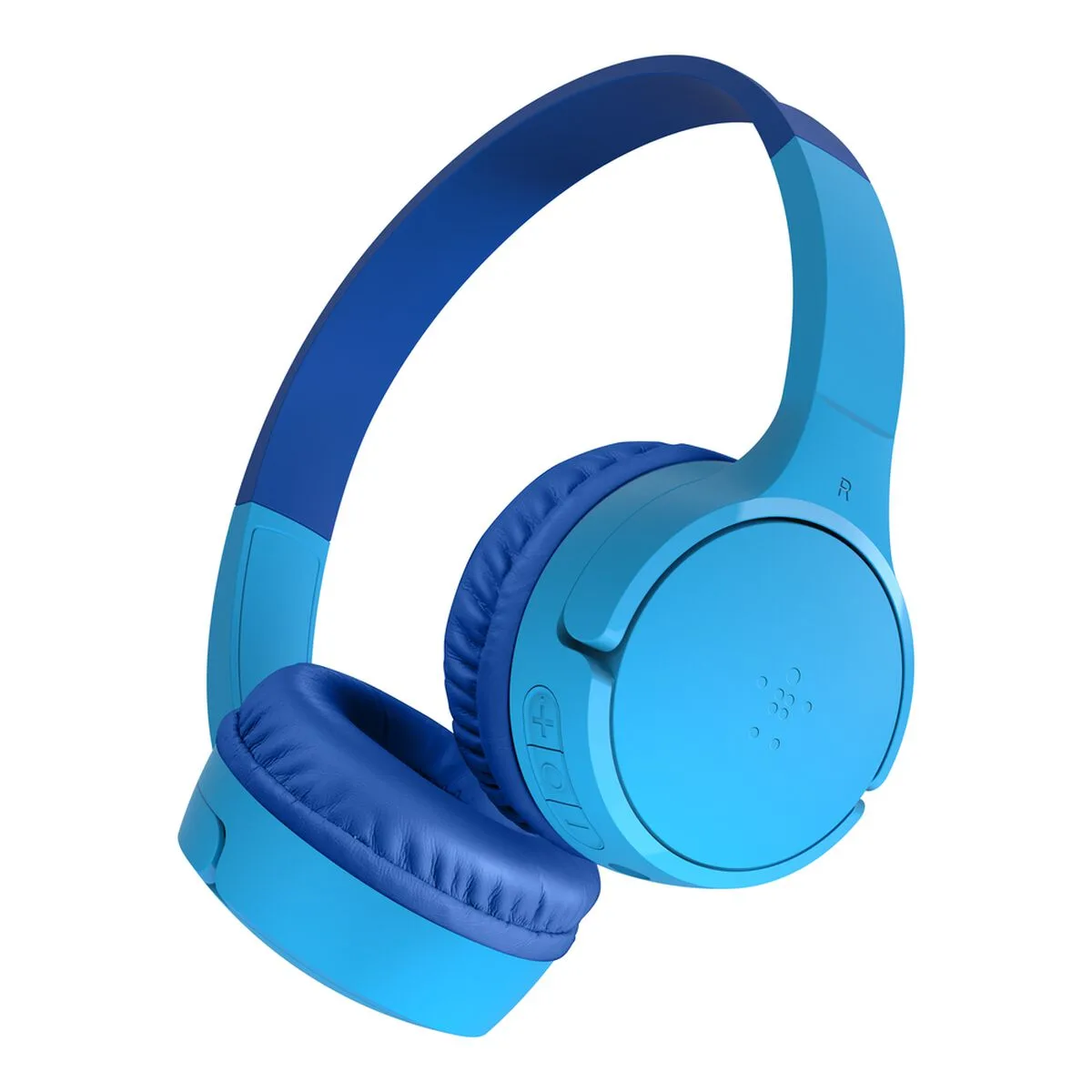
Buy these for the battery and the price, not for the volume limiter. Belkin claims 30 hours, but independent lab testing ran them for roughly 82 hours straight — realistically your kid charges these once a month, and a 10-minute USB-C top-up buys about 3 hours when they forget. There's a built-in mic for school calls, a 3.5mm aux cable for a dead battery or airplane seatbacks, simple buttons, and a design plain enough that a ten-year-old won't reject it as babyish. Now the part Belkin's box won't tell you: lab testing of an earlier revision measured about 98dB over Bluetooth and 109dB wired — nowhere near the advertised 85dB cap, and among the worst limiter results of any major kids headphone tested. If strict hearing protection is your priority, this is the wrong product; use your tablet's OS-level volume limit as the real control. The clamping force also runs tight, which keeps them on wiggly heads but bothers some kids on long sessions, and the sound skews thin and mid-heavy. Belkin has since moved the line to USB-C charging, which fixed the old micro-USB annoyance. At around $33 with stickers in the box, it's a fine road-trip and homework headphone — as long as you understand the 85dB claim is marketing.
Best for parents who prioritize marathon battery life over strict volume limiting
iClever
Kids Headphones
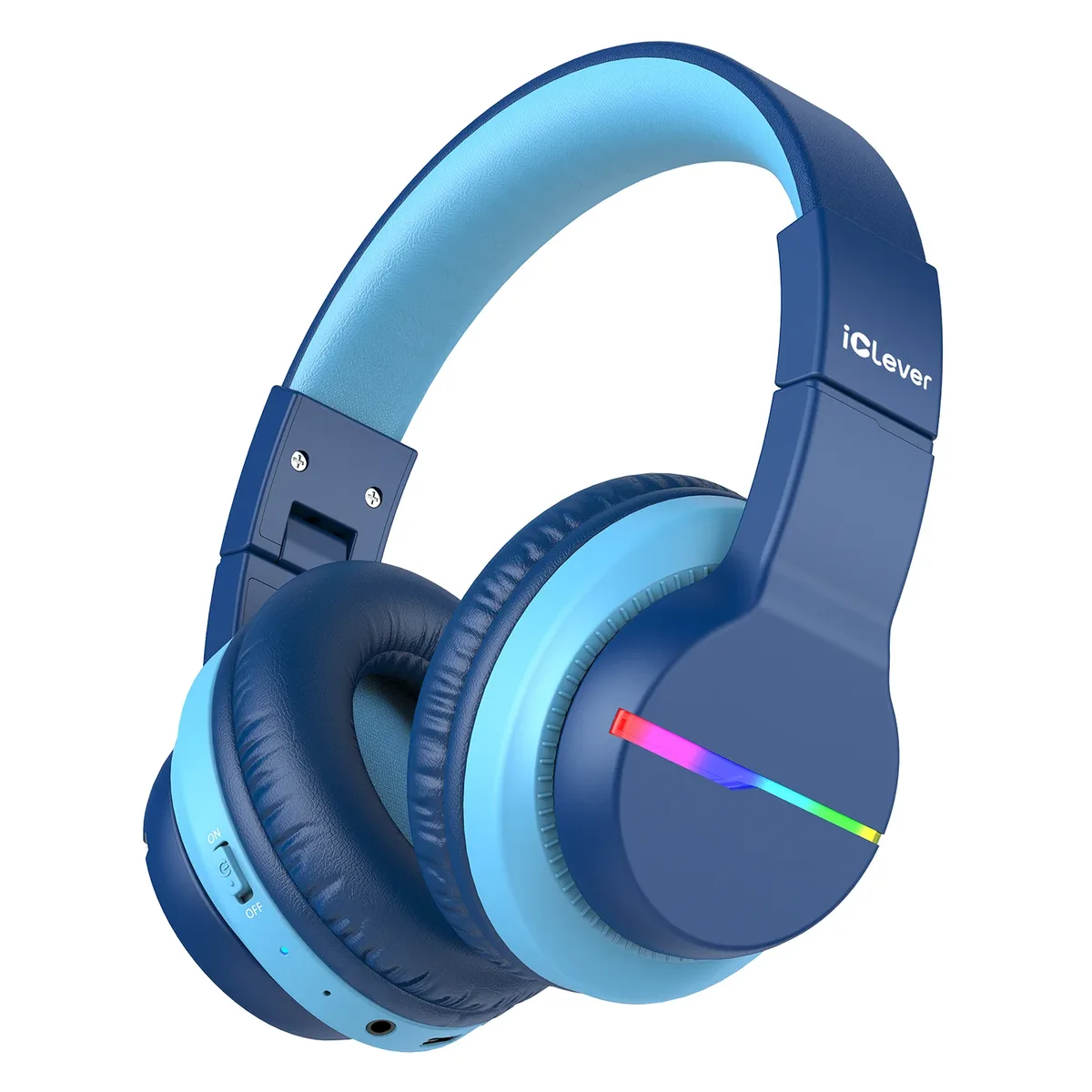
The BTH12's rainbow LED earcups are the reason kids pick it off the shelf, and the reason it wins flights: iClever claims 85 hours with the lights off, and owners report the lights-on number is closer to 50 — still enough for a week of travel. It's Bluetooth 5.2 (SBC audio, which is fine at this level) with a USB-C fast charge that banks about seven hours in ten minutes. The volume limiter toggles between 74 and 85dBA, and here's the caveat every parent should know: plug in the included aux cable and the limiter depends on the source device, so wired mode can get louder than the caps suggest. Fit runs small-to-medium — great for toddlers through early grade school, snug on big kids. Padding is decent, build is plasticky but has survived plenty of backpack abuse.
Best for young kids on long flights
ONANOFF
Kids Headphones
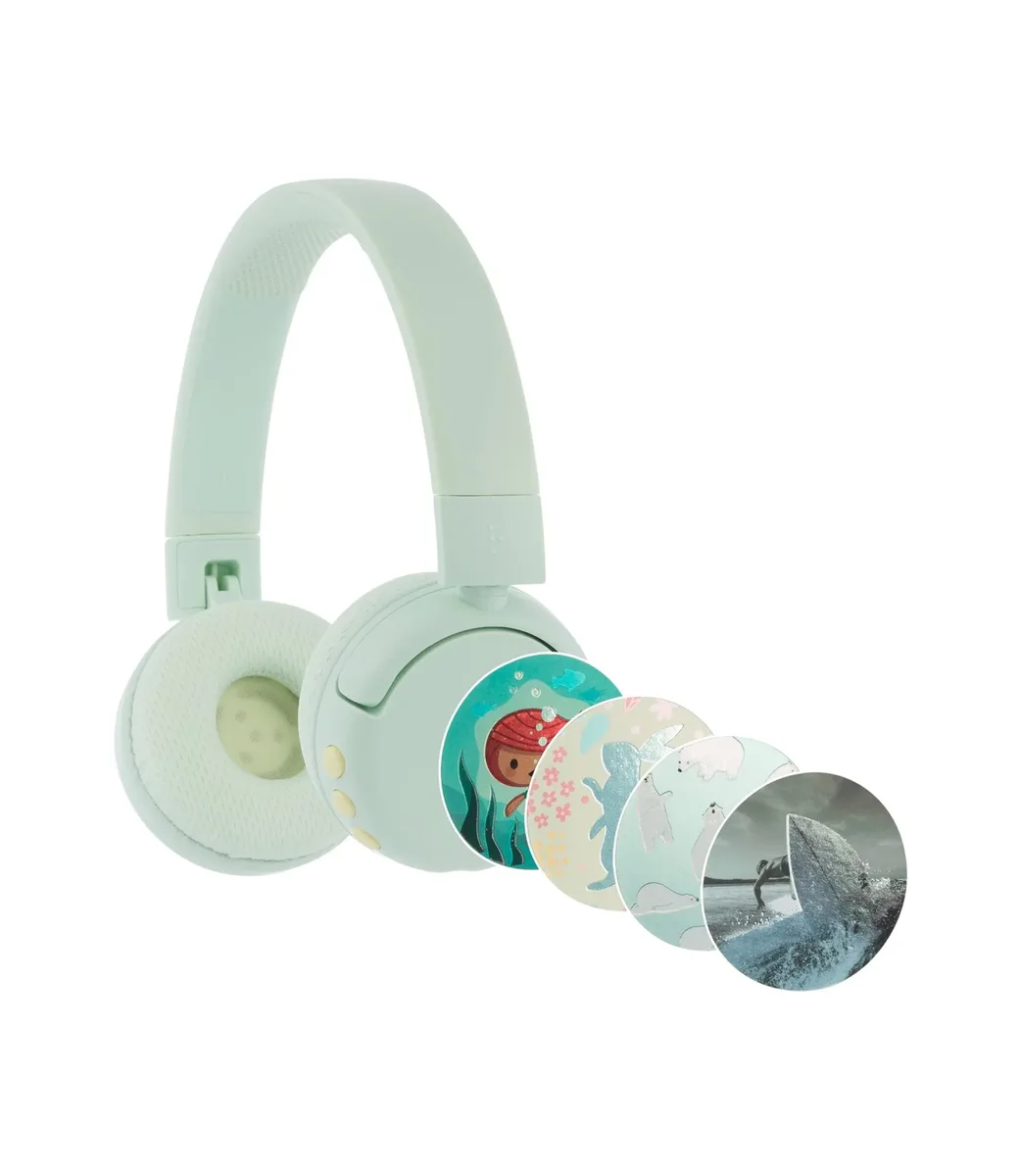
Here's the rare kids headphone where the volume limit actually does what the box says: instrumented testing measured 84.4dB in the 85dB SafeMode over Bluetooth, and even the parent-selectable 94dB POP mode landed exactly on target. That makes this one of the two or three most trustworthy limiters in the category, at a $30 price where most competitors blow past 94dB. The two modes are the smart part — 85dB for everyday use, 94dB you can unlock for noisy airplanes — and it works wired through the included 3.5mm cable too, so a dead battery doesn't end the trip. Battery tested at over 23 hours against the claimed 24, it charges over USB-C in under two hours, and at 137-147g with light clamping it fits the 3-to-9 age range it's built for. It's honest-cheap in the right ways: flexible plastic that survives bending and drops, washable earpads, stickers for personalization. The honest weaknesses: the built-in mic is muffled enough that teachers will struggle to hear your kid on video calls — plan on using the tablet's mic instead — and there's zero water resistance, so a juice-box spill can kill them. No carrying pouch either. If the whole reason you're buying kids headphones is the hearing protection, this is the best value in the category.
Best for parents who want a volume limit that verifiably holds, for $30
JLab
Kids Headphones
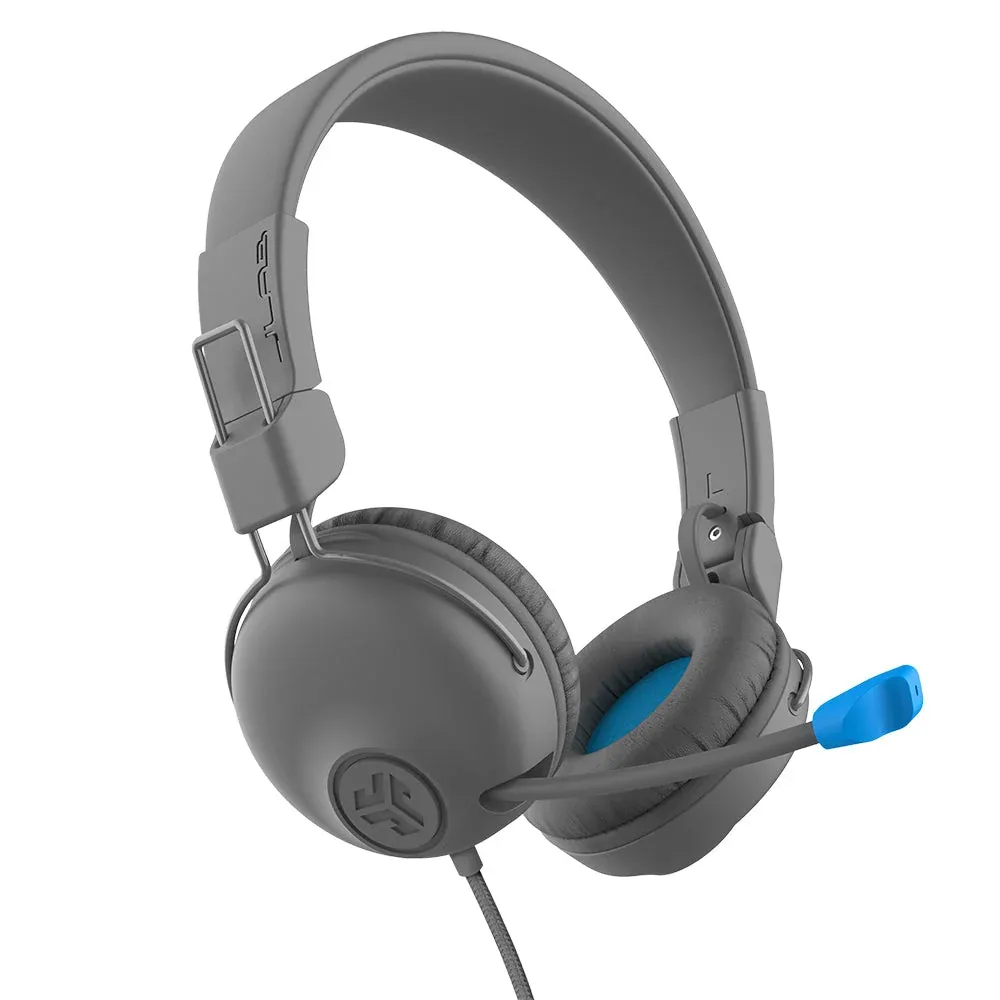
Heads up: despite sitting next to wireless kids models, the JBuddies Learn is wired-only — a 3.5mm nylon cord and no battery, which for school is actually the feature. Nothing to charge, nothing to pair, nothing for a six-year-old to lose by Tuesday. The retractable boom mic tucks into the earcup and works better for virtual classes than the muffled built-in mics on most kids headphones. Volume is capped at a fixed 85dB — the responsible number, but be realistic: 85dB for hours is still a lot of sound, and in a loud room kids will max it out. At 125g with folding hinges it fits ages six and up. Sound quality is fine-not-great, which no kid has ever complained about. JLab's lifetime warranty is the sleeper reason parents rebuy — they actually honor it.
Best for school and remote-class headsets