TOZO
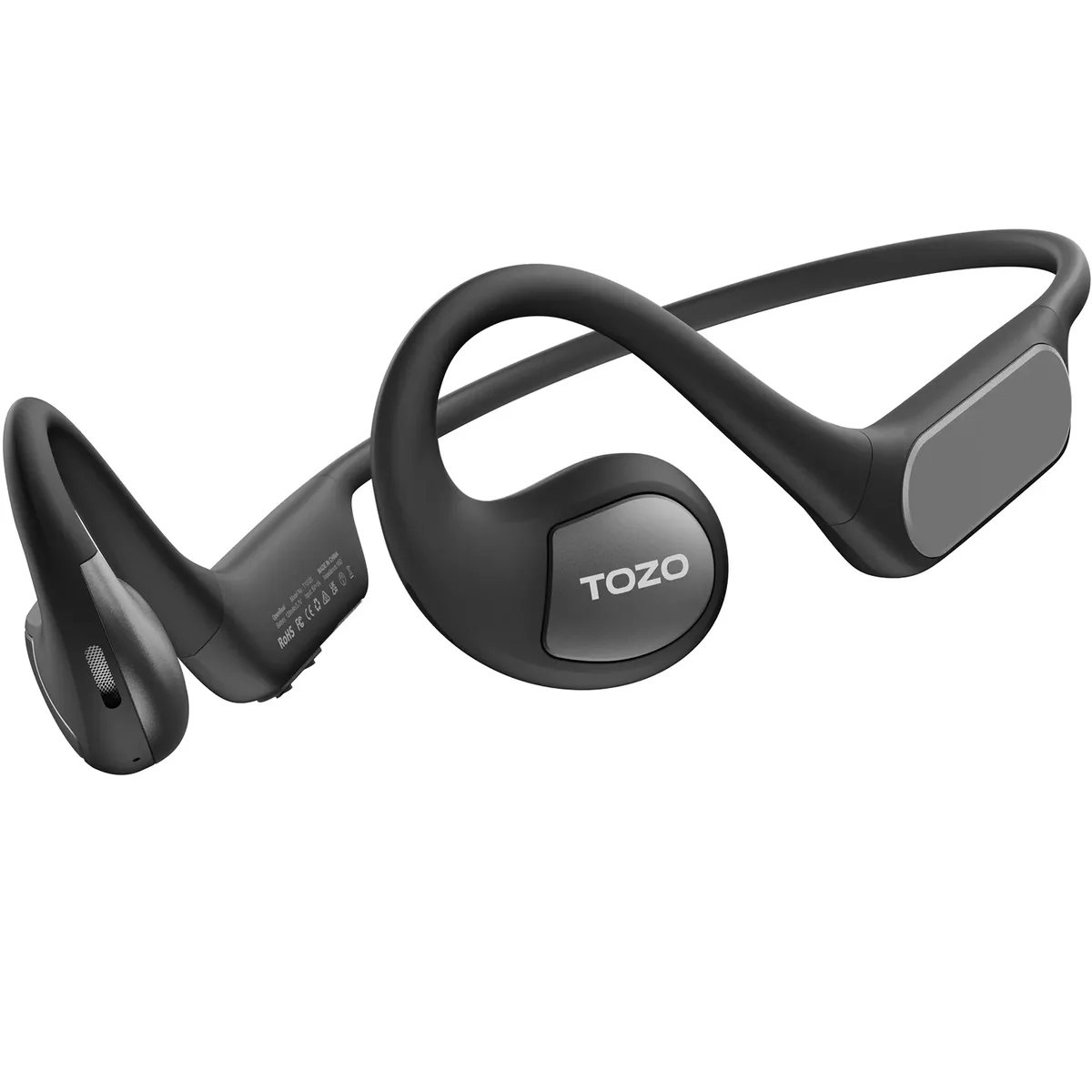
TOZO OpenReal
Looks like bone conduction, isn't: the OpenReal is an air-conduction neckband, with 16.2mm dynamic drivers sitting just in front of your ears on a 29g Shokz-style band. That's actually good news for sound — no cheekbone tickle, and noticeably fuller mids than true bone conduction at this price. Sixteen hours of battery embarrasses the six-hour OpenMove it undercuts, and the TOZO app brings 32 EQ presets. Now the compromises: it charges through a proprietary magnetic cable you must not lose, there's no multipoint, and the water-resistance spec is muddled — TOZO's site claims IPX8 while the Amazon listing says IPX5, so treat it as sweat-and-rain gear, not swim gear. Leakage is higher than bone conduction since these are literally tiny speakers aimed at your ears. For fifty bucks as open-ear yard-work and running headphones, it's a quiet overachiever.
We may earn a commission. Price and availability on Amazon’s site may differ.
Specifications
Highlights
Pros
- ✓16-hour battery embarrasses the six-hour Shokz OpenMove
- ✓Air conduction means zero cheekbone tickle
- ✓Fuller mids than true bone conduction at $50
- ✓32 EQ presets in the TOZO app
- ✓10-minute charge adds two hours
- ✓Louder maximum volume than most open-ear rivals
Cons
- ✗Proprietary magnetic charging cable you must not lose
- ✗Water rating muddled — site says IPX8, listing IPX5
- ✗Leaks more than bone conduction — tiny speakers aimed earward
- ✗No multipoint at any price
- ✗Confusing controls and no battery-level readout
Owner Insights(15 discussions)
The OpenReal is a quiet overachiever in open-ear discussions: a $40-50 air-conduction neckband that keeps showing up as the budget answer to 'is there a cheaper Shokz that actually sounds good?' Owner sentiment is smaller in volume than for big-brand gear but notably enthusiastic among runners and cyclists - the recurring line is that it delivers listenable, full-bodied audio where true bone conduction sounds like a phone speaker taped to your cheekbones, and it does it at a quarter of the price of an OpenRun.
In practice the strengths are volume, battery, and comfort. Owners confirm the 16-hour battery claim in the field - ultrarunners report it lasting through 50k and 100k events - and the maximum volume is loud enough for podcasts next to traffic, something Shokz owners often complain their sets can't do. Because the 16.2mm drivers sit in front of your ears rather than on your cheekbones, there's no vibration tickle, and comfort holds up for all-day wear. The two flaws to weigh seriously: it charges via a proprietary magnetic cable that TOZO doesn't sell as a spare, so losing it bricks the headphones, and sound leakage becomes audible to people nearby once you pass about half volume - fine outdoors, awkward in an office.
Buy the OpenReal if you want open-ear awareness for yard work, running, or cycling and can't justify $130 for a Shokz OpenRun - it beats the six-hour Shokz OpenMove on battery and volume outright. Skip it if you need multipoint for work calls, want something for the office (leakage), or plan to swim with it. The strongest alternatives are the Shokz OpenRun if you want the established ecosystem and standard accessories, or clip-on open buds like the Soundcore C30i style if you'd rather ditch the neckband entirely.
Pros
- +Runners who switched from Shokz call this 'actually listenable music' at a quarter of the OpenRun's price - fuller mids, real bass presence
- +Noticeably louder maximum volume than bone-conduction rivals, which podcast listeners in traffic specifically praise
- +The 16-hour battery claim checks out in long-term use - ultrarunners report finishing 50k and 100k races on a single charge
- +No cheekbone vibration or tickle since it's air conduction, a relief for people who couldn't tolerate true bone conduction
- +Comfortable for hours, including for small-eared people who can't keep normal earbuds in
- +Full situational awareness for trail running and road cycling while still sounding like proper headphones
Cons
- −Charges only via a proprietary magnetic cable that TOZO doesn't sell separately - lose it and the headphones are effectively dead
- −Sound leaks audibly above roughly 50% volume, so office and library use broadcasts your podcast to neighbors
- −Water rating is contradictory across TOZO's own materials (IPX8 on the site, IPX5 on the listing) - treat it as sweat-proof, not swim-proof
- −No multipoint, so switching between phone and laptop means manual re-pairing every time
- −Neckband format means no pocketable case and it can bounce slightly on hard running strides
- −Bass, while better than bone conduction, still thins out compared to any sealed earbud at the same price
Common Questions
Compare the TOZO OpenReal
Related headphones
More from TOZO →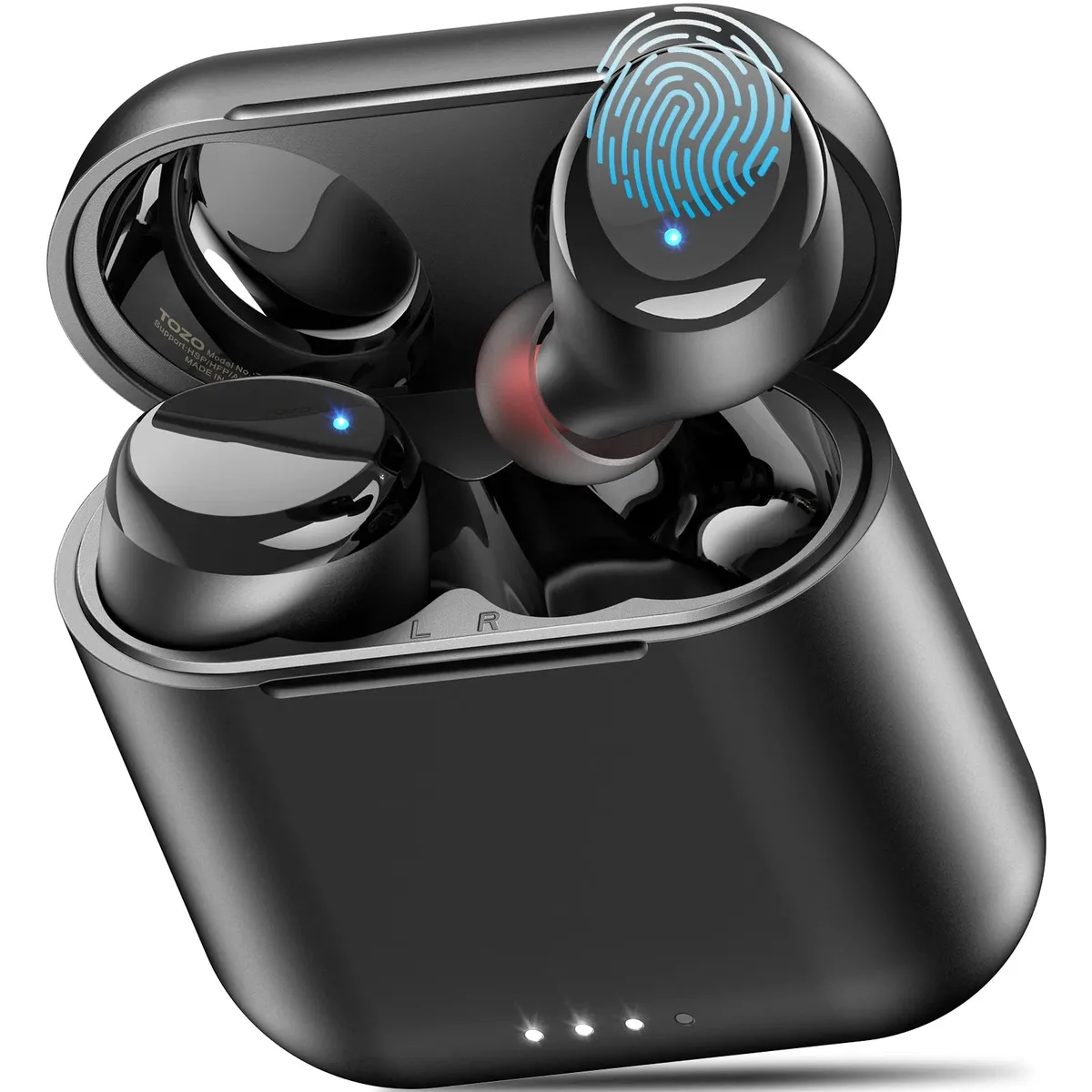
TOZO
Wireless Earbuds
The T6 is one of the best-selling budget earbuds ever made, and the refreshed version keeps it relevant with Bluetooth 5.3, app EQ with 32 presets, and a claimed 12 hours per charge. The IPX8 rating is the real differentiator: these shrug off rain and sweat that kill other cheap buds, and the case still supports wireless charging at a price where that's almost unheard of. Why it's $26: SBC/AAC only, no ANC or ambient mode, no multipoint, and TOZO's infamous quirk where volume resets to a blaring default on every reconnect still annoys longtime owners. Touch controls are oversensitive, and the mic is fine for quick calls but not meetings. The bass-heavy OrigX tuning flatters pop and hip-hop. As a durable, replaceable workout bud, the T6 endures because it nails the basics.
Best for sweaty workouts and rainy runs
TOZO
Wireless Earbuds
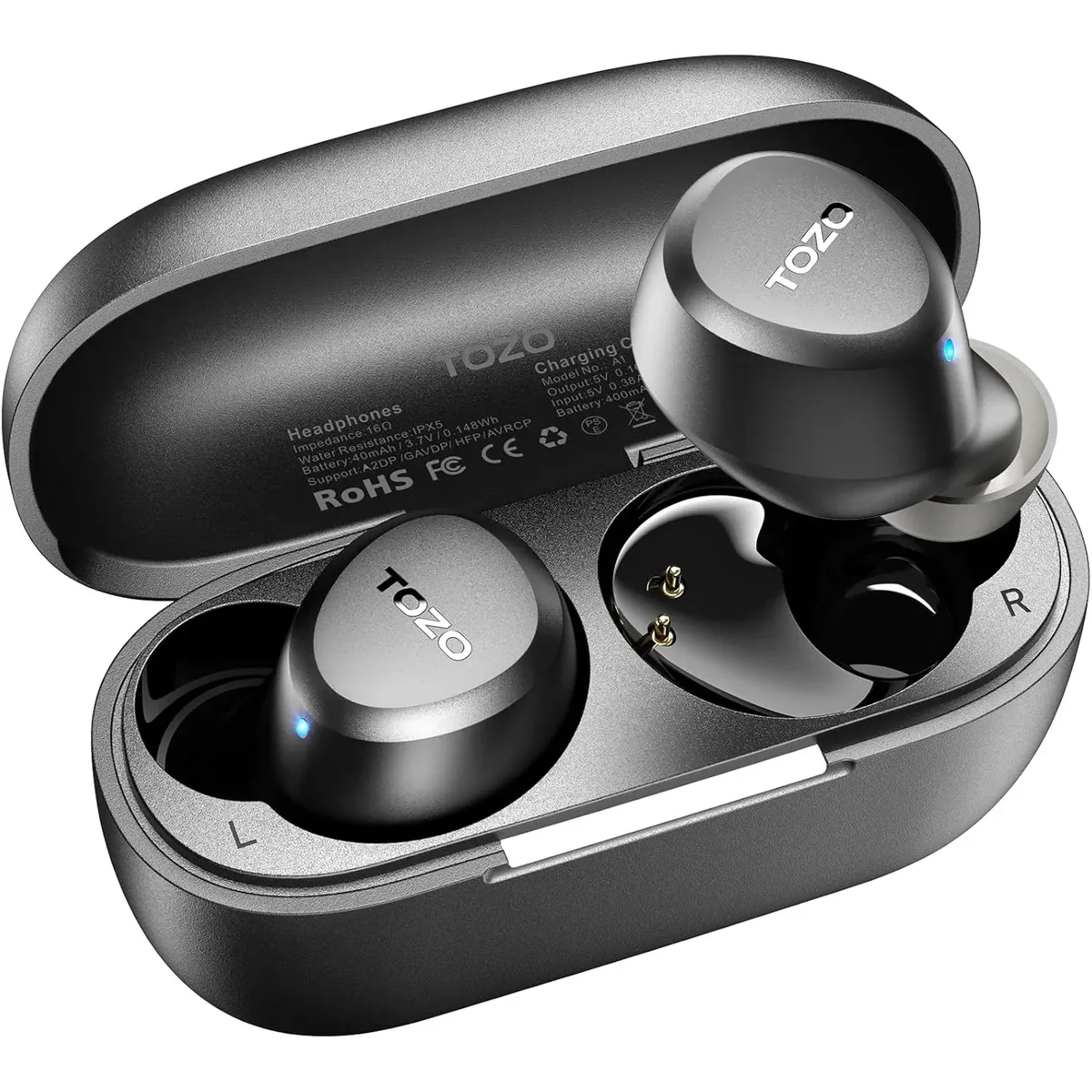
The A1 Mini is the perennial Amazon best-seller for a reason: it does the basics well for the price of a couple of lunches. Each bud weighs just 3.7 grams, and owners with small ears consistently say these are the first earbuds that actually stay put — several report they hold better than AirPods, and the tiny profile makes them one of the few budget buds you can sleep on. Sound leans bright with crisp highs and modest bass; through TOZO's app you get 32 EQ presets to nudge it around, which is unusual at this price. Battery is a legitimate 7 hours per charge with 32 total from the USB-C case, and IPX5 sweat resistance covers gym duty. The honest caveats: there's no ANC, no transparency mode, no multipoint, and no wireless charging — this is a bare-bones music-and-podcasts bud. Mic quality is serviceable for quick calls but nobody praises it. Owners who bought them as beaters for travel and workouts tend to buy a second pair rather than upgrade, which tells you the value equation works. Just don't expect them to compete with anything above $50 on sound.
Best for Small ears and gym sessions on a tiny budget
Soundcore
Open-Ear & Bone Conduction
Anker's value play in open-ear, and the spec sheet embarrasses products twice the price: LDAC hi-res streaming, multipoint, wireless charging, 10 hours per charge with 42 total, and a four-position rotating joint so you can aim the 20 x 11.5mm racetrack drivers at your ear canal. That adjustability matters more than it sounds — open-ear bass lives or dies on driver placement, and dialing it in genuinely helps. At 10g per side the hooks are comfortable, though they jostle for real estate with glasses arms more than the Shokz OpenFit 2 does. Sound is respectable but the LDAC badge oversells it; you're still listening to speakers hovering outside your ear, so bass stays light and leakage is audible near others. Mics are just okay in wind. Street price hovers around $70, which makes the flaws easy to forgive.
Best for budget buyers who want flagship open-ear features
Shokz
Open-Ear & Bone Conduction
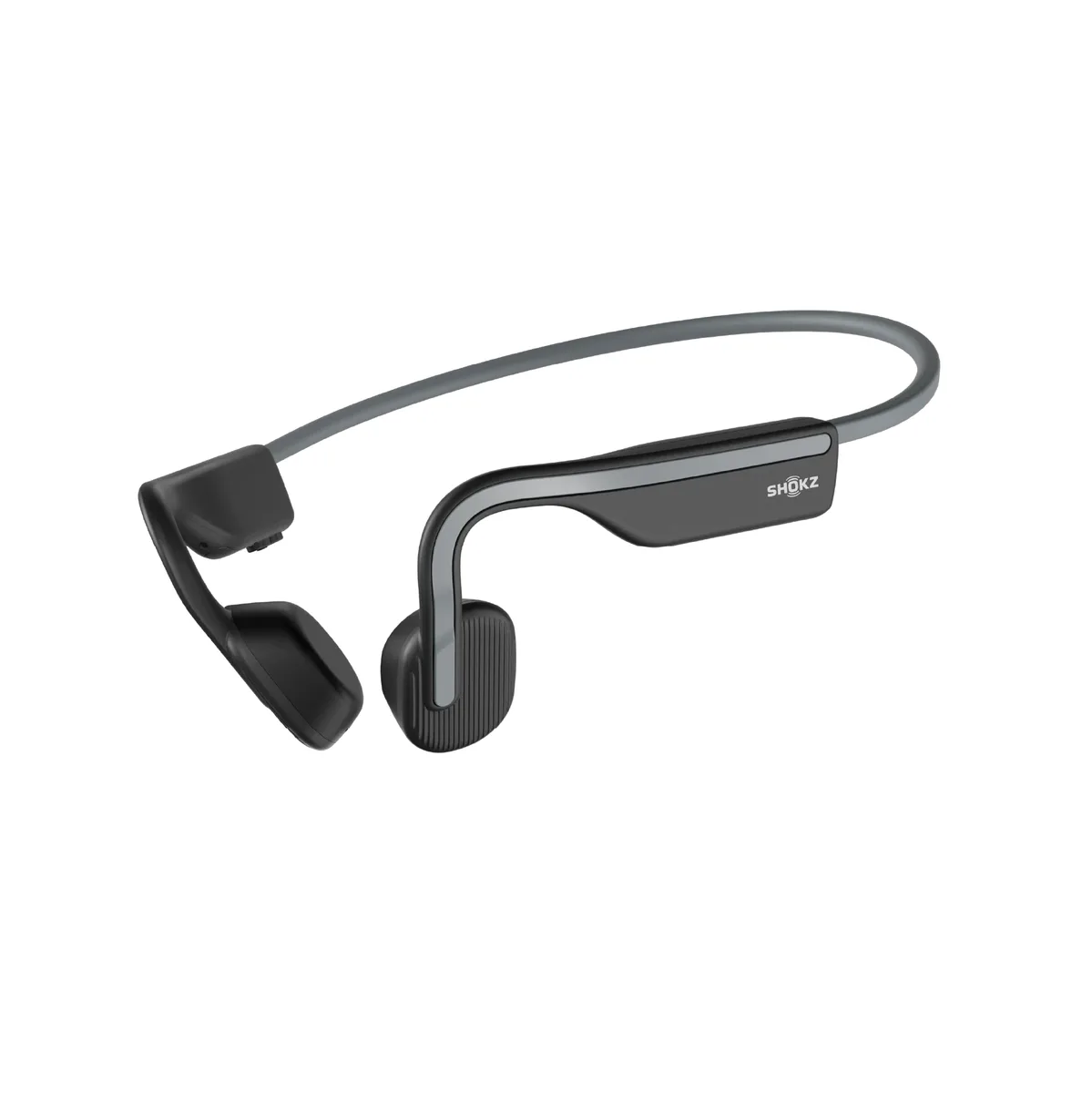
The cheapest way into real bone conduction, and it's been the gateway drug for years. The 29g titanium band is the same basic recipe as the expensive Shokz: transducers rest on your cheekbones, ears stay completely open, and IP55 shrugs off sweat and rain. The cuts are honest — six hours of battery instead of twelve, older-generation transducers with noticeably thinner bass, and more of the trademark tickle when you push the volume. It streams SBC only and skips the Shokz app entirely; EQ is three on-device modes (Standard, Vocal Booster, Earplug) toggled by holding the volume buttons, which nobody remembers how to do. It does support multipoint and charges over USB-C, both unusual at this price. Leakage is audible in quiet rooms. If you're bone-conduction-curious, spend $80 here before committing $180 to the OpenRun Pro 2.
Best for first-time bone-conduction buyers on a budget
Soundcore
Open-Ear & Bone Conduction
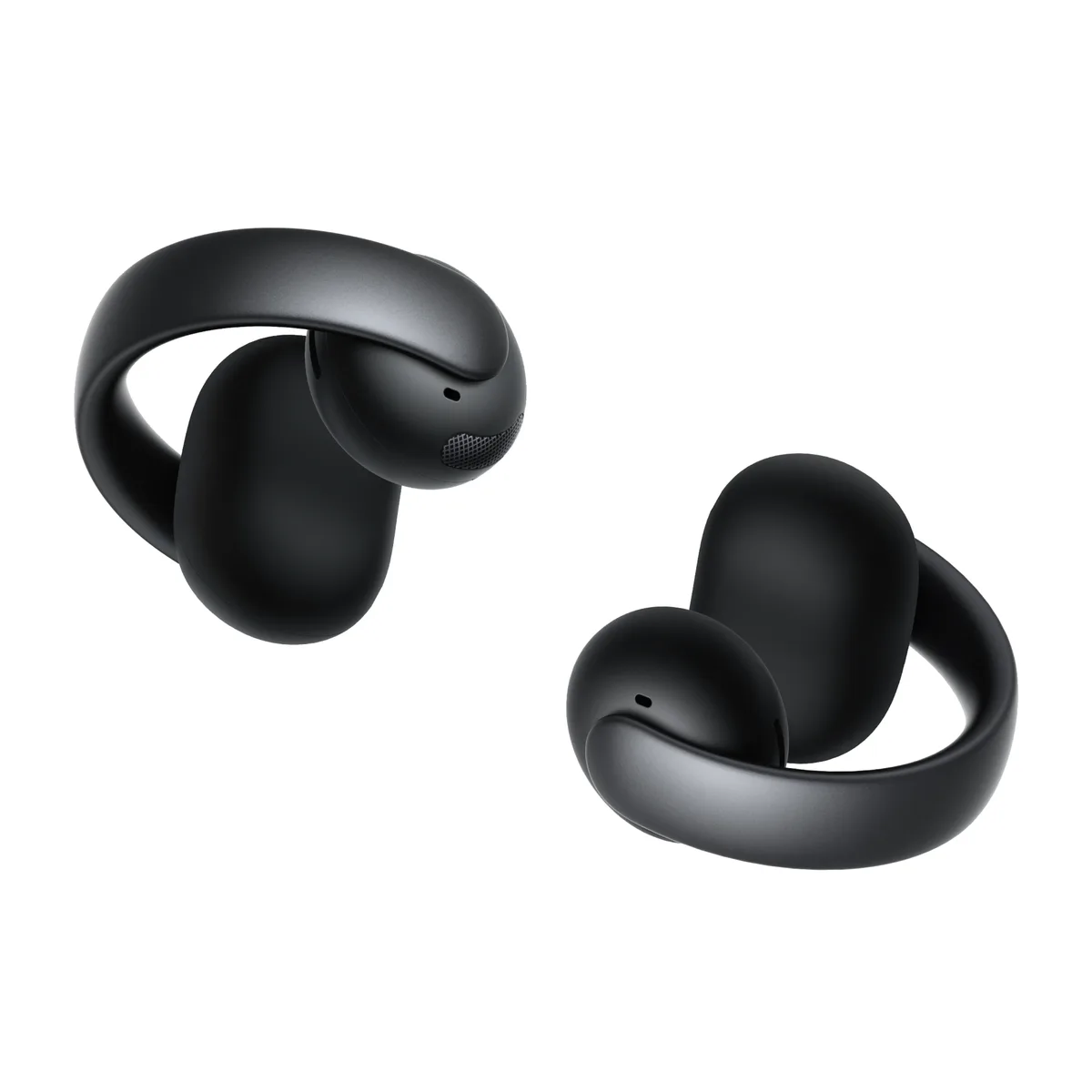
Anker's answer to the Bose Ultra Open at half the money: a 6g cuff with a memory-titanium wire core that clips to the edge of your ear, rated for 20,000 bends. Because nothing hooks over the top of your ear, these are the glasses-friendliest sports buds in this list — sunglasses and hearing-aid wearers gravitate to the clip format for exactly that reason. You get LDAC, multipoint, and Bluetooth 5.4, plus a 12mm titanium-coated driver that sounds warm and pleasant, if clearly a tier below Bose's tuning. Eight hours per charge and 32 total is fine, but the case skips wireless charging. The honest downsides: bass is gentle (open-ear physics again), the cuff can slowly rotate out of position during burpees or floor work, and call quality drops outdoors in wind despite the four-mic array. At its frequent $99 street price, it's the smart-money clip-on.
Best for glasses wearers wanting comfortable clip-on awareness
Soundcore
Open-Ear & Bone Conduction
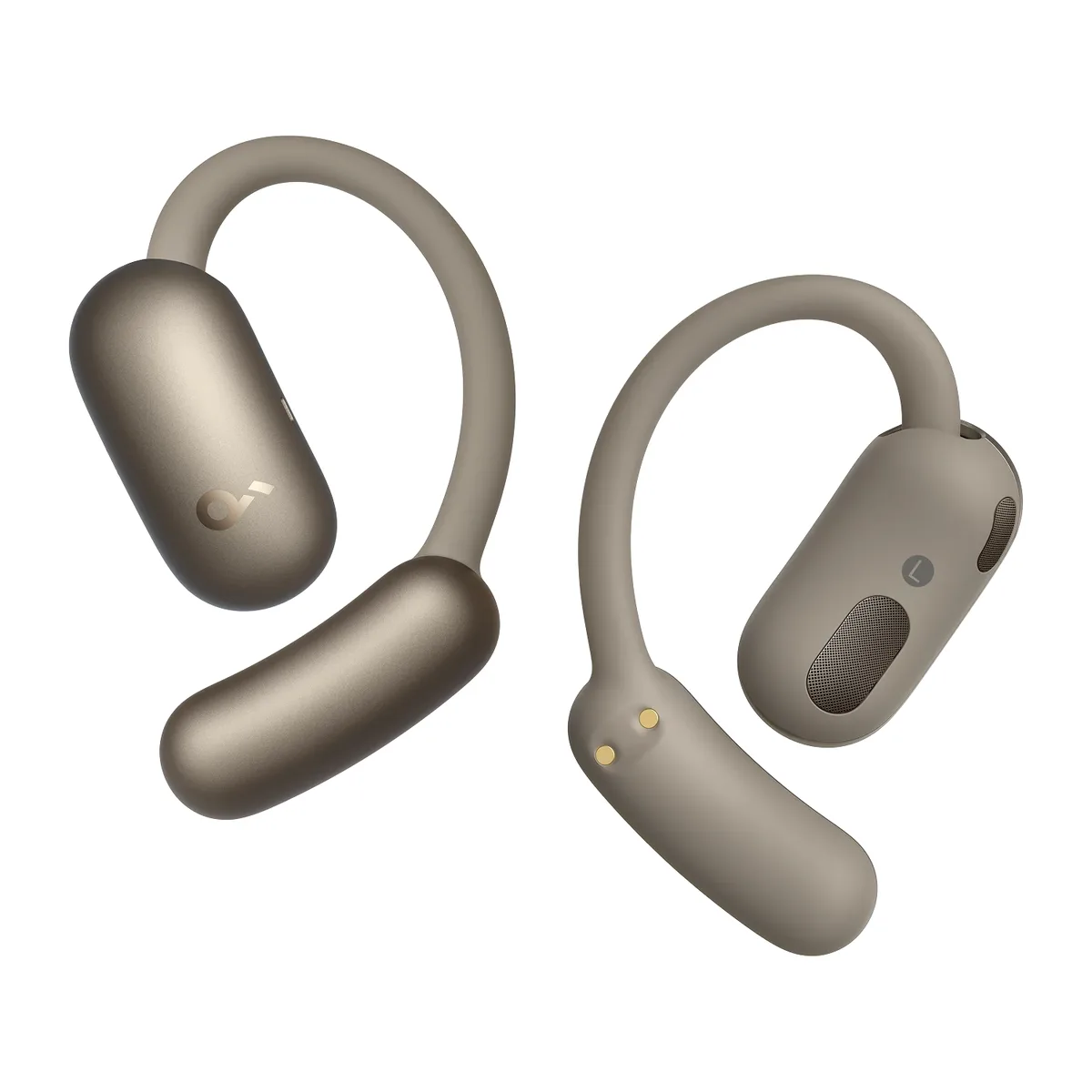
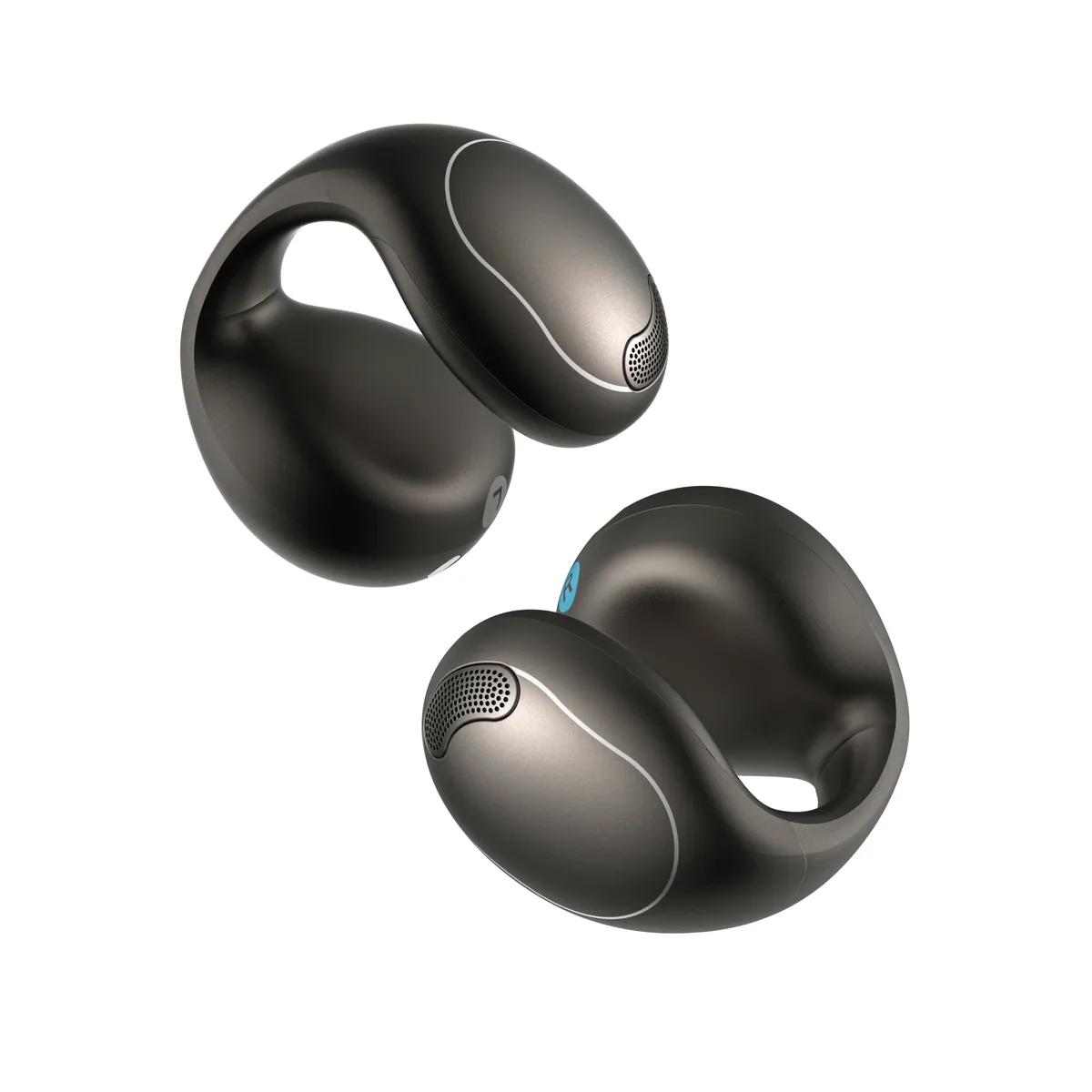
Anker's clip-on open-ear is the sensible-money alternative to the $200 Shokz OpenDots One and $299 Bose Ultra Open: same cuff-style concept — a titanium-wire joint clips a 5.8g bud to the edge of your ear, nothing in the canal, nothing over the top — at half or a third of the price. The 12×17mm titanium-coated oval driver sounds decent once you spend a few minutes in the soundcore app; reviewers and owners agree the out-of-box tuning needs EQ work before it shines, and even then it won't out-muscle the OpenDots on bass. Controls are physical buttons rather than touch, which owners of touch-control rivals may consider a feature. Battery is 7 hours per charge and 21 with the case, with a 10-minute charge buying 2 hours. Fit is the polarizing part: most people find the clip design extremely comfortable and forget it's there, but the buds run large as clip-ons go, and some owners with smaller ears report pressure-point soreness after an hour — if in-ears bother you this is worth trying, but it's not universal. IPX4 handles sweat fine. Bluetooth 5.4 with multipoint is better connectivity than most at this price; Anker doesn't publish codec support, so assume standard fare. As a first open-ear or a gym-and-errands pair, it's the best value in the clip-on category.
Best for trying clip-on open-ears without spending $200