Kids Headphones: What Volume Limiting Actually Protects
Kids headphones are a hearing-safety product first and an audio product second. The entire category exists because children's ears are still developing and children crank volume. The differences that matter are whether the limiter actually holds, whether the hinge survives a backpack, and whether a small head gets a real seal.
What 85dB limiting means — and when it lies
85 decibels is the occupational-safety threshold for sustained listening; the WHO recommends children stay at or below it. A volume-limited headphone caps its own output so a kid can't exceed it no matter how hard they mash the volume button. That's the theory.
The practice has two failure modes worth checking in owner reports. First, some budget models limit volume over Bluetooth but not through the included aux cable — plug into a school Chromebook and the cap silently disappears. Second, some 'limited' models measure well above 85dB with the right source. The brands that treat limiting as a safety spec (Puro is the standard-bearer) hold the cap in every mode; the ones that treat it as a marketing bullet don't. Several models also ship a 94dB 'travel mode' for airplanes — fine as a parent-controlled toggle, a problem if a seven-year-old can find it in the app.
Durability is a spec, sold separately
The realistic lifecycle of kids headphones is: dropped, sat on, folded backwards, yanked off by the cord, and left in a car in July. Flexible one-piece headbands and metal-reinforced hinges survive this; the cheapest plastic folding designs snap at the hinge within months, which is the most common one-star review in the category.
Wired models with detachable cables split the difference — the cable dies instead of the headphone, and a replacement costs a few dollars. For toddlers, avoid dangling cords entirely and go Bluetooth with a long battery: the 40-55 hour claims on current kids models are real because the limited volume barely sips power.
Fit: small heads are not small adults
An adult headphone on a child leaks sound past the seal, and a leaky seal means the kid turns it up — quietly defeating the entire volume-limit premise. Kid-specific models use shallower cups, lighter clamping, and headbands that adjust small enough to actually seal on a five-year-old.
On-ear designs suit most school-age kids; over-ear cups that fully enclose small ears are better for flights and car trips. For sensory-sensitive kids, soft pads and low clamping force matter more than any audio spec — check owner reports from other parents, which our insights sections collect per model.
School, calls, and the mic question
Remote learning made mics a kids-headphone requirement: look for a boom or in-line mic that teachers report hearing clearly, and physical buttons a kid can work without reading menus. School-friendly also means wired-capable — plenty of classrooms ban Bluetooth pairing chaos, and a headphone that does both modes covers every scenario.
Price tiers are honest here: $20-35 buys the reliable school workhorses (JLab, iClever, JBL's JR line), $50 adds ANC for travel, and ~$100 buys Puro's studio-grade build and strict limiting. Buy two of the cheap ones before one of the fancy ones if loss is a bigger risk than sound quality — in most households, it is.
Headphones mentioned in this guide
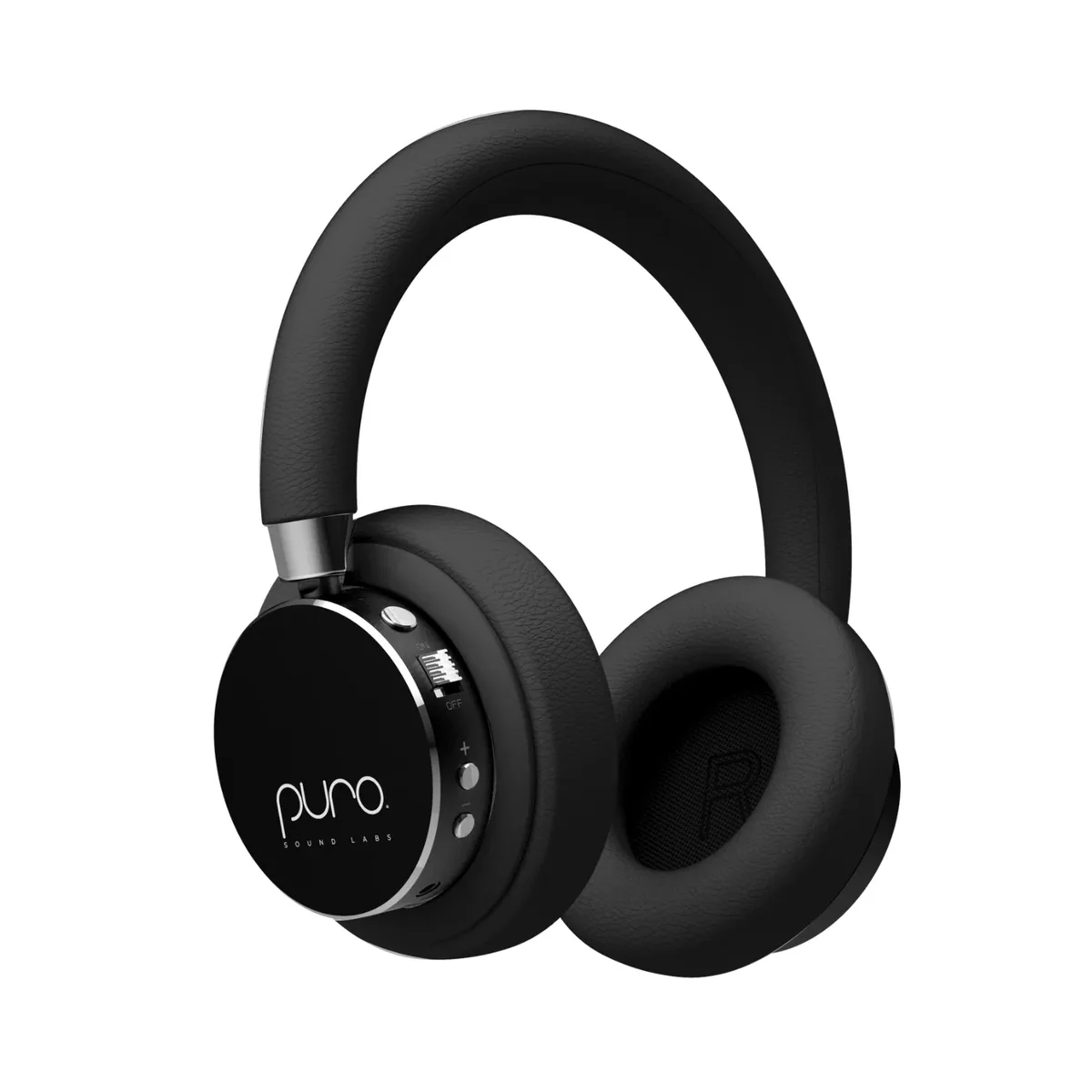
Puro Sound Labs
Kids Headphones
This is the premium kids headphone, and much of the $99 shows: aluminum frame instead of creaky plastic, a hard travel case, vegan-leather pads in two swappable sizes (on-ear for small kids, over-ear as they grow), and a mic that long-term reviews rate as genuinely good for school video calls — clear even in noisy rooms. Puro's signature move is the included 3.5mm cable with a built-in limiter, and that's where the 85dB promise actually holds: wired through Puro's own cable, measurements stay at or under the limit. Over Bluetooth the story is murkier — independent testing measured music peaking around 89dB and worst-case test signals higher, so it's meaningfully safer than most kids headphones but still not an absolute ceiling. Passive isolation is strong (Puro claims 83% of ambient noise blocked), which matters more than it sounds: kids turn volume up to fight background noise, and these don't make them. The honest knocks: battery testing came in around 12 hours against the claimed 20, there's no water resistance at all, and swap in a random third-party aux cable and the limiter is gone entirely. A daisy-chain cable lets two Puros share one tablet — genuinely useful on flights with siblings. If hearing protection is the reason you're shopping, this is the closest thing to doing it right; just charge it more often than the box suggests and hide the spare cables.
Best for parents who treat 85dB volume limiting as the whole point
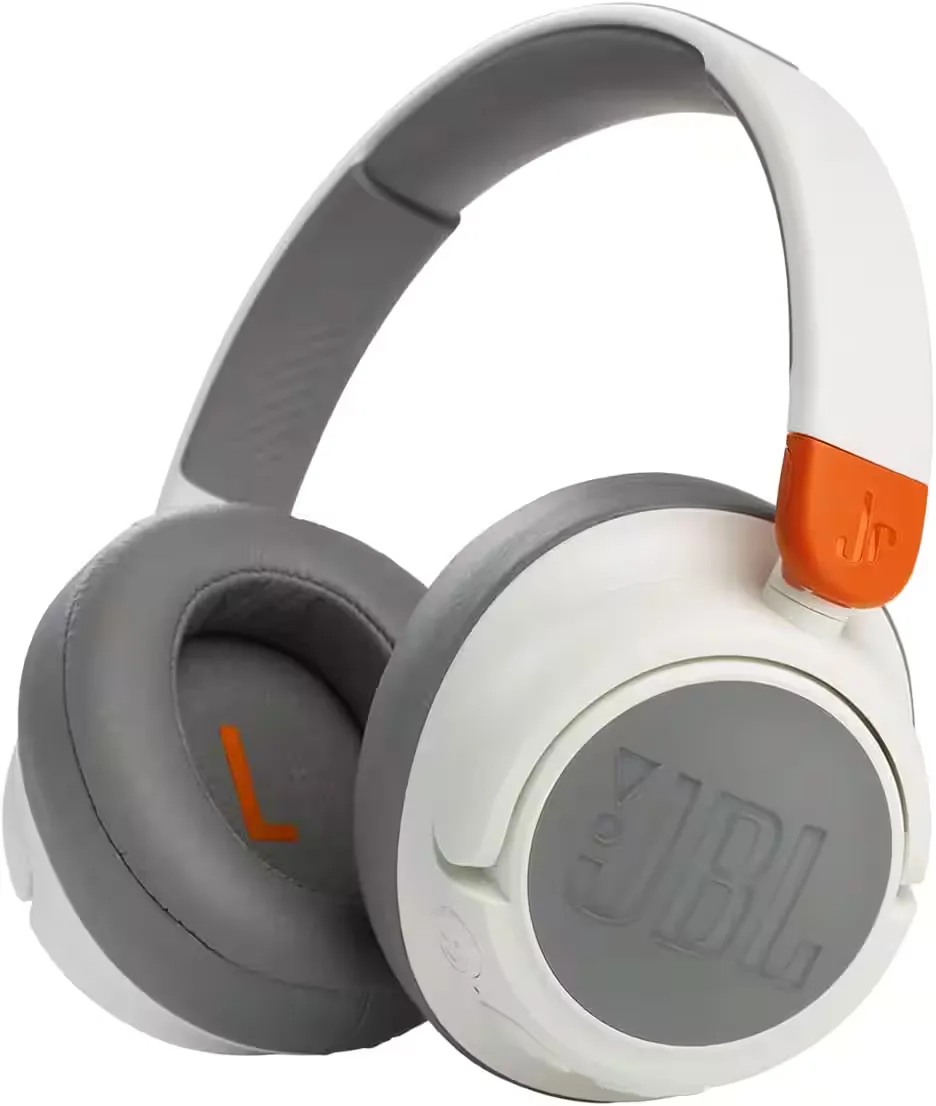
JBL
Kids Headphones
This is the kids headphone you buy for airplanes: real active noise cancelling at a price that doesn't sting when it gets left in a seat pocket. The over-ear cups seal better than typical kids on-ears, the ANC takes the edge off engine drone, and reviewers note the volume stays capped just under 85dB with no way for kids to override it — there isn't even a volume dial to crank. Battery runs 20 hours with ANC on and about 30 with it off, recharging fully in two hours, and the detachable 3.5mm cable means a dead battery on descent isn't a crisis. The built-in mic is fine for school calls, multipoint lets it hop between a tablet and a phone, and Google Fast Pair makes Android setup instant. Honest caveats: at 200g it's noticeably heavier than the on-ear JBLs, and the over-ear sizing runs big on toddlers — this is really a 6-and-up headphone. The tuning is bass-heavy in classic JBL fashion, which kids love and audiophile parents will shrug at. And like most kids headphones, the volume cap is only trustworthy over Bluetooth; on the aux cable, loudness depends on whatever device it's plugged into. For road trips and school use at around $50, it's the sweet spot in JBL's kids line.
Best for families who fly — ANC and a wired backup at a kid-proof price
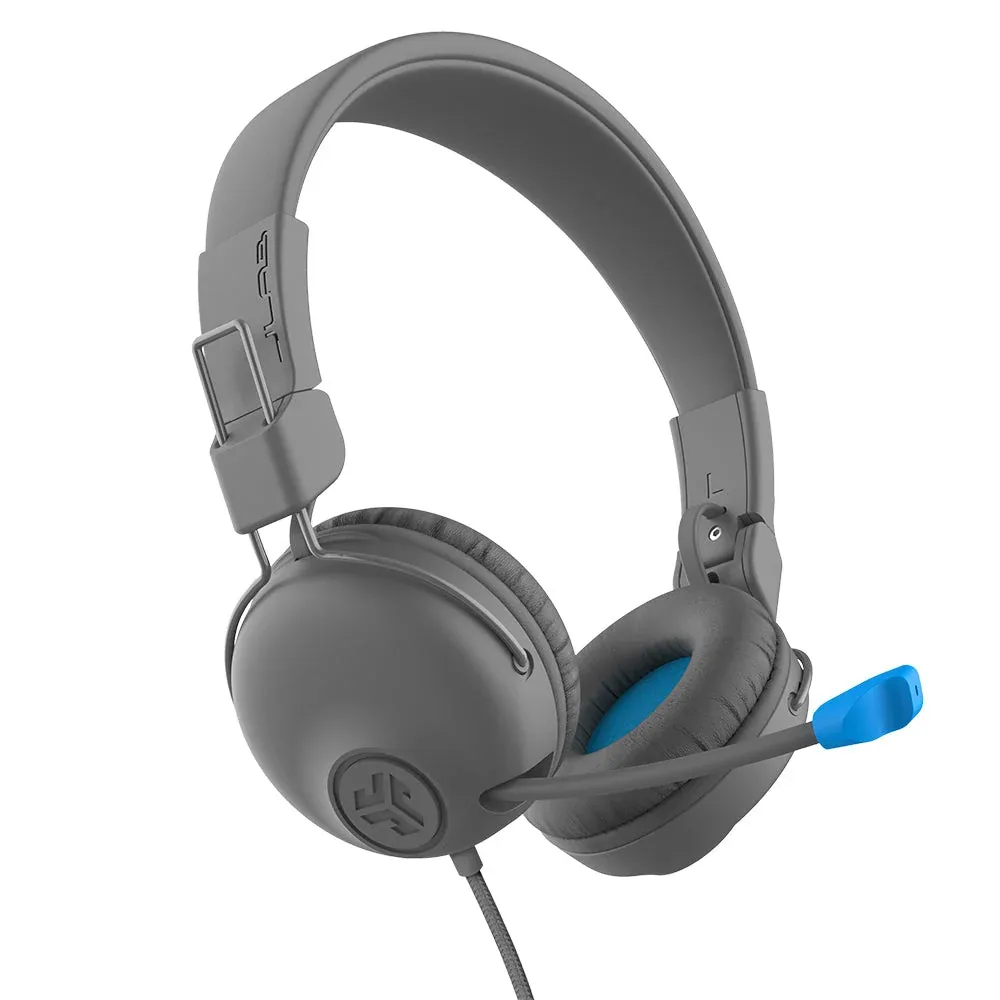
JLab
Kids Headphones
Heads up: despite sitting next to wireless kids models, the JBuddies Learn is wired-only — a 3.5mm nylon cord and no battery, which for school is actually the feature. Nothing to charge, nothing to pair, nothing for a six-year-old to lose by Tuesday. The retractable boom mic tucks into the earcup and works better for virtual classes than the muffled built-in mics on most kids headphones. Volume is capped at a fixed 85dB — the responsible number, but be realistic: 85dB for hours is still a lot of sound, and in a loud room kids will max it out. At 125g with folding hinges it fits ages six and up. Sound quality is fine-not-great, which no kid has ever complained about. JLab's lifetime warranty is the sleeper reason parents rebuy — they actually honor it.
Best for school and remote-class headsets