Beyerdynamic
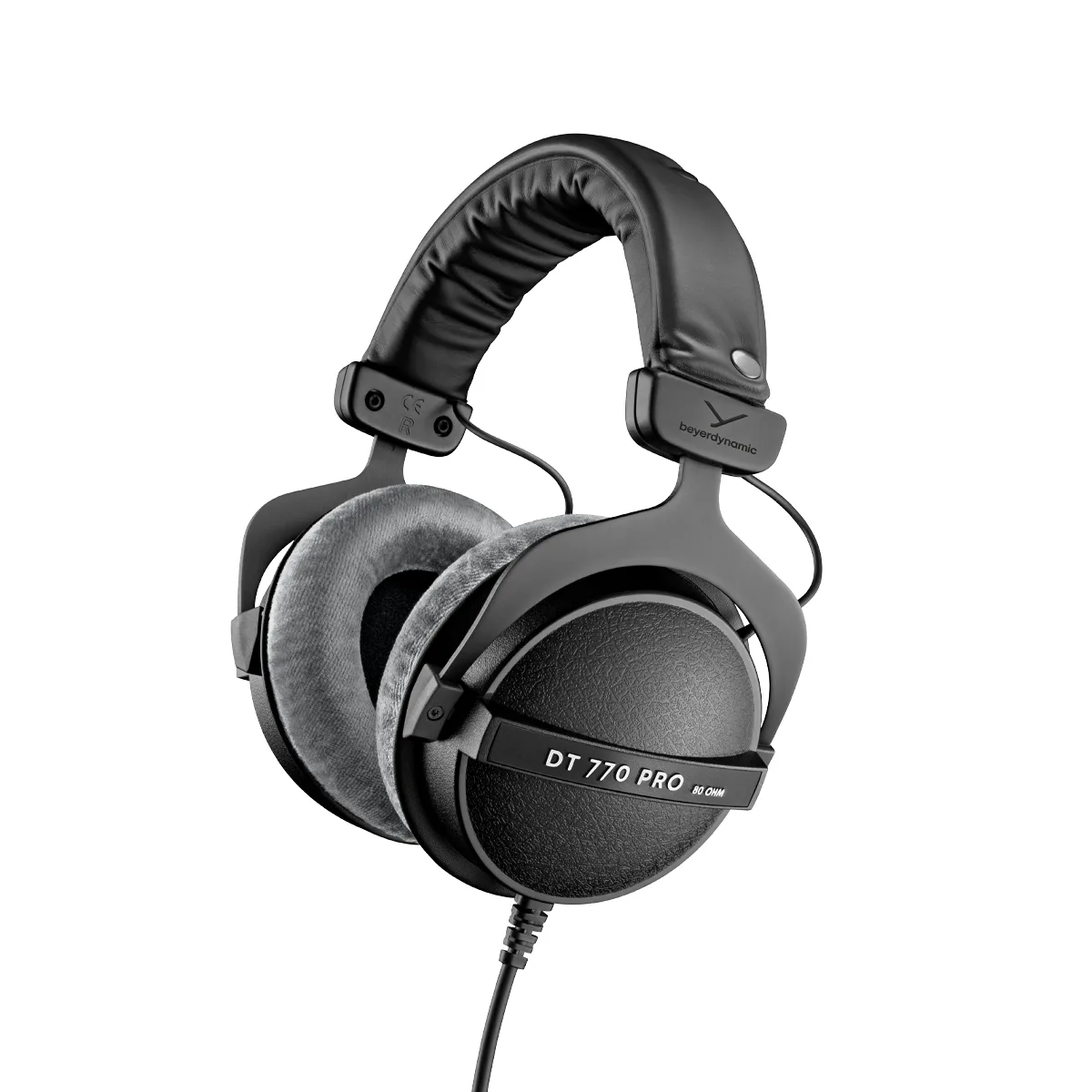
Beyerdynamic DT 770 Pro (80 Ohm)
The DT 770 Pro's velour earpads and gentle clamp make it the comfort benchmark among closed studio headphones — people track drums in these for eight-hour days. The 80-ohm version is the sweet spot for home studios, but be honest about power: a phone or thin laptop jack will get it loud-ish, while an audio interface or small amp is what brings the bass control and volume headroom it's built for. The tuning is V-shaped for a monitor: elevated lows, slightly recessed mids, and a treble spike around 8kHz that bothers treble-sensitive listeners. Isolation is excellent for tracking. The build is famously serviceable — every part is replaceable — but the 3-meter cable is hard-wired and non-detachable, which feels dated at this price. Made in Germany and commonly seen still working after 15 years.
We may earn a commission. Price and availability on Amazon’s site may differ.
Specifications
Highlights
Pros
- ✓Velour pads set the closed-back comfort benchmark
- ✓Drummers track eight-hour days in these
- ✓Excellent isolation for tracking vocals and drums
- ✓Every part replaceable — commonly alive after 15 years
- ✓Made-in-Germany build outlasts the M50x's pleather pads
- ✓80-ohm version suits home-studio interfaces perfectly
Cons
- ✗Wants an interface or amp for real bass control
- ✗8kHz treble spike bothers treble-sensitive listeners
- ✗Hard-wired 3-meter cable feels dated at $149
- ✗Recessed mids make it V-shaped for a monitor
- ✗Bulky earcups don't fold for travel
Owner Insights(520 discussions)
The DT 770 Pro is one of the most-owned studio headphones in enthusiast communities - roughly three-quarters positive across hundreds of owner reviews - and its reputation rests on two pillars: comfort and immortality. The velour earpads and gentle clamp are the closed-back comfort benchmark owners measure everything else against, with eight-hour tracking sessions and all-day gaming cited as routine. And because every part is user-replaceable, decade-plus-old pairs still in daily service are a running theme; many owners describe it as the last closed-back they ever needed to buy.
The sound is a V-shaped monitor: deep, well-controlled sub-bass, slightly recessed mids, and the famous Beyerdynamic treble spike around 8kHz - the single most-cited flaw, which treble-sensitive owners tame with a permanent EQ cut and others never notice. Two practical realities matter for the 80-ohm version: it truly wakes up on an audio interface or small amp (a bare phone gets it loud-ish but loses bass grip and dynamics), and the 3-meter cable is hard-wired, so cable damage years down the road means soldering rather than swapping - the complaint owners consider least forgivable at this price. Isolation is strong enough for drum tracking, and gamers prize the unusually wide closed-back soundstage.
Buy the 80-ohm DT 770 if you work or play at a desk with an interface and want maximum comfort, isolation, and a headphone that outlives its price several times over. Against the ATH-M50x it trades portability and phone-friendliness for comfort and deeper bass; the 32-ohm DT 770 variant exists for mobile use, and the 250-ohm for pure desk amps. The strongest modern alternative in owner threads is Beyerdynamic's own DT 700 Pro X - detachable cable, one easier-to-drive impedance, tamer treble - for about $100 more.
Pros
- +The velour pads and gentle clamp set the closed-back comfort benchmark - owners routinely track and game in them for eight-hour stretches without hot ears
- +Legendary serviceability: pads, headband, and drivers are all replaceable, and 10-15-year-old pairs still in daily use are common owner stories
- +Passive isolation strong enough that drummers and vocalists use them for tracking without bleed complaints
- +Surprisingly wide soundstage for a closed back - gamers repeatedly say it ended their search for a closed competitive-gaming headphone
- +Deep, controlled sub-bass that owners say the ATH-M50x can't match once properly powered
- +German build quality at $150 that owners describe as the last closed-back purchase they needed to make
- +The 80-ohm version hits the sweet spot - drivable by an audio interface without the 250-ohm version's amp dependency
Cons
- −The ~8kHz treble spike is the defining flaw - treble-sensitive owners call it fatiguing and many run a permanent EQ cut to live with it
- −Genuinely underwhelming from a bare phone or thin laptop jack - it gets loud-ish but bass control and dynamics need an interface or small amp
- −The 3-meter cable is hard-wired - after 6+ years cable damage means soldering, not swapping, which owners consider inexcusable at this price
- −Recessed mids push vocals slightly behind the V-shaped bass and treble - not the flat monitor newcomers expect
- −It's a studio design through and through: no folding, no case, no inline mic, and far too much cable for mobile use
- −Stock velour pads eventually compress and flatten, and while replacements are cheap, fresh pads measurably restore lost bass - owners often don't realize how far theirs drifted
Common Questions
Compare the Beyerdynamic DT 770 Pro (80 Ohm)
Related headphones
More from Beyerdynamic →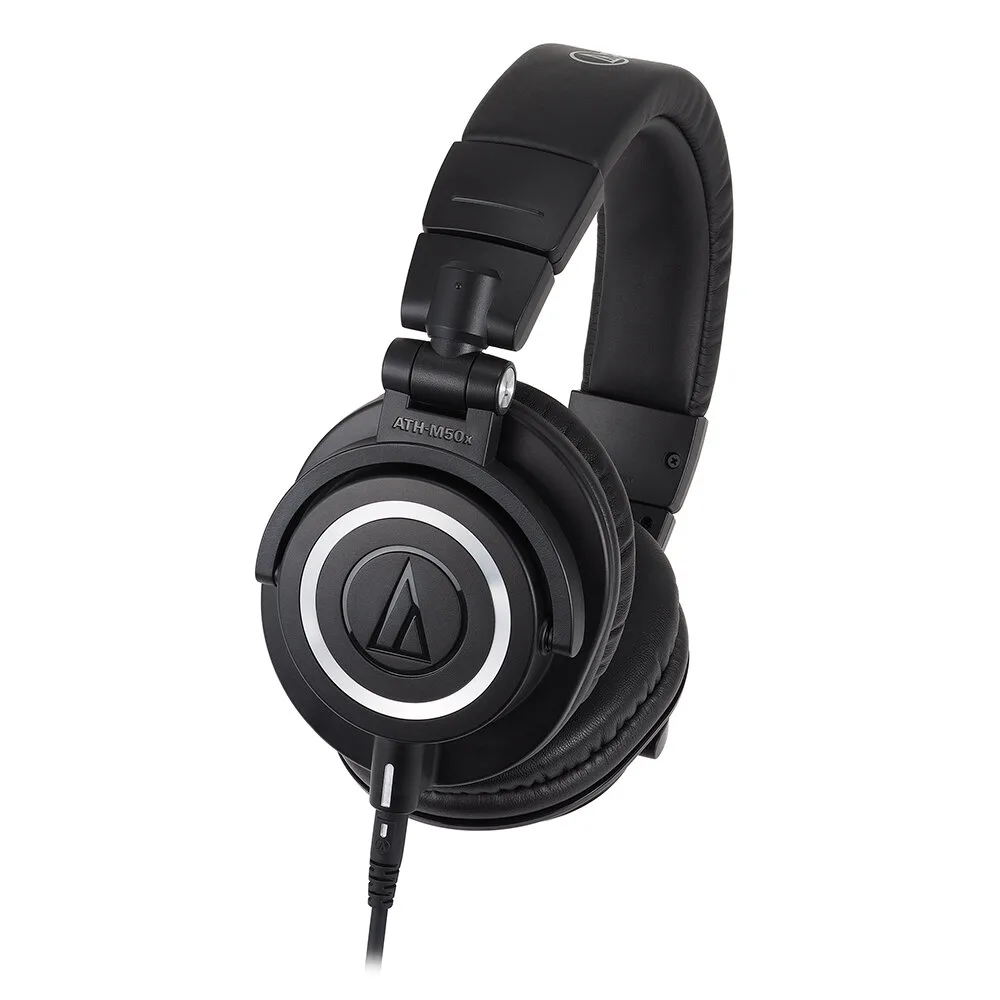
Audio-Technica
Wired & Studio
The M50x has been the default first studio headphone recommendation for over a decade, and it mostly earns it. At 38 ohms and 99dB sensitivity it runs happily from a phone dongle or laptop — no amp needed. The tuning is punchy rather than flat: a mid-bass bump and forward treble that flatter hip-hop and electronic more than they serve critical mixing. What owners actually rave about is the build — these fold flat, shrug off years of backpack abuse, and take three detachable cables. The coiled cable is the classic complaint: it's heavy enough to tug on your head, so most people live on the straight ones. The pleather earpads run hot, clamp firmly on larger heads, and start flaking around year two or three; replacements are cheap and considered routine maintenance by long-term owners.
Best for first serious studio headphone buyers
Sennheiser
Wired & Studio
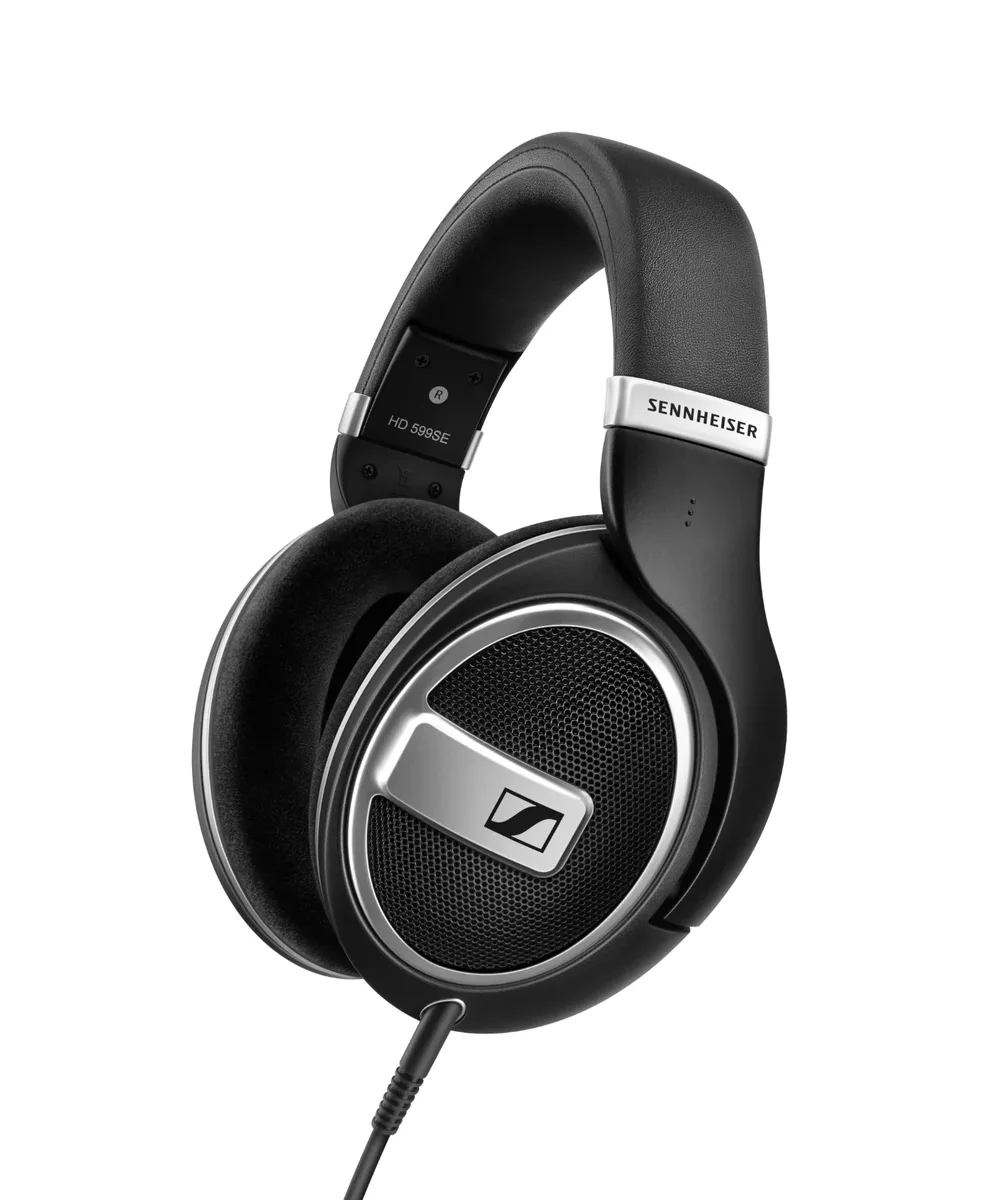
The HD 599 SE is the Amazon-exclusive black version of Sennheiser's long-running open-back, and it's the classic gateway into open-back listening. At 50 ohms with high sensitivity it runs fine straight from a laptop or phone dongle — no amp required, despite what forums imply. The sound is warm, smooth, and wide, with relaxed treble that's easy for hours; bass rolls off at the bottom like most open-backs, and everyone around you hears your music, so it's a quiet-room headphone only. At 250g with velour pads, comfort is superb even for glasses wearers. Two cables (6.3mm and 3.5mm) are included. Pricing is the thing to know: it lists around $160 but has dropped to roughly $100 many times, so patient buyers should never pay full price. Pads and cables are replaceable.
Best for relaxed at-home open-back listening
Sennheiser
Wired & Studio
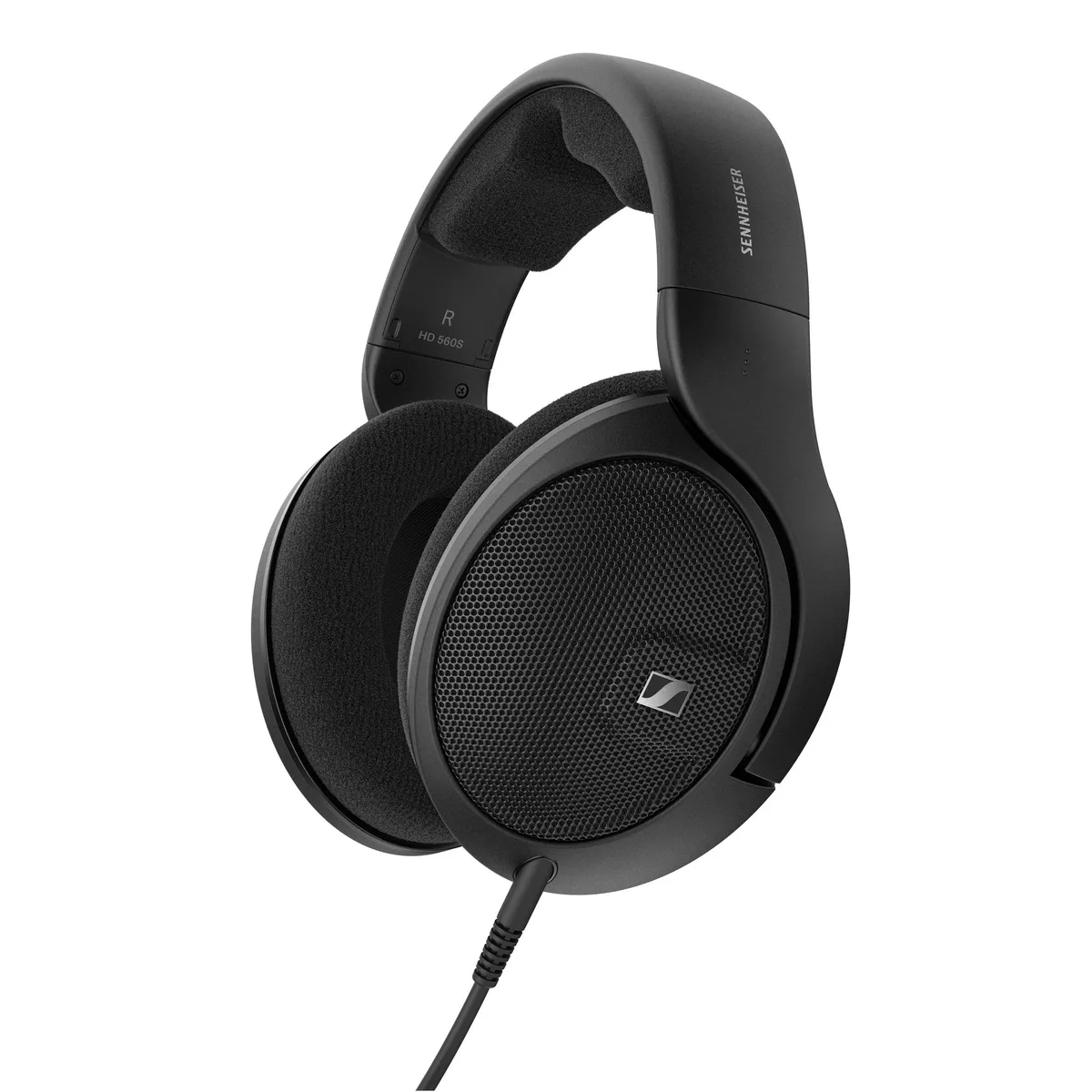
The HD 560S is the measurement crowd's favorite budget reference: the most honestly neutral headphone Sennheiser sells under $200, with bass that actually extends where the HD 600 and 6XX roll off. Angled drivers give it a wider, more precise presentation than its 6-series cousins, which is why owners keep recommending it for competitive gaming as much as for checking mixes — footsteps and pan positions land exactly where they should. It's 120 ohms but very sensitive at 110 dB/1Vrms, so unlike the 300-ohm Sennheisers it gets genuinely loud from a decent dongle or interface, though it still tightens up on a real amp. The sonic trade-off owners cite most is the treble: there's a brightness and occasional sibilance around the top that treble-sensitive listeners EQ down, and it makes harsh recordings harsher. Build is where the price shows — lots of lightweight matte plastic that feels a class below the sound, with a long-term creak here and there, though at 280g it stays comfortable for hours. The open back leaks freely, as always. Street price swings between $140 and $200; toward the low end of that range it's arguably the best neutral-headphone value in the hobby.
Best for Neutral reference sound without a big amp
Sennheiser
Wired & Studio
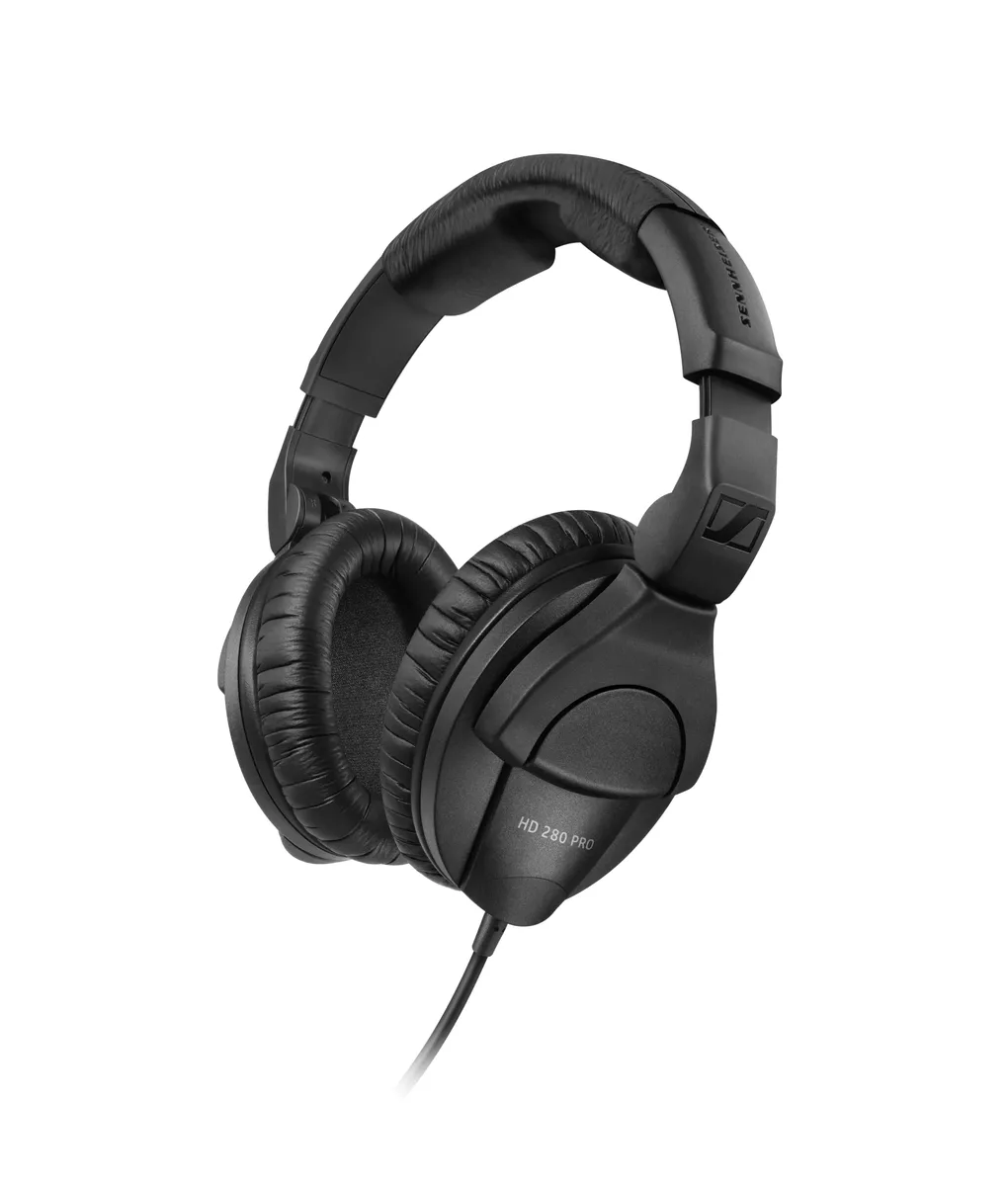
The HD 280 Pro is the beige Toyota pickup of studio headphones: it's been in every tracking room, radio station, and podcast studio for twenty years because it does one job — isolate and monitor — better than anything near $100. The closed cups block up to 32 dB of outside noise passively, which is more than many ANC headphones manage and exactly what you want when a singer is tracking next to a click or you're editing audio somewhere loud. The sound is honest rather than fun: clear, mid-focused, slightly dry, with controlled but unexciting bass — owners consistently call it a phenomenal tracking and editing tool and a mediocre music-pleasure headphone. The isolation comes from a genuinely aggressive clamp; larger heads feel it inside an hour, and the pleather pads get sweaty in long sessions, though the grip relaxes with break-in. At 64 ohms and 113 dB max SPL it runs fine from interfaces, laptops, and phones without an amp. The coiled 1.3-3m cable is studio-practical but non-detachable, and the cups fold and swivel for one-ear monitoring and bag storage. Pads, headband padding, and earcup parts are all replaceable, and owners commonly report pairs surviving a decade of abuse. Buy it as a tool, not a toy, and it never disappoints.
Best for Tracking, editing, and podcasting in noisy rooms
Sony
Wired & Studio
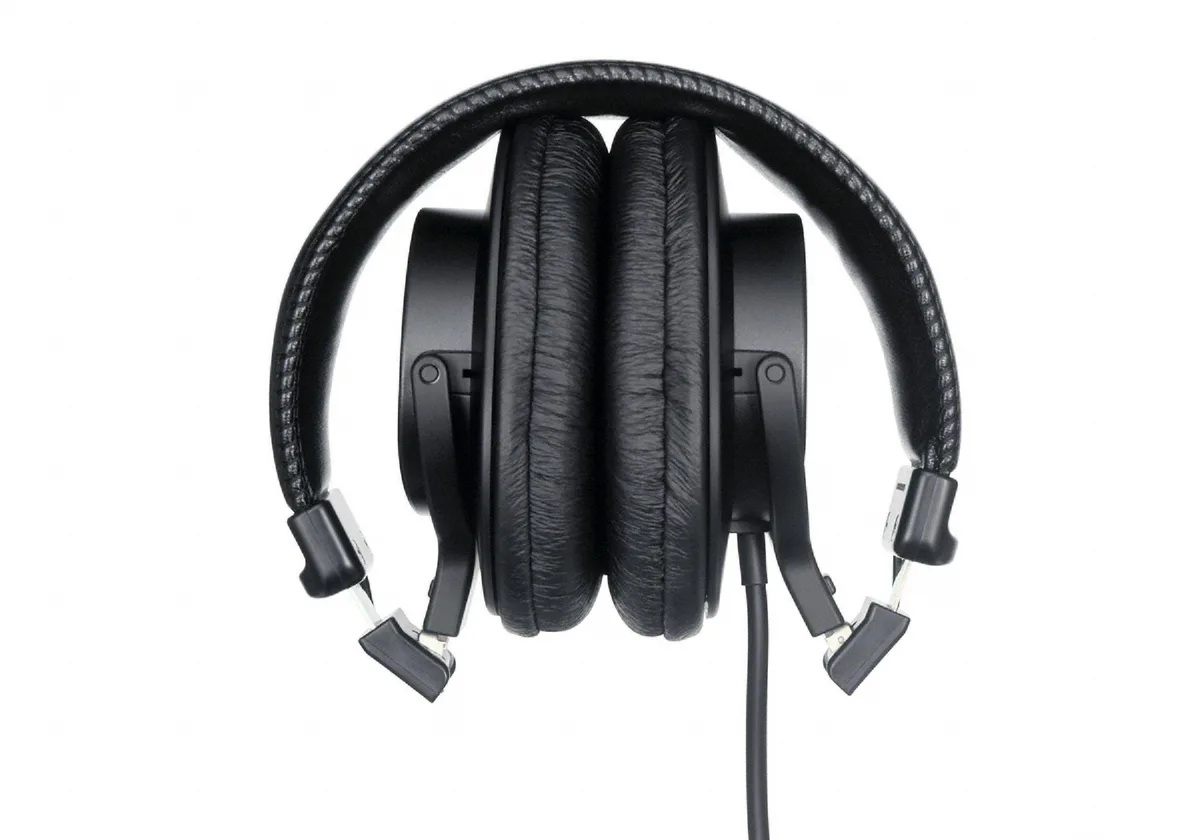
The MDR-7506 has been hanging in broadcast booths and video rigs since 1991, and almost nothing about it has changed — including the flaws. At 63 ohms and 106dB/mW it's sensitive enough that any camera, mixer, or phone drives it fine without an amp. The sound is bright and detail-forward: sibilance, hum, and edit points jump out, which is exactly why engineers love it and casual listeners sometimes find it fatiguing. The 230g folding frame is featherweight for all-day wear. Two gripes come up constantly: the 3-meter coiled cable is permanently attached and heavy for desk use, and the stock earpads famously disintegrate into black flakes within a year or two — nearly every long-term owner ends up buying aftermarket pads and considers it part of the price.
Best for podcasters and field recording pros
Drop x Sennheiser
Wired & Studio
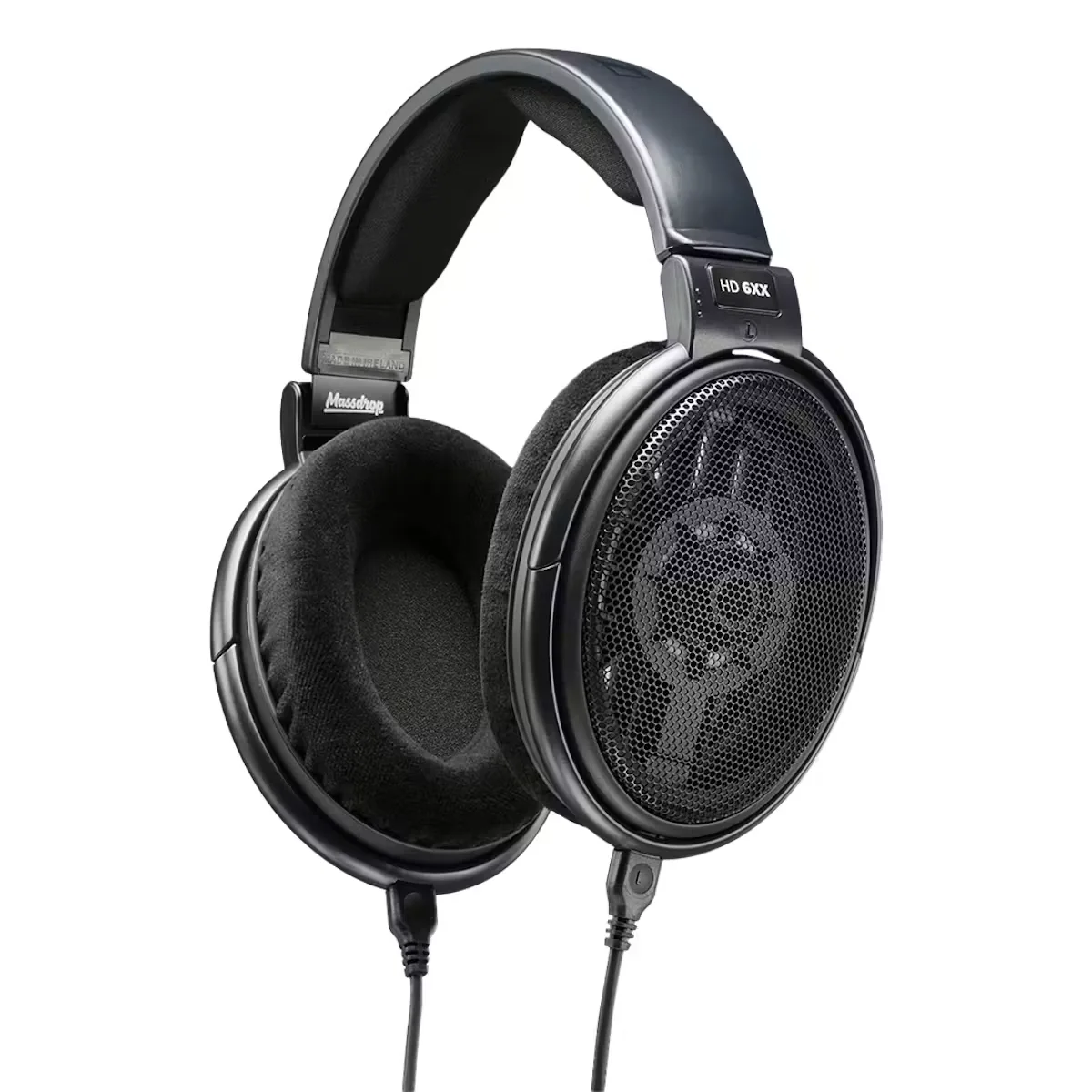
The HD 6XX is the worst-kept secret in audio: it's a Sennheiser HD 650 — same drivers, same Ireland production line — in midnight-blue plastic with a shorter 1.8m cable, sold for roughly half the money through Drop and Amazon. That makes it the default first 'real' audiophile headphone, and the long-term owner consensus backs it up: warm, smooth, and relaxed, with the same gorgeous Sennheiser midrange as the HD 600 but a touch more bass warmth and a more forgiving top end. Like its siblings it's 300 ohms, and this is where new buyers get burned — from a phone or motherboard jack it sounds veiled and lifeless, while on a decent amp (owners are particularly fond of cheap tube hybrids) it opens up dramatically. The famous 'Sennheiser veil' criticism is really just its laid-back treble; if you want sparkle and analysis, get an HD 600 or 560S instead. Physical caveats are the family ones: firm clamp before break-in, rolled-off sub-bass, an intimate soundstage, and zero isolation from the open backs. Parts are interchangeable with the HD 650, so pads and cables are easy to source. Watch pricing — it lists around $220 but drops to $159-199 constantly, and at those prices nothing touches it.
Best for The classic first audiophile headphone